This job has taken me quite a few places over my short time in its employ, and while I’ll say till my dying day that hunters are the nation’s leading conservationists, my (professional) contact with conservation tends to be in enjoying its rewards. Sure, my purchases of licenses, tags and stamps all drive conservation, but it’s rather rare for a hunt to fully center on the topic. This is why I was so excited to find myself in Colonsay, Saskatchewan, on land used by Delta Waterfowl for its nesting and brood studies. The hunt itself was spectacular. Held at Honker Heaven Outfitters, our three days in the field saw a plethora of ducks, sandhill cranes and trademark honkers fall to our Federal Ultra Steel shot, but the real treat was in talking to the Delta guys about the interesting work that goes on around here, helping to keep skies full and hunters invested for generations to come.
There’s a reason that Delta conducts this research in our neighbor to the north. The pothole region of Saskatchewan is home to a large segment of the North American flock, which returns to it each and every year to nest, feed and—of course—breed. Standing in the middle of a Saskatchewan field on an unseasonably warm September day, it was easy to see why. Food sources abound in every direction, with vast expanses of agricultural fields stretching as far as the eye can see. Pockmarking this landscape, bodies of water from small puddles to sizable lakes provide the perfect refuge for waterfowl to roost, hide and recover. Were it not for the harsh cold that pummels the region each winter, I doubt the birds would ever leave. Leave they do, though, the birds’ southward migration cementing the importance of this place for hunters and nature-lovers across the continent.
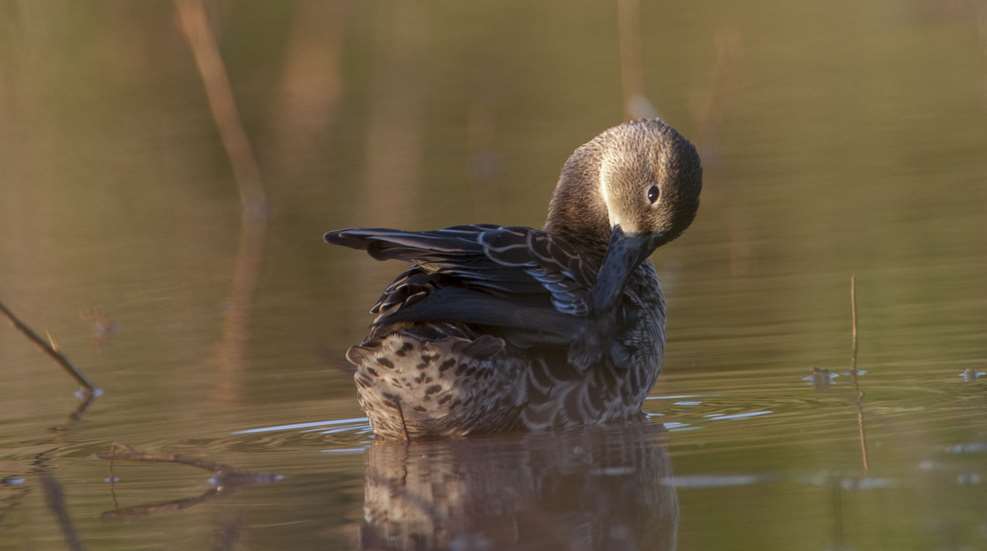
As a result, springtime often sees Ph.D. candidates from programs partnered with Delta Waterfowl traipsing through the thick alfalfa carrying not Benelli SBE IIIs but nets, hot on the trail of brooding ducks (in the study I was briefed on, their quarry was specifically blue-wing teal). In years past, studies on ducklings and brood mortality rates often focused on tagging and tracking ducklings. The downside of this is, in interacting with the ducklings, even when being as careful as possible, you are necessarily affecting the animal in a way that will influence its chances of survival. Of course, even this was a step above the crude, look-at-the-pond-and-count-the-ducks style surveys of even longer ago. Researchers decided they still needed to come up with a better way to accomplish their goals, and with the advent of some cutting-edge technologies, they have evolved it.
Using souped-up DJI drones and thermal imaging cameras, Delta researchers can locate nests by detecting the rising heat signatures of the ducks and their eggs. Finding these, they then go out and capture nesting ducks with a net during the peak of the hatch (aiming to make captures within a day of that particular nest hatching, for optimal result). Once the duck has been caught, a roughly six-minute operation ensues, during which the duck is implanted with a 4-gram radio transmitter, a wispy, 9-inch antenna and a study block identifier before being released back into the wild. Then the research really begins.
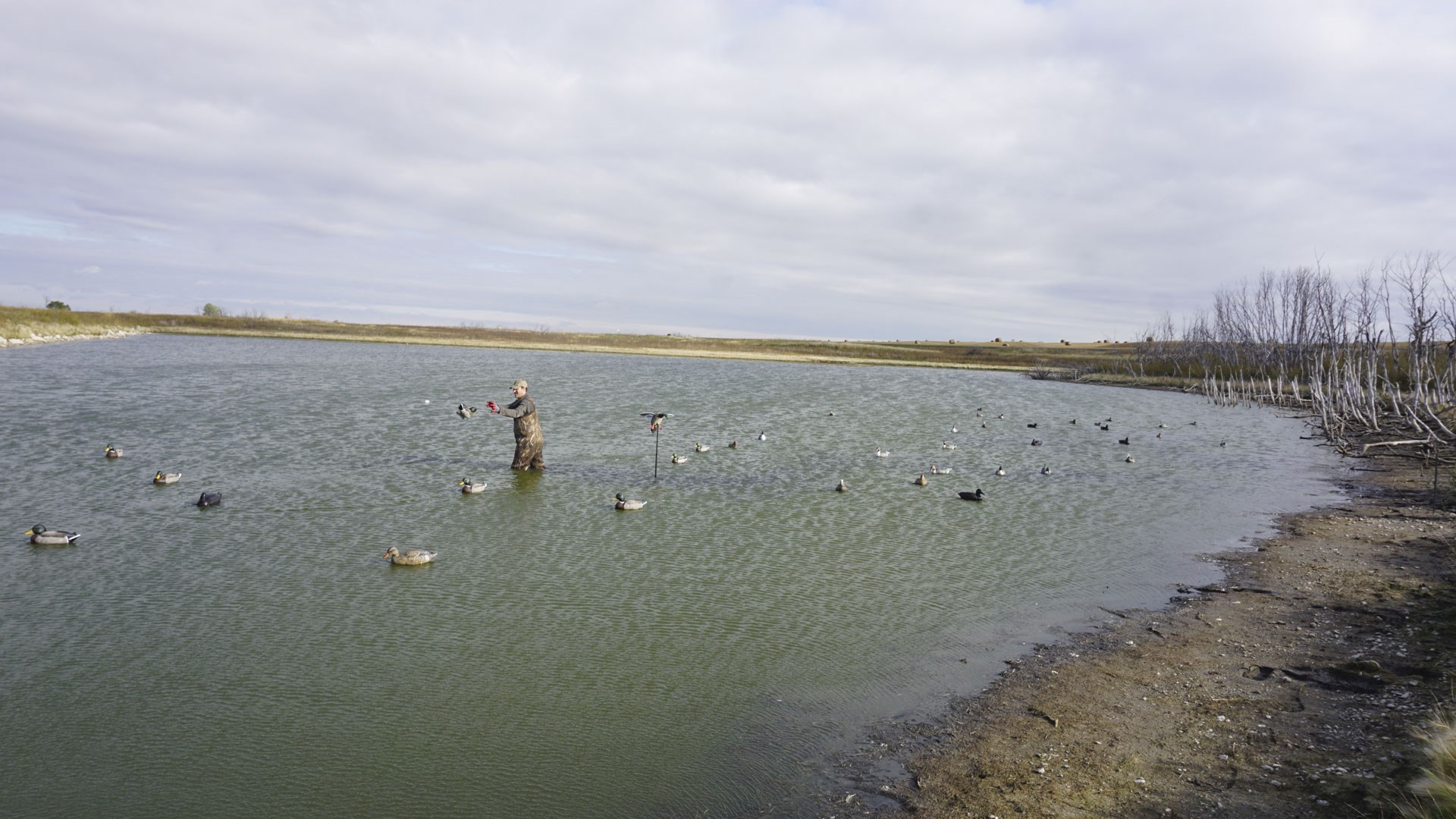
Once the duck has its tracker installed, researchers use the signal to find the duck via radio telemetry drone, then check on it with a second drone equipped with a high-definition camera and thermal imager. This allows them to see how many ducklings hatch and monitor the number who remain as the season progresses. The thermal imager is a real game-changer, as it can even see the heat signature of ducks and ducklings in thick cattails, an environment that is otherwise completely unobservable. Researchers attempt to track broods from 30-35 days (though some have managed as long as 40) to get a good idea of survival and brood abundance.
While this is all pretty cutting-edge stuff, the program does constantly strive to make its process even less invasive and its data more robust, aiming for more ducks marked, and seeking eventually to combine pair counts with brood surveys to yield a comprehensive prediction for the fall flight. In fact, by the time this goes to press, Delta’s methods may already have progressed a touch from what is described above, but the goal will doubtless remain the same—further refining its state-of-the-art brood surveys for better predictions.
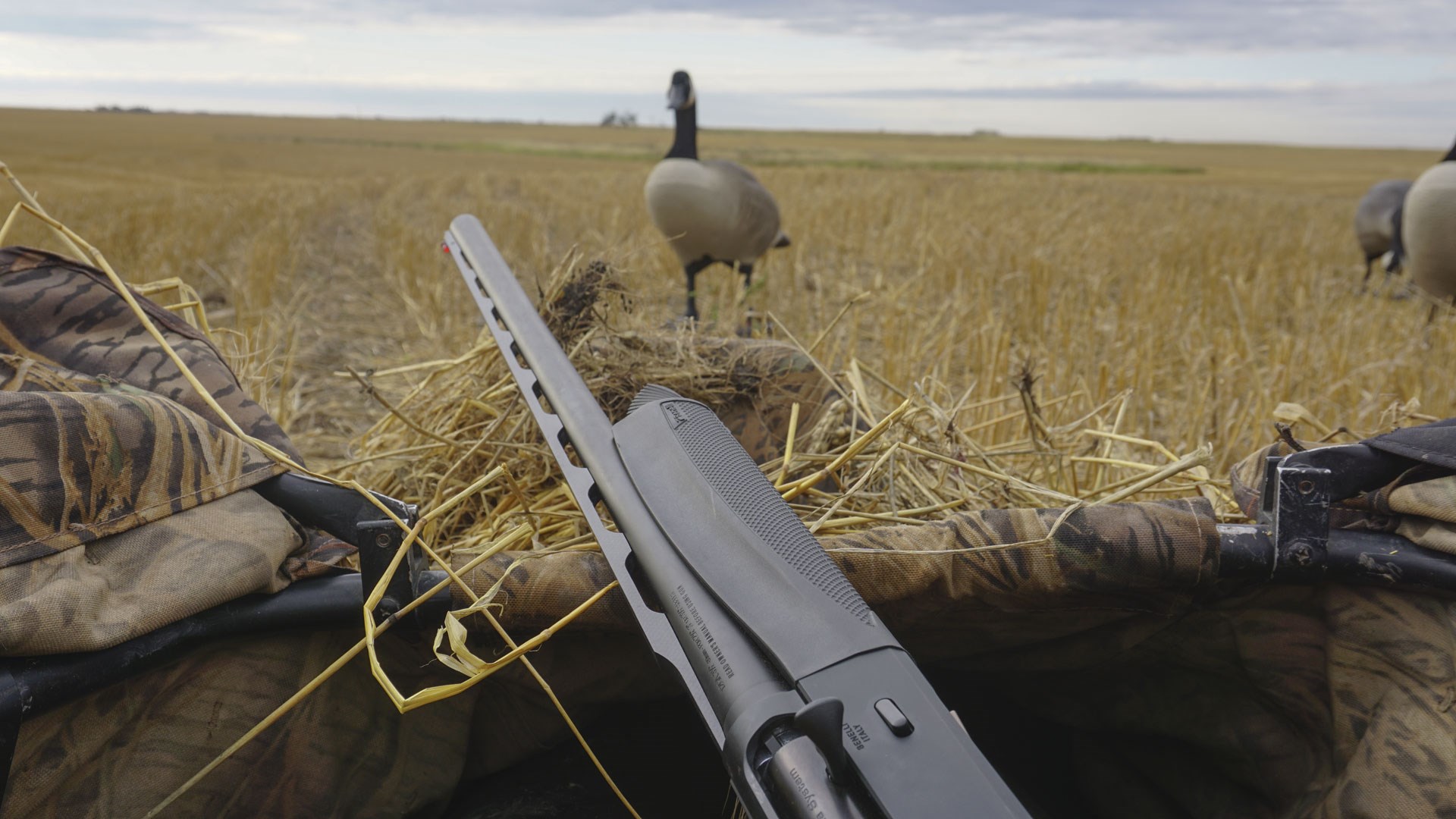
Though it’s true that every waterfowl hunt I’ve ever been on has, in some way, been an indirect beneficiary of programs like these, the proximity of this one to the science really brought it all home. As we reclined in our layout blinds, listening to the calls and watching the skies overhead for any flash of feathers, it was hard to forget the continental importance of the very flocks and birds we were seeing. In fact, whenever a group disappeared toward the south, it was hard to not imagine I might see them farther on down the line this very season. At the moment though, it was time to lay back and reap the rewards of North America’s brilliant conservation model.
The first morning was one of my favorite sorts of hunts, with singles and doubles trickling in with regularity. While to some hunters that’s not a banner outing, given the lack of massive flights, I love the constant action more than a quick tag-out, with lots of calling, near constant attention to the skies and hours of warm barrels. The next morning, however, included exactly what I had come to Canada to hunt.
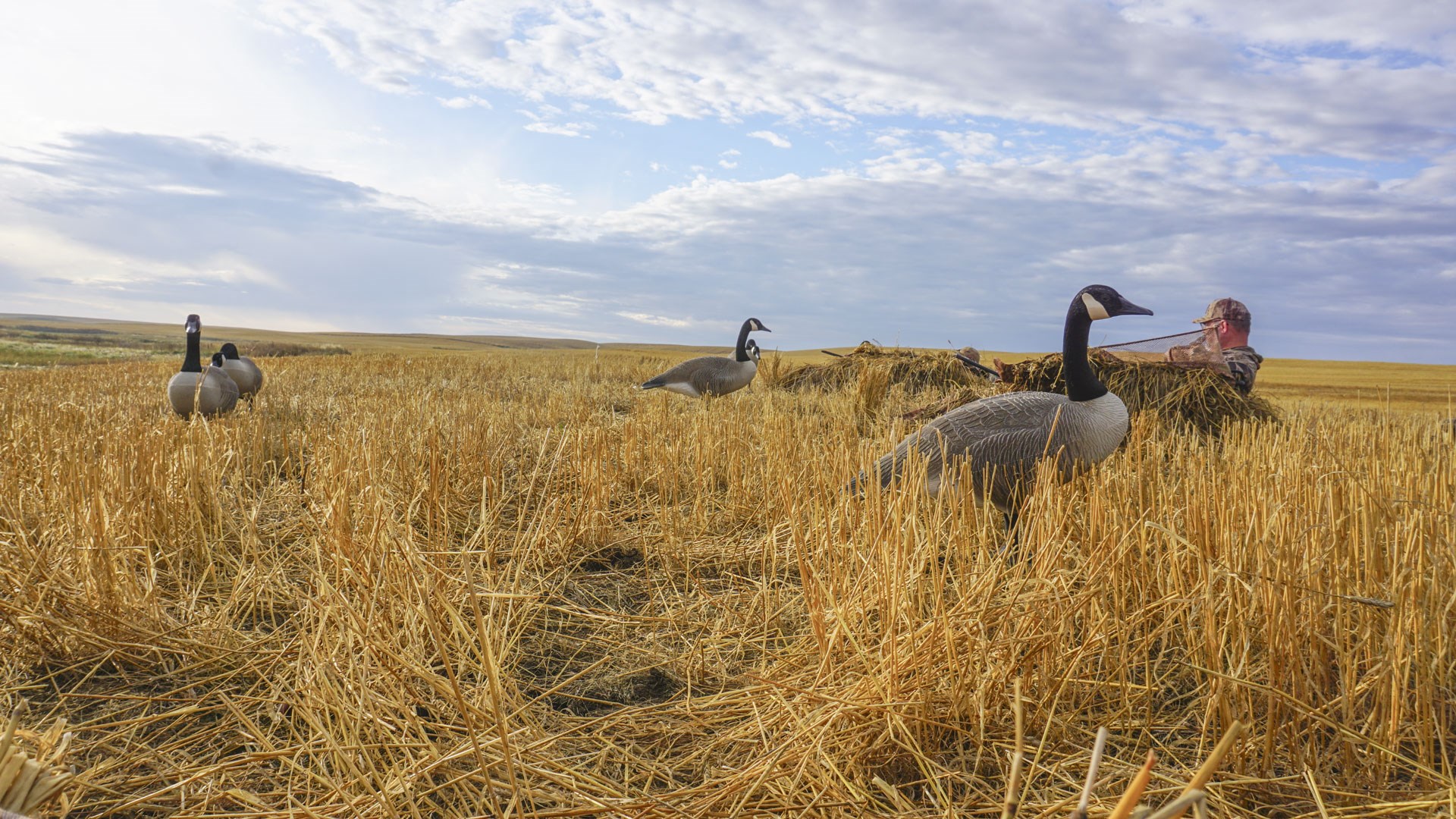
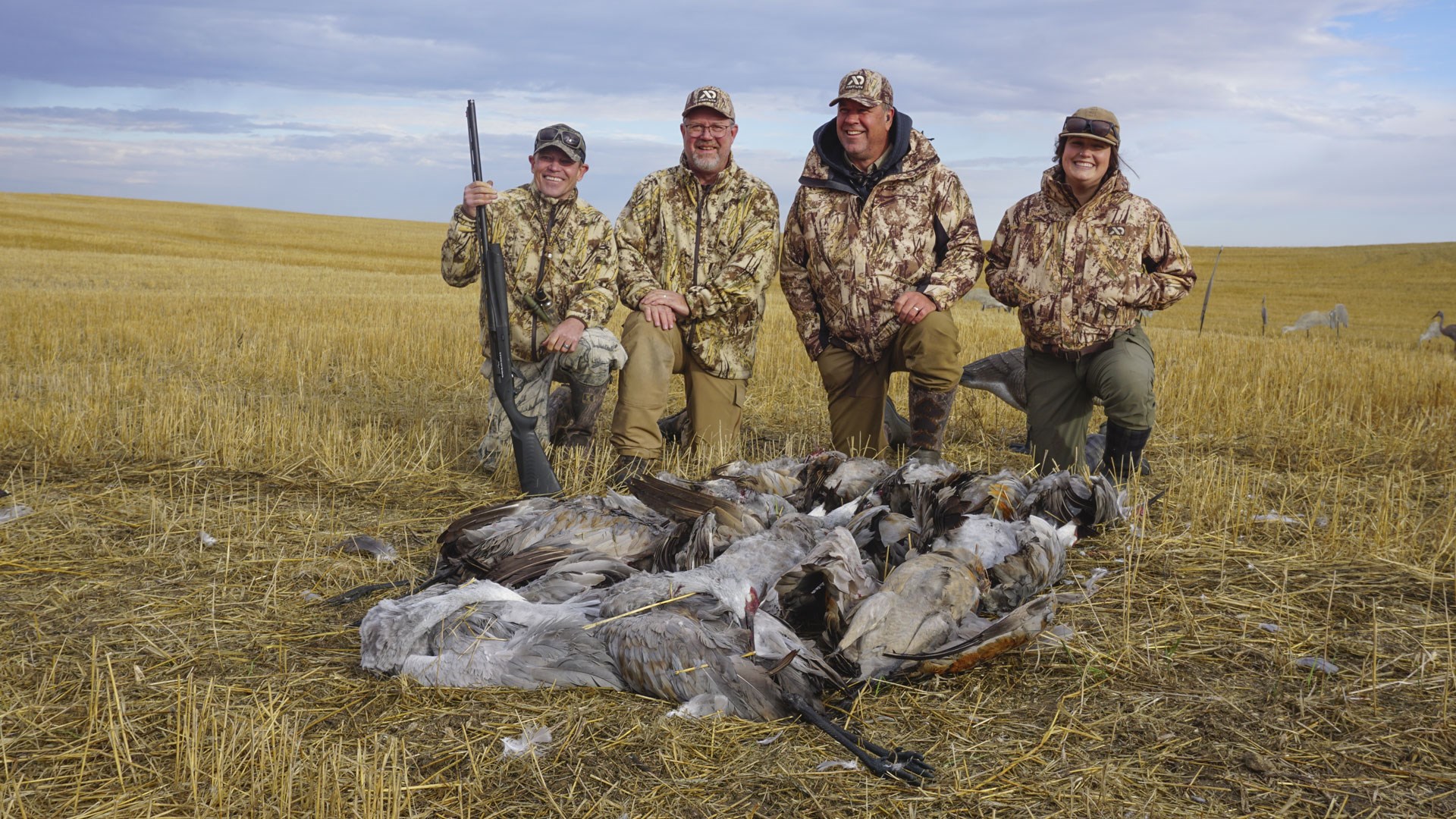
After a slightly late start and a rush to set up our decoy spreads, we laid in wait for sandhill cranes, and come they did. With inconsistent winds, sandhills came in from every direction, causing us to frequently jump out and switch up our blind and decoy angles while birds were out of sight. Shot and birds rained from the skies all morning, as I alternated between firing at birds and munching on some delicious snow goose summer sausage whipped up by AH contributor Brad Fenson. It was a surreal experience, enjoying the thrill of the hunt while also munching on its rewards, all in the heart of one of North America’s premier conservation projects. The outing ended with 18 sandhills down, and we were eager to get them on the grill as soon as possible.
This, really, was the story of this hunt: days with bird-filled skies, and nights of excellent fare, much of it whipped up by Brad from the day’s harvest. An avid waterfowler in his own Alberta backyard, Brad has a wealth of knowledge about how to properly prepare birds like these for delicious results. If you’re curious, head to americanhunter.org for a ton of these recipes from Brad himself.
As I loaded the plane home in Saskatoon just a few short days later, geese, ducks and cranes all in tow, it was with a renewed appreciation for organizations like Delta Waterfowl, and the important work it does to keep our skies full for generations to come. If you’re curious about Delta’s work, head to deltawaterfowl.com to read up on its mission and current projects. And of course, if you’re interested in having a hunt like this all your own, check out Honker Heaven Outfitters (honkerheaven.com).
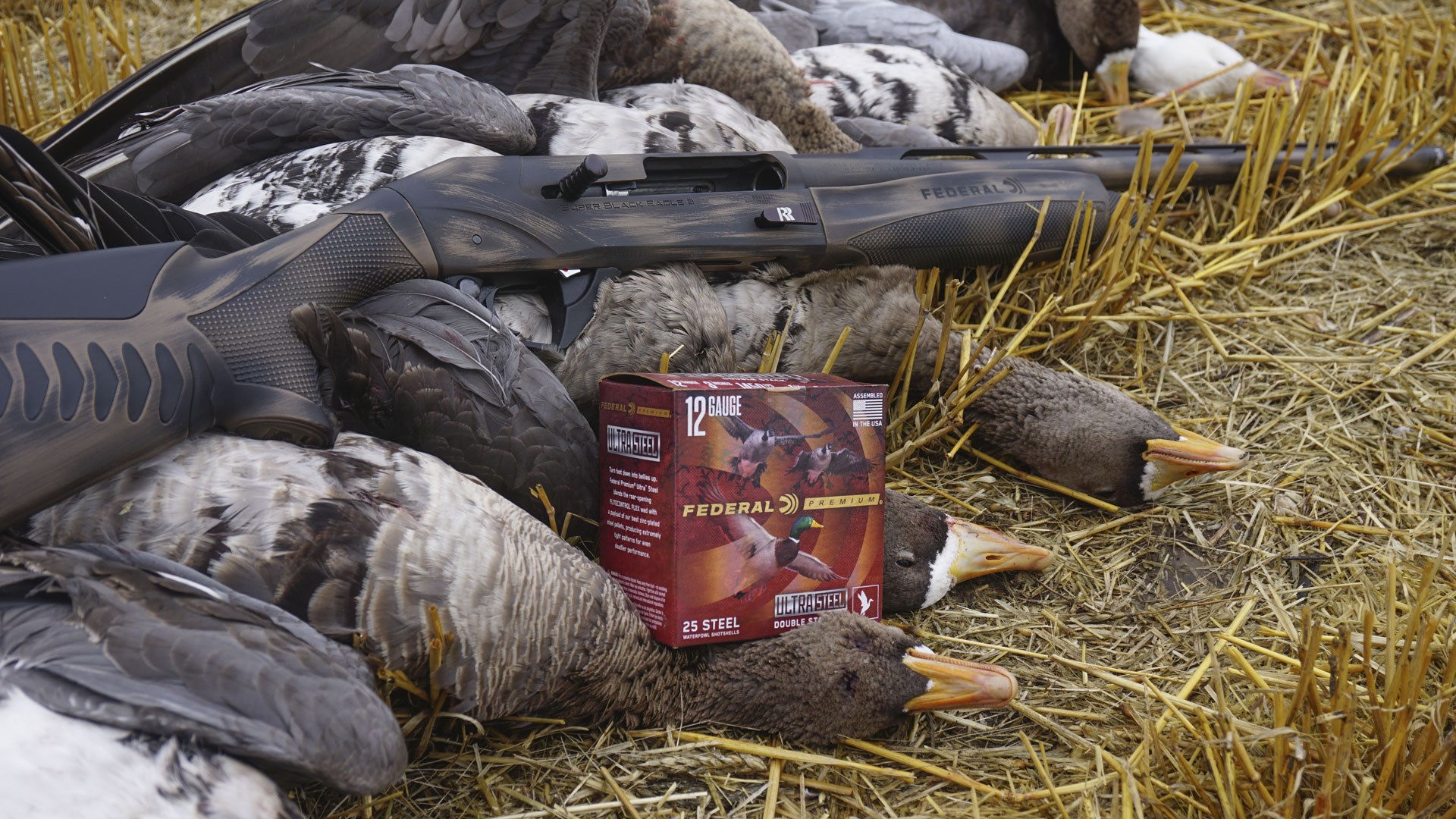
Federal Premium Ultra Steel Double Stack 12-Gauge
I’ve been an alloy convert since the first time I fired it. Whenever I go afield after waterfowl—geese in particular—I make certain I’ve some form of bismuth or tungsten alloy on hand, to ensure whatever I hit bellies up like a target from an ’80s arcade game. This hunt changed that. Don’t get me wrong, I still love alloy, but it’s expensive, and waterfowling is a high-volume endeavor; there’s simply no way around it. This in mind, the ballistic geniuses over at Federal Premium created a new load termed Ultra Steel, and let me tell you, it hits at least as good as most bismuths for a fraction of the price.
So how do they do it? A lot of the magic is in the double stack. Coming in BB- and 2-shot, 2- and 4-shot and 3- and 5-shot variations (we were using the first two), double-stack versions of Ultra Steel place a column of zinc-plated steel behind a FliteControl Flex wad for unbelievably dense patterns—the smaller shot zipping along in the slipstream of the larger like a racecar driver drafting a teammate. While steel may not be as physically dense as lead, bismuth or tungsten, the density of these patterns more than makes up for it. The larger front pellets absolutely wallop targets with bird-folding energy, while the smaller cloud comes along behind to fill any gaps. I should note that Federal Premium Ultra Steel does come in a standard (non-double-stack) 2-shot load as well. While I can’t speak to its efficacy personally, I’m sure it also hits birds good and hard. For me though? I’ll be reaching for Federal’s Ultra Steel double-stack loads for most all of my personal waterfowling needs for the foreseeable future, particularly given they are available for both 12- and 20-gauge. It runs $37.99-$42.99 for a box of 25. federalpremium.com
Most Popular