If you’re looking for a happy hunting tale, complete with a satisfying ending and a big grip-and-grin, skip this one. You’ll be disappointed. This is a story about losing, dejection, a measure of redemption and the lessons that sprouted from it all. Intrigued? Read on.
As the pale Saskatchewan sun found us trudging through a dense thicket, hot on the bloodless trail of a running deer, I felt my heart begin to sink to a rarely plumbed depth. The previous 12 hours had been a rollercoaster of euphoria and rank despair.
The previous day, at hour 42 of my intensive, weeklong vigil of all-day sits, I had watched my target buck saunter toward me across a field of brushy willows. As I watched the stately set of antlers make its way across the field, just visible over the tangle of brush, I felt my pulse quicken. A few deep breaths steadied me as I made my plan.
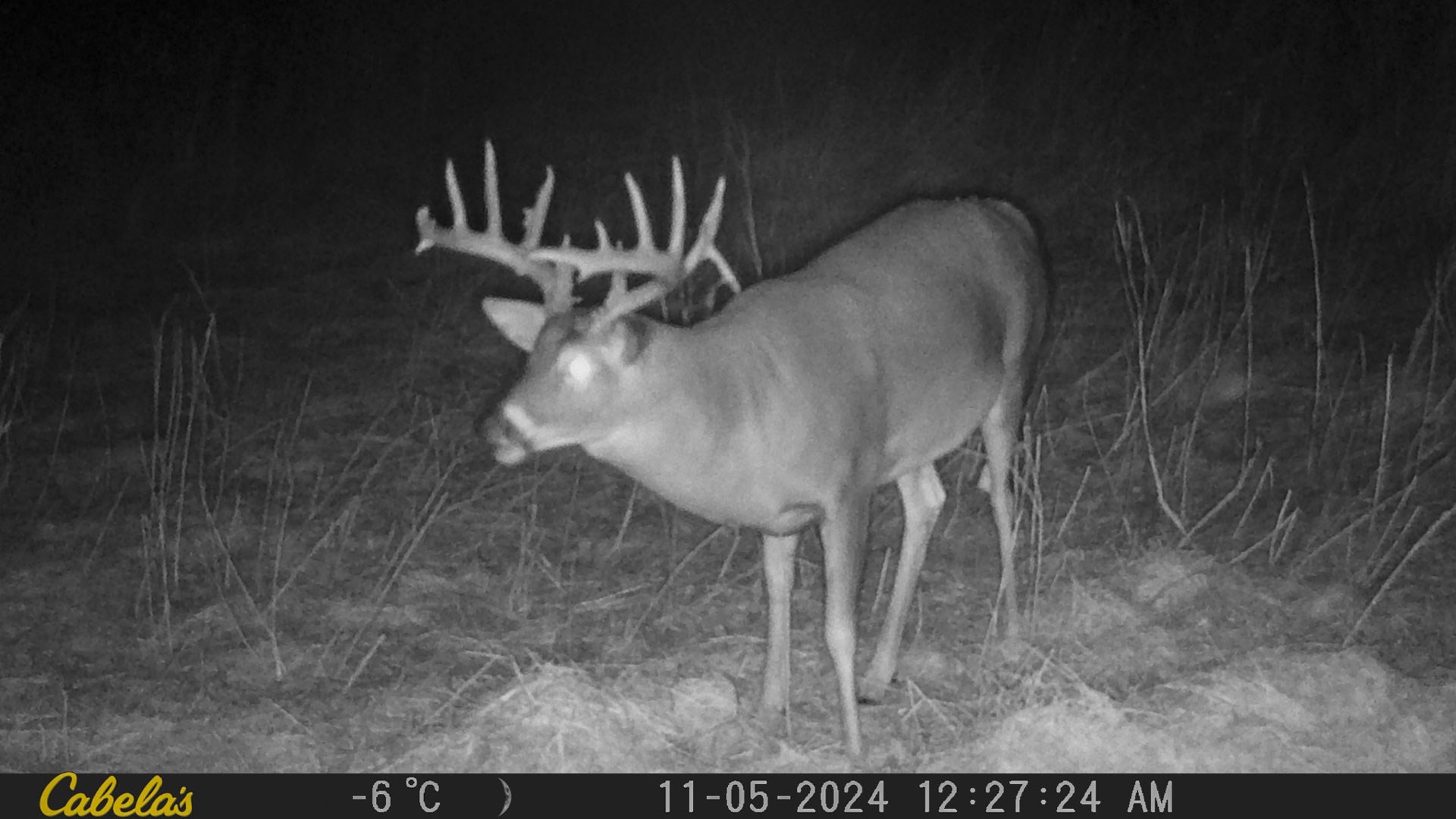 Trail cam photos of the giant buck greeted the author upon his arrival in camp, but the deer didn’t appear in daylight until day four, and then only briefly.
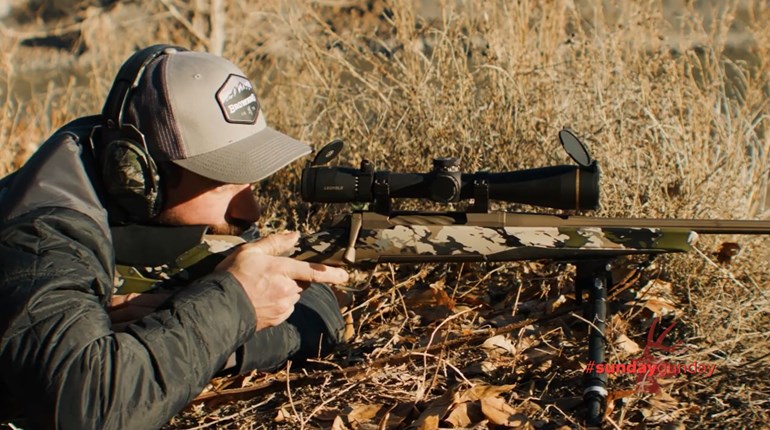
This was the buck I had been waiting for all week. As I sat watching precious little stroll by over the previous days, I had begun to call him “Stickers,” constantly imagining I had just caught sight of him in a faraway bush. Now he was here for real and locked onto a doe. Where she went, he went, pacing her every step. This could end up a tight shooting window, as I had a feeling he was fully disinterested in satiating any other sort of hunger. I zoomed in my LPVO, maintaining a comfortable balance between a precise sight picture and a view of the deer’s entire body, as I tracked him through my scope. He stayed perfectly broadside. First his whole head appeared, then his neck, then the top of his shoulder began to peek through the cover. As soon as he broke cover entirely, I’d take my shot.
Slowly, the doe fed into the alfalfa at the edge of the brush. The buck stopped on the edge of the willows, drinking in her every movement. Then, the unexpected happened. Instead of continuing on her way, she fed to the rear of the clearing and turned back into the cover whence she came. Heart in my throat, I begged the buck to take two more steps.
Finally, he moved, but it was the wrong way. His head turned, following the doe. Then his off-side leg moved back. He was beginning to turn, to follow the doe back into the heavy brush. Less than two hours of daylight remained. One day was left in the hunt. This was his first time out in daylight in the four days I had been here, and there was no guarantee I’d see him again. In fact, the opposite was likely true. What cover was still in front of him was thin—his vitals were clearly visible, with only a few wispy twigs and grasses cutting tiny lines down his side. My mind whirling with risk and reward, I settled into my gun and squeezed the trigger.
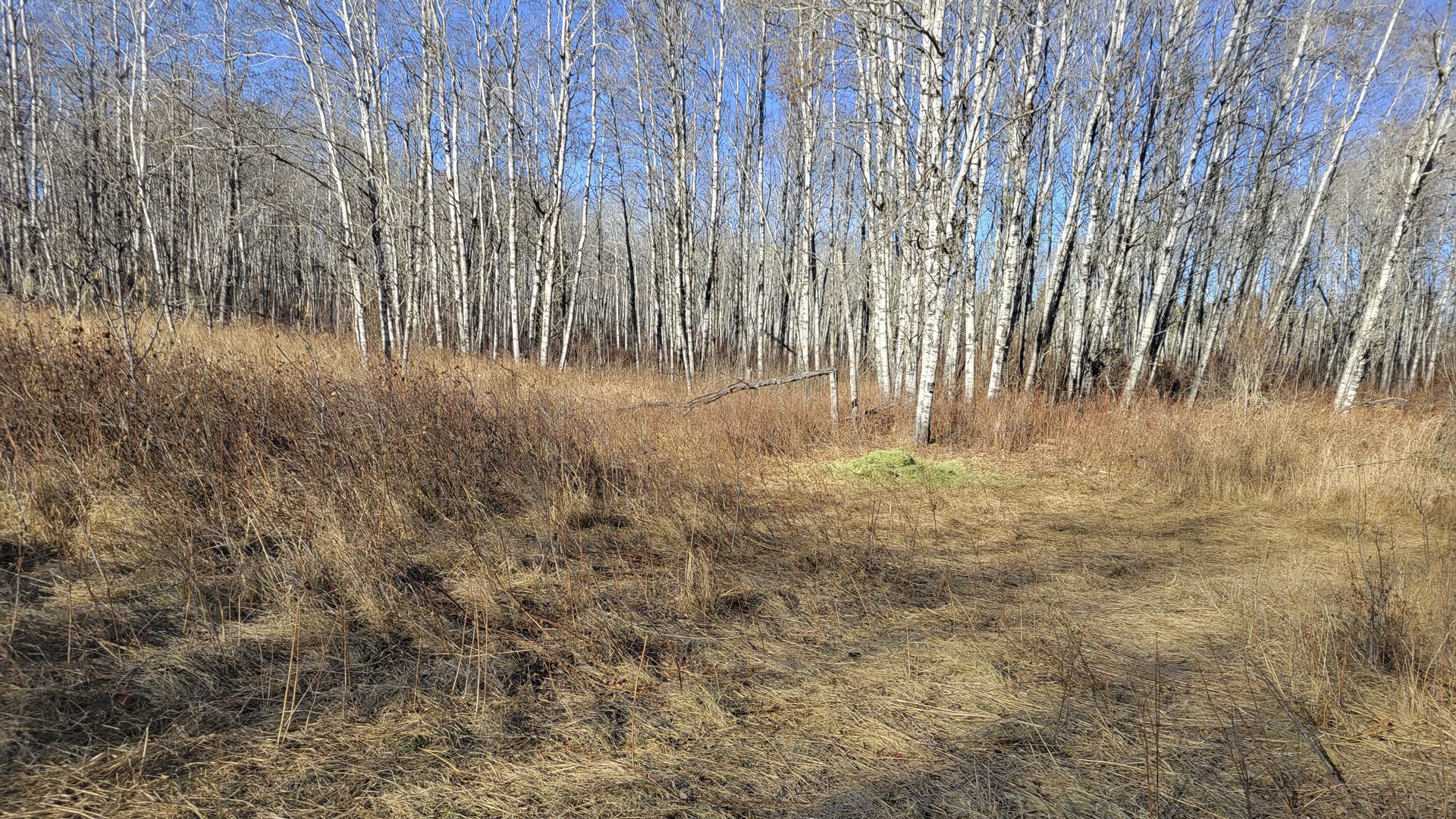 The buck stood barely 10 yards to the left of the alfalfa at the time of the shot.
The shot echoed in the blind. My eyes locked wide on my target, I watched the deer hunch, kick and crash across the clearing into the tree line. The biggest buck of my life was down. I exhaled a shaky, happy sigh and texted Ashton, my guide in this dense Northern forest, to let him know the deed was done.
An hour later, as we bushwhacked through the thick undergrowth a couple hundred yards and two hills away, my mood could not have been more reversed. No speck of blood or tuft of hair had we found. Had my bullet deflected off some tiny piece of cover? But it couldn’t be. The deer had done a perfect heart kick, I had seen it. Conflicted, I trundled along, until suddenly we heard it: a deer, stumbling unseen through the gnarled undergrowth just ahead of us. It crashed 10 yards, then stopped. We waited, then moved again. It crashed again. After another repetition, with light fading, we pulled out and decided to come back in the morning to find the deer. I wasn’t sure what had gone wrong, but it seemed something had—it sounded like there was a lot of life left in that deer.
This brings us back to the beginning of my story. Six of us, hunters and guides alike, had descended on the spot where we last heard the deer to try to pick up a trail. We fanned out and scoured the ground for hours, but only ever found clear signs of a deer in fast flight—no hair, no blood, no nothing. Discouraged, we went back to the point of the shot and, on hands and knees, looked for any fleck of blood or tuft of hair, finding absolutely nothing. Finally, what everyone had been thinking was said out loud: I must have missed.
Agreeing with the whopping pile of evidence (or lack thereof), I headed to the blind and sat out the rest of my final day. As I sat dejected in the dead still of a Saskatchewan afternoon, though, something gnawed at the back of my mind. I’m far from the world’s greatest hunter, but I’ve been killing deer since I was a teen. If that deer hadn’t heart-kicked, it was a damn good actor. With this small doubt lingering, I resolved to follow the advice fellow hunter Eddie Stevenson had given me, and when we pulled out the next morning I left my tag with Ashton, just in case.
Two days, a long, cross-border drive and a flight later, I was sitting in the Denver airport penning this very story. My phone buzzed. I set down my pen. Ashton’s name appeared on the screen.
“I just got one question,” he said.
“Sure man, what’s your question?”
“Shoulder mount or European?”
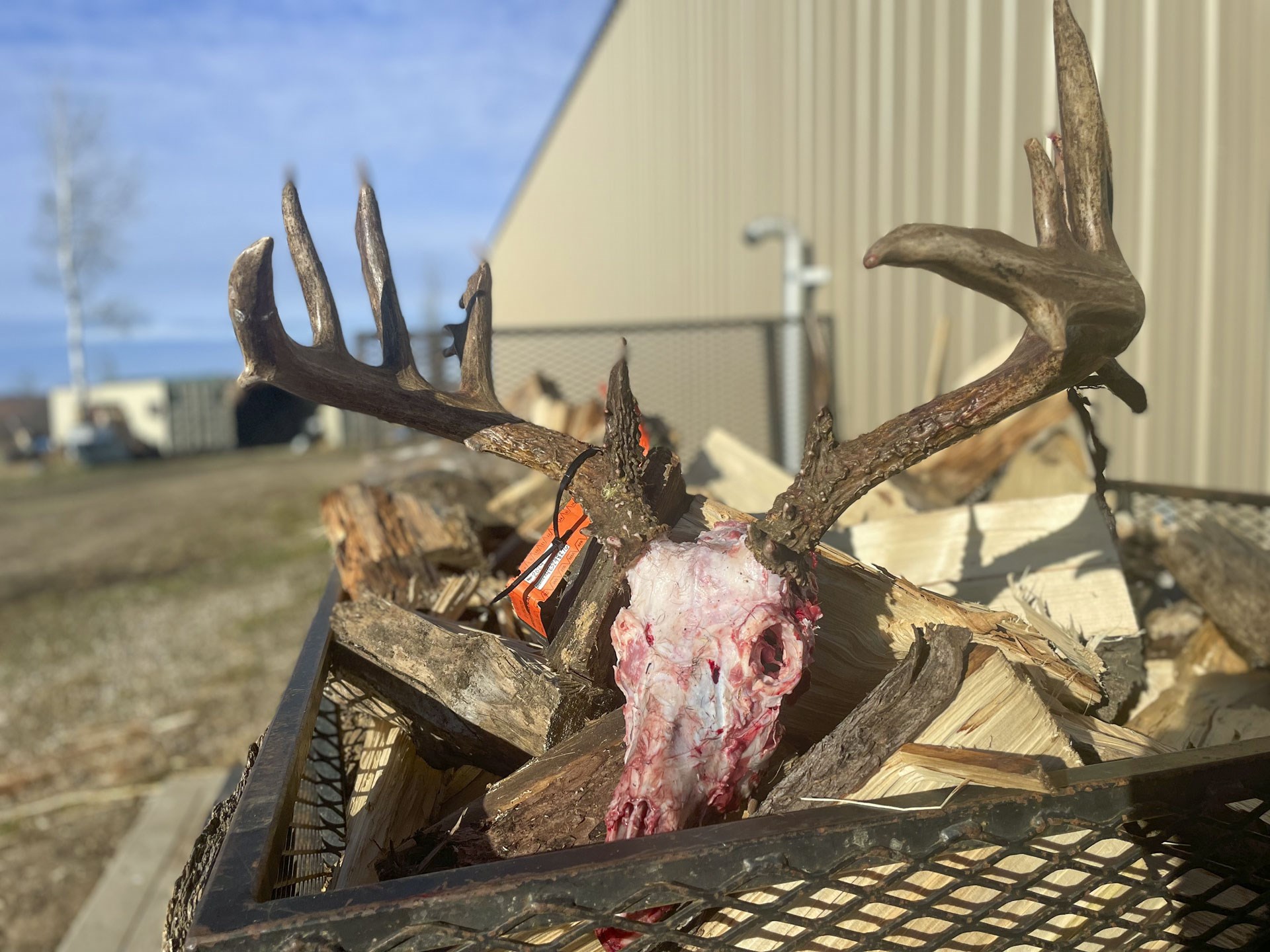
As my head slowly cleared and my jubilation subsided, I got the full story. Ashton had found the deer when he went to pull cards from a nearby camera. The buck had barely run 20 yards from where I shot him before nosediving beneath the thick undergrowth. After I had watched him break the tree line on a well-trodden trail, he had turned abruptly and crashed unseen into a thicket so dense the wolves, coyotes and even the birds all missed him for days. Eventually, of course, the birds did zero in on him, which led Ashton to the spot. Our search party had walked within a mere 10 feet of him at one point. The amount of fat on this massive Northern whitetail—potentially north of 300 pounds on the hoof—was simply enough to plug the hole, leaving no blood trail for us to follow, even though my bullet had passed right through his vitals.
As the initial wave of relief passed—that I had not actually botched a 60-yard chip shot—it was quickly replaced by pure disappointment in myself. I take no small measure of pride in provisioning myself year-round from my hunts, and the usual consolation of “nothing really goes to waste, the animals eat it” rung hollow. I had wasted a beautiful animal—what might be the largest whitetail of my lifetime. How could I ensure this would never happen again? This in mind, I picked up my pen again and began a list—what my mother, in her frustratingly endearing (though wholly correct) way would call “lessons learned.”
To begin with, never forget the fundamentals. Cutting for sign is done in concentric circles for a reason—the animal hasn’t always gone where you think. Sometimes, you’ll watch him disappear straight one way, and he’ll cut a 90 on you as soon as he’s out of sight. That’s what happened here. Convinced of his path, I put us straight onto the trail of a completely different deer, leading us farther and farther from our quarry. Had I cut a few circles, I would have been on top of him within a quarter-hour.
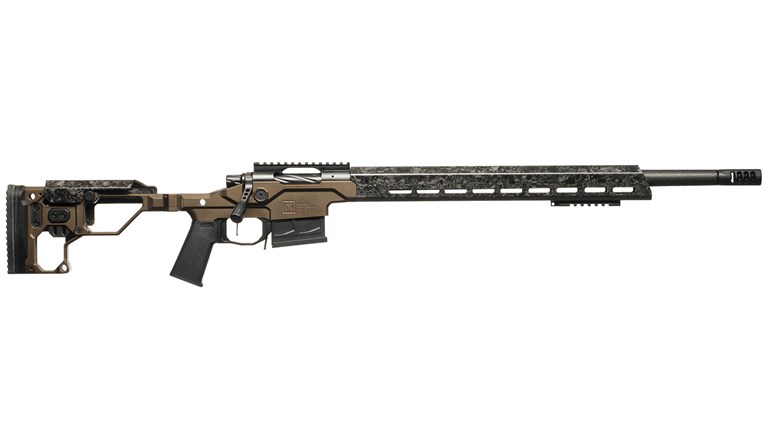
Next, bring enough gun. Despite my primary deer rifle being an old .30-06, I’ve never really understood the reticence around 6.5 Creedmoor. I’ve taken plenty of animals with the cartridge, and if you do your job it will put any deer in the dirt. Turns out, I was both right and wrong. The 6.5 Creed did indeed kill and kill quickly. But the deer was so fatty it left no blood and no way to trail the mortally wounded animal. I would have been better served with a bigger hole and a gushing exit wound. I’ll still never frown on anyone using the cartridge on whatever they are legally allowed to—the best thing you can hunt with is what you shoot best and what feels most comfortable. For me, however, 6.5 Creed will be relegated to pronghorn and Southern whitetail-sized animals in the future, as I want every edge available to recover my animal.
Finally, trust yourself. This isn’t an encouragement to empty bravado or boorish know-it-all-ism, simply an admonishment to have confidence in what you do know. I’ve seen 100 deer heart-kick, but when no blood turned up I started second-guessing myself almost immediately. Instead of giving into despair and conjecture, I should have racked my brain for tracking tactics and pounded the dirt until I found him.
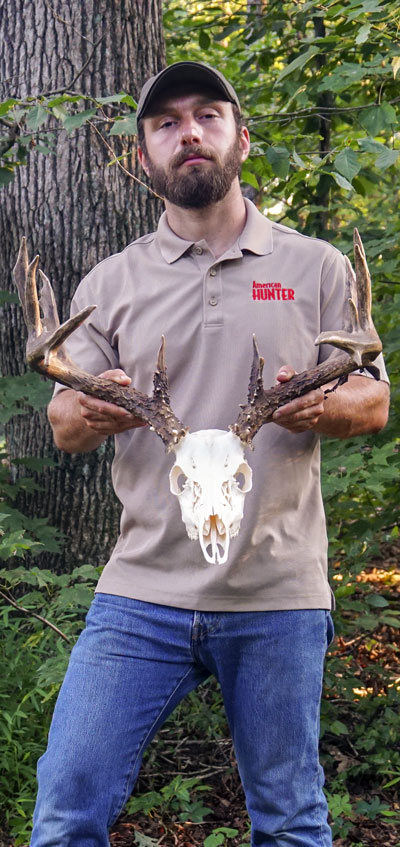
My Euro mount arrived yesterday. It was a surreal feeling, laying hands for the first time on something I had killed more than six months before. The deer is a giant, dwarfing most everything else on my wall, but he will forever remain more a lesson than a trophy. In that way, I suppose he might just be the most important deer up there.
If you’re interested in chasing a deer of this caliber, check out Safari River Outfitters (safaririver.com)—the folks up there know exactly where the monsters live, and are happy to put you on one. If you do though, do me a favor: Don’t lead your guide on the sort of wild goose chase that I did. I made those boys walk enough for a few seasons.
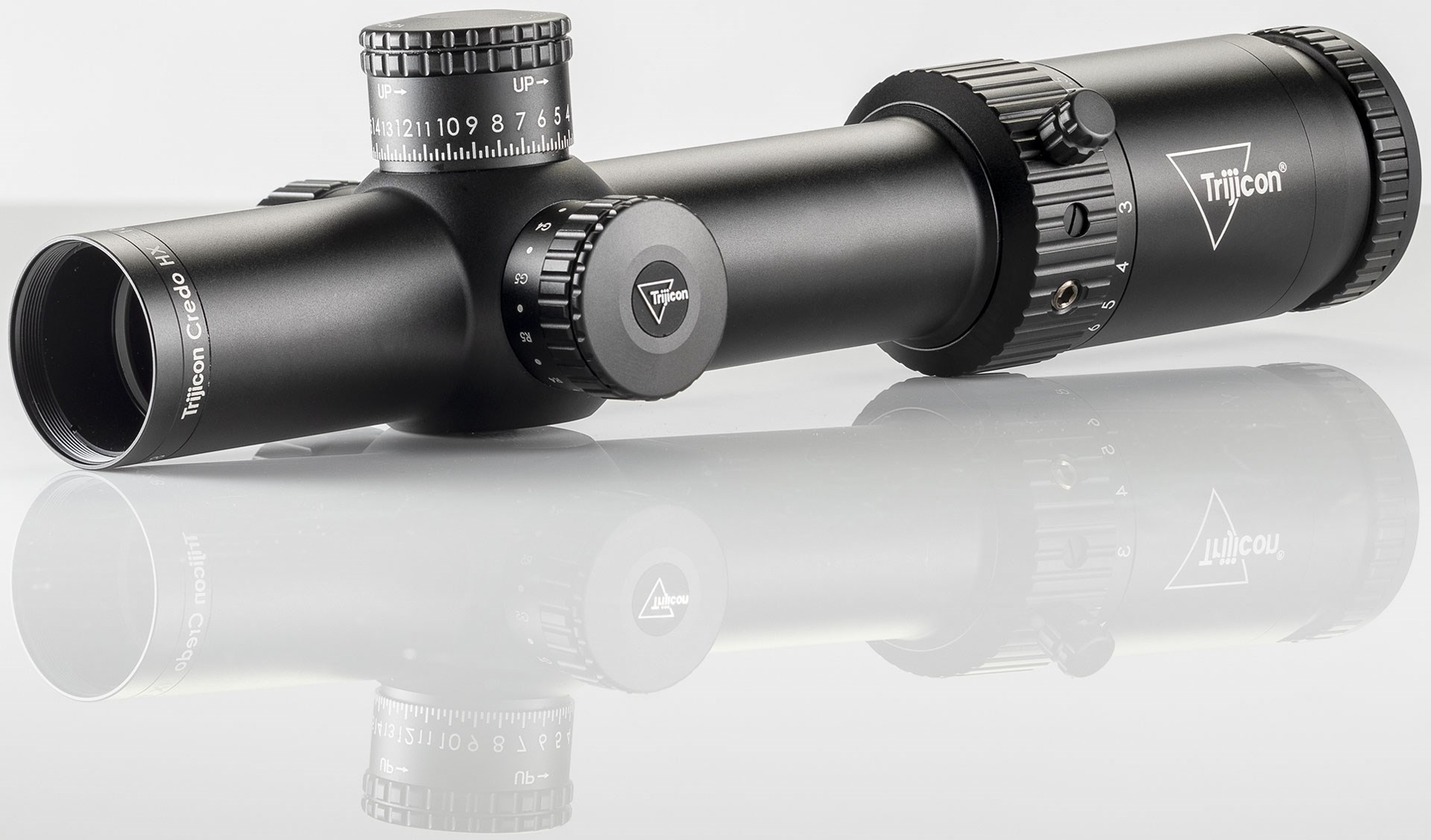
Trijicon Credo HX 1-10x28mm
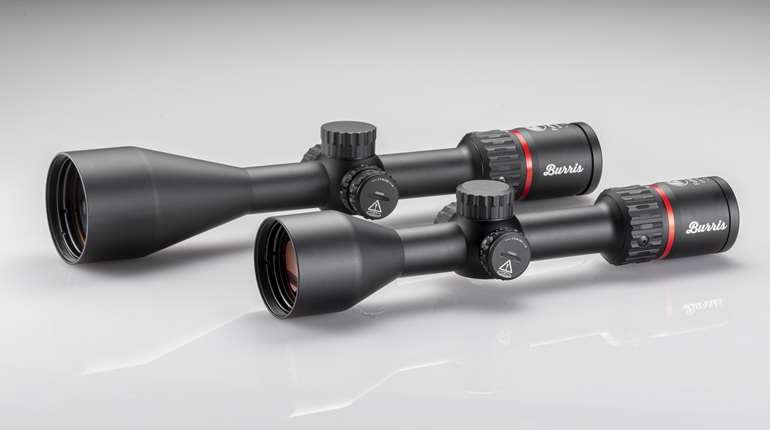
It will be hard to add anything about the Trijicon Credo HX 1-10x28mm that I didn’t already touch on in the review I wrote last year (“Hardware,” December 2024). Simply put, it is a perfect optic for deer hunting. Most whitetail hunters rely on a classic 3-9x40mm, or even the old fixed 6. This has more magnification than either of them while maintaining a 1X bottom end perfect for close-quarters snap shooting. Meanwhile, its objective lens may be smaller, but the quality of Trijicon’s internals and lenses mean the picture is bright and clear from dawn till dusk (for a more thorough debunking of the objective lens myth, see that Hardware in last December’s magazine). Finally, in addition to all this the scope boasts a first focal plane Bindon Aiming Concept (BAC) Segmented Circle Enhanced illuminated reticle with elevation and windage holds, as well as ballistic turrets for even longer shots. Altogether, that makes the Credo HX 1-10x28mm (MSRP $2,150) about as do-it-all a scope as they come, and the perfect optic to chase anything from deer to dogs this fall. It is our 2025 Optic of the Year. trijicon.com