For most individuals, the term “camping” conjures images of children giggling while roasting marshmallows and/or making smores around a contained campfire, or friends—or like-minded individuals, such as hunters—sharing stretched-truth stories embellishing the dimensions of difficulty of an outing. Why? Well, the media and Hollywood portray it as such and thus it’s ingrained in your psyche, or, like me, you’ve experienced camping firsthand as a family, Boy Scout and/or hunter. Camping is special, but it has the potential to become deadly, quick.
In the past two decades, I’ve hunted big-game in areas as diverse as Africa’s Eastern Cape; Kodiak Island, Alaska; Montague Island, Alaska; backcountry Mont.; and remote British Columbia, to name a few. Although vastly different with regards to the flora and fauna (among other things) there is a commonality among them—dangerous species. Brown and black bear, as well as grizzlies, wolves, mountain lions and leopards, were standard inhabitants.
In each of the aforementioned locales, I walked amongst recognized killers of humans, and where, to borrow a line from deceased rapper Coolio, “death ain’t nothin’ but a heartbeat away.” The reality is that nothing is guaranteed, and a misstep or unfortunate chance meeting could rapidly dissolve into a life-or-death scenario. Navigating, and especially camping, in predator-filled places puts you at an elevated risk of attack. Being observant, using common sense and taking steps to mitigate hazards—such as maintaining a clean campsite devoid of attractants—can help, but one must be prepared in case the situation deteriorates. In those instances, it’s likely only a firearm will save you.
Obviously, “camp” can differ significantly. One for a solo fly fisherman alongside a five-star trout water will be dissimilar to that for a hunting base camp in the rugged, unforgiving Wyoming wilderness, or camping with friends or family on the “back forty.” Tent quality and quantity, food preparation and storage, terrain, proximity of travel (within camp), and, most importantly, fauna, will fluctuate greatly. For the purpose of this article, I’ll focus on worst-case camp defense, and the firearms, setups and ammunition will reflect it. Believe me, they’ll suffice for nigh all four-legged terrors, as well as any homo sapiens that choose to mimics their lethal wild counterparts.
Base Considerations
Be it a handgun, rifle or shotgun, a firearm meant for camp defense needs to be compact, as it’ll likely be employed in tight spaces, such as a tent or while following a vegetation-choked trail. Fateful encounters often take place without notice, so getting it into action quickly is essential. Barrel length (key to boosting velocity and thus energy for distance work) becomes a hindrance; instead, its span is less important than bore diameter. That is, hard-hitting “stopping” cartridges trump those meant for distance work. And, you want a sizable quantity of rounds on tap.
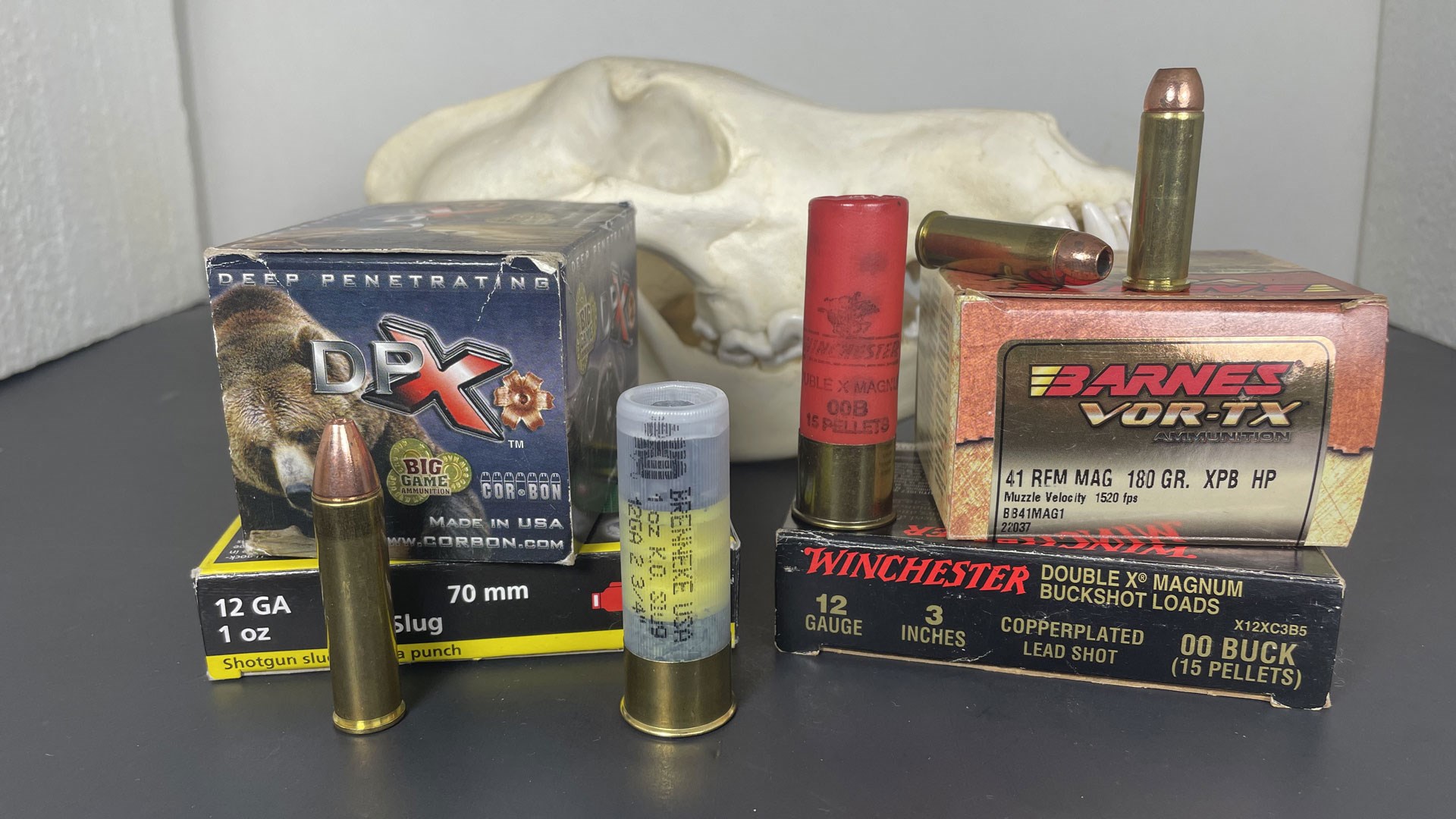
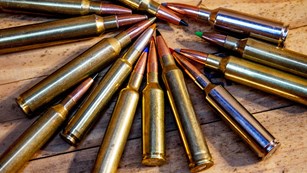
Speaking of cartridges, here are some handy guidelines for serious camp defense. First, the encounter will likely be intimate and fast; it’ll be in-your-face-type action. Secondly, with you likely making a less-than-ideal shot due to duress, the bullet must offset your shortcoming. Your goal isn’t to scare or wound the creature, it’s to stop it—dead. Simply stated, the great predators require big bullets pushed fast. When a feisty grizzly or a hellbent brownie bears down on you isn’t when you want to discover that six .38 Specials to the chest only increase their rage.
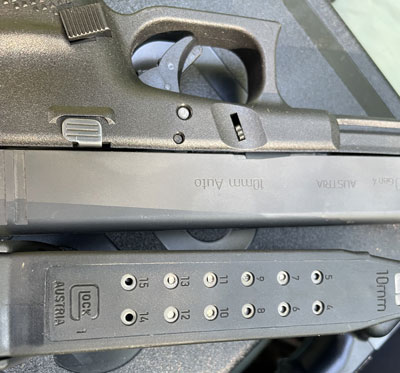
For those who prefer a handgun as their primary (or secondary) camp-defense weapon, outside of a few outliers, semi-automatic pistols aren’t the best choices, and that’s due to lack of suitable chamberings. I’d recommend nothing smaller than the 10mm Auto, though some would argue the stubby .40 S&W is equally good when quality, heavy-for-caliber bullets are used. To each their own.
Some would gravitate to the .45 ACP, a proven manstopper; however, the bullet selection suitable for halting an oversized carnivore or omnivore isn’t great, and those meant for self-defense against humans can fall short. Case in point: I witnessed an overly eager deer hunter shoot a whitetail doe with a .45 ACP-chambered handgun loaded with a top-five defensive bullet, and it only penetrated enough to create a fist-size hole for its innards to escape. Thankfully the deer was located and dispatched, but the situation left a lingering bitterness. It also taught me to use a bullet that’s designed for the task at hand. Other autoloader options include the .460 Rowland, and in the Magnum Research Desert Eagle, .44 Remington Magnum and .50 AE.
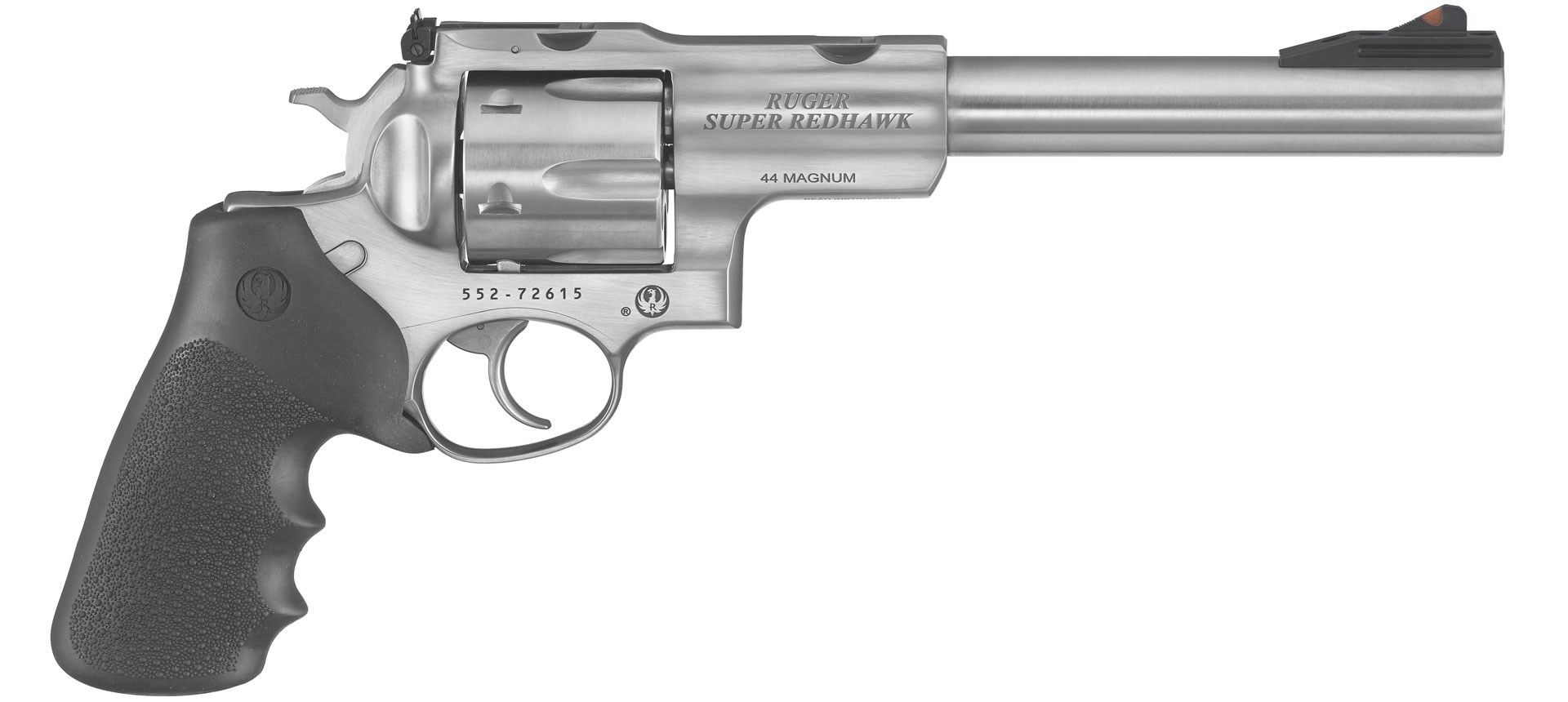
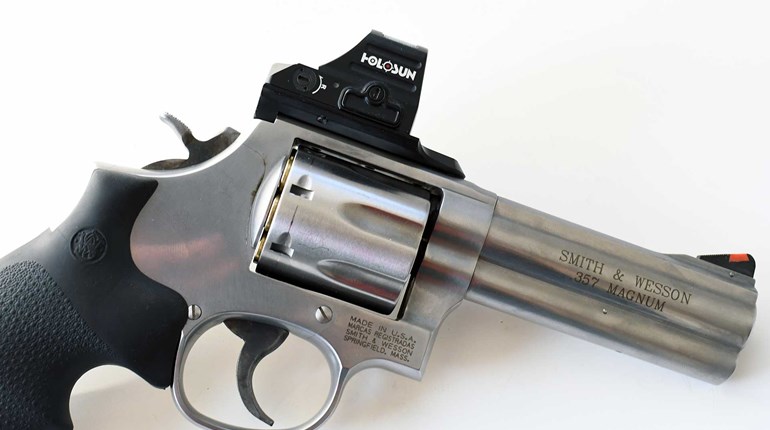
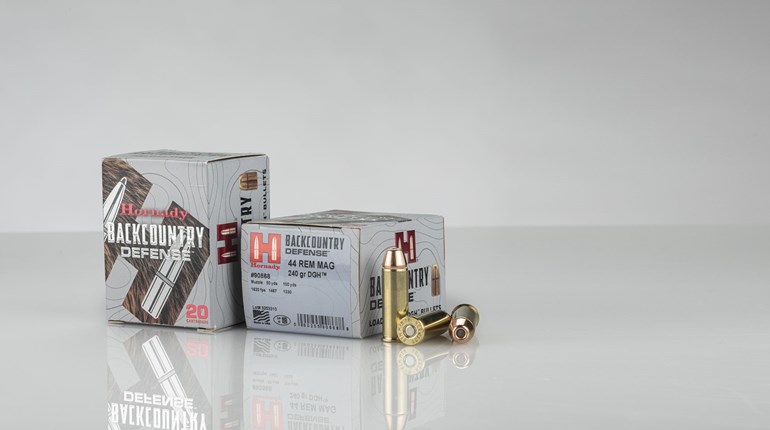
Frankly, a revolver is a better option for the task at-hand. As for cartridges, opt for the .41 Rem. Mag., .44 Rem. Mag., .454 Casull, .460 S&W Mag., .475 Linebaugh, .480 Ruger. or .500 S&W Mag. Outside of the .475, I’ve used them all extensively, and choice comes down to recoil tolerance and firearm dimensions. Even when hunting Kodiak Island, Alaska, a .41 Rem. Mag. (loaded with 250-grain, flat-nose, hard-cast lead bullets) accompanied me, and I didn’t feel unsafe when amongst the mega bears. For most camp-defense scenarios, said combination would a good choice—especially for those unaccustomed to using magnum handgun cartridges.
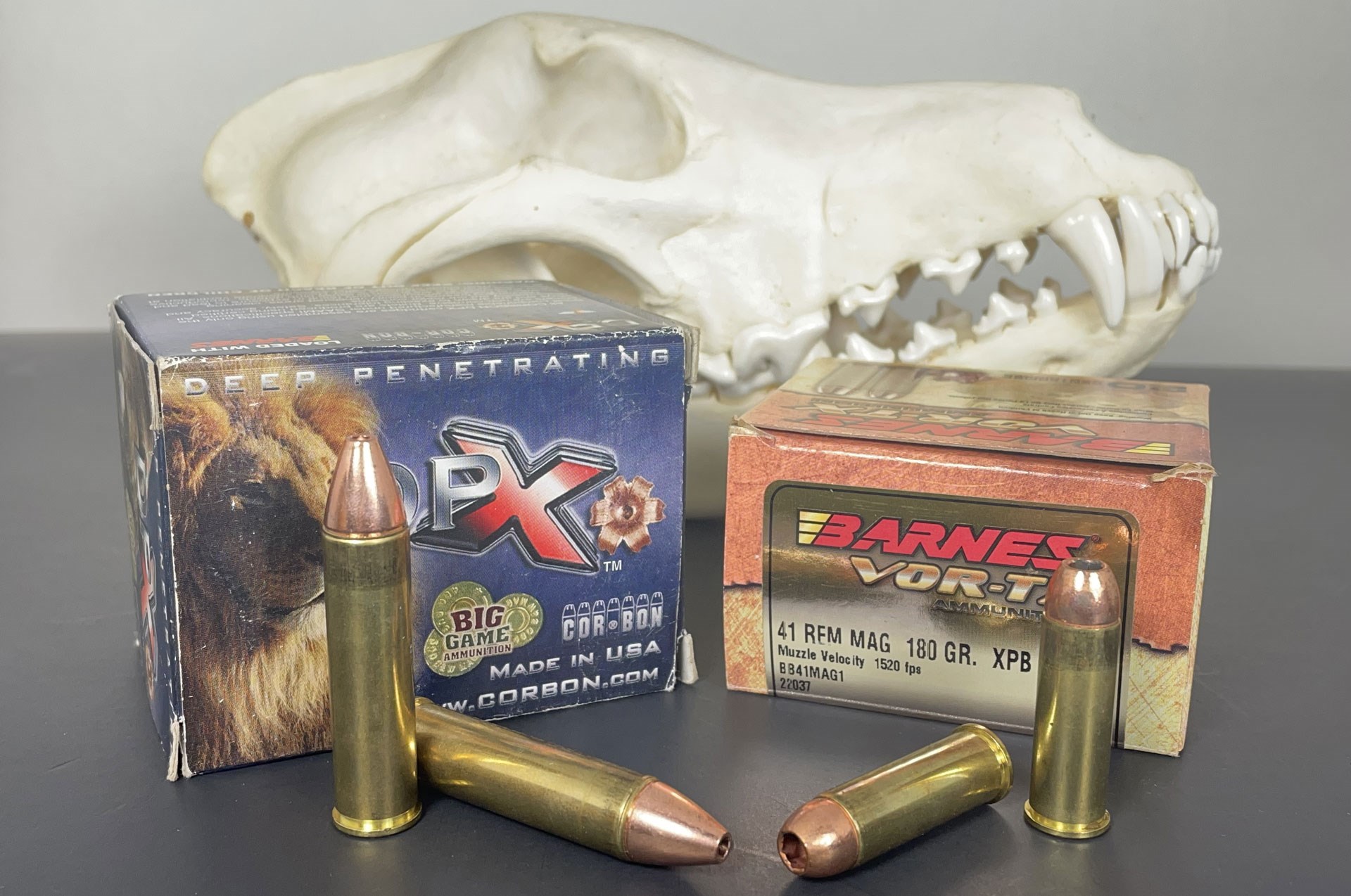
The vaunted .44 Rem. Mag. isn’t too punishing, but it does take a lot of range time to tolerate. Beyond it, though, are chamberings that few people ever become accustomed to, let alone master. And, enhanced bullet size won’t fully counteract poor accuracy (and certainly misses) in a self-defense scenario. Even today, Dick Casull’s .454 is arguably still the best insurance policy for big predators—if you can handle it. Why? It offers high velocities with tough, 0.452-inch-diameter bullets, and yet it can fit in relatively small handguns. Bigger cartridges, larger handguns.

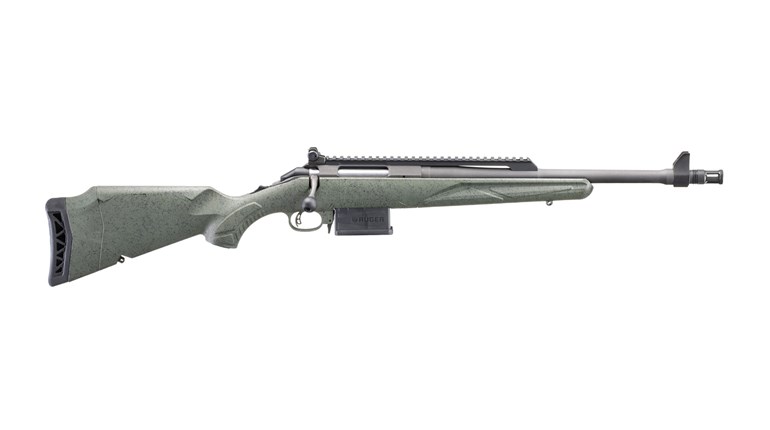
Rifles are no different than handguns; size matters in self-defense. For me, camp defense starts with .35-caliber cartridges, though bigger is better. Since autoloaders and lever-actions top the list of action types for defensing one’s campsite, I’ll focus on cartridges suitable for those platforms. The ubiquitous AR is a phenomenal choice, given that the correct chambering is selected. Cartridges to consider include the .400 Legend, .450 Bushmaster, .458 SOCOM and .50 Beowulf. Lever-actions offer more options, with such top performers being the .360 Buckhammer, .38-55 Win., .375 Win., .44 Rem. Mag., .444 Marlin, .454 Casull; .460 S&W Mag., .45-70 Gov’t, .450 Marlin and .500 S&W Mag. Having a revolver and lever-action chambered for the same cartridge is the icing on the cake.
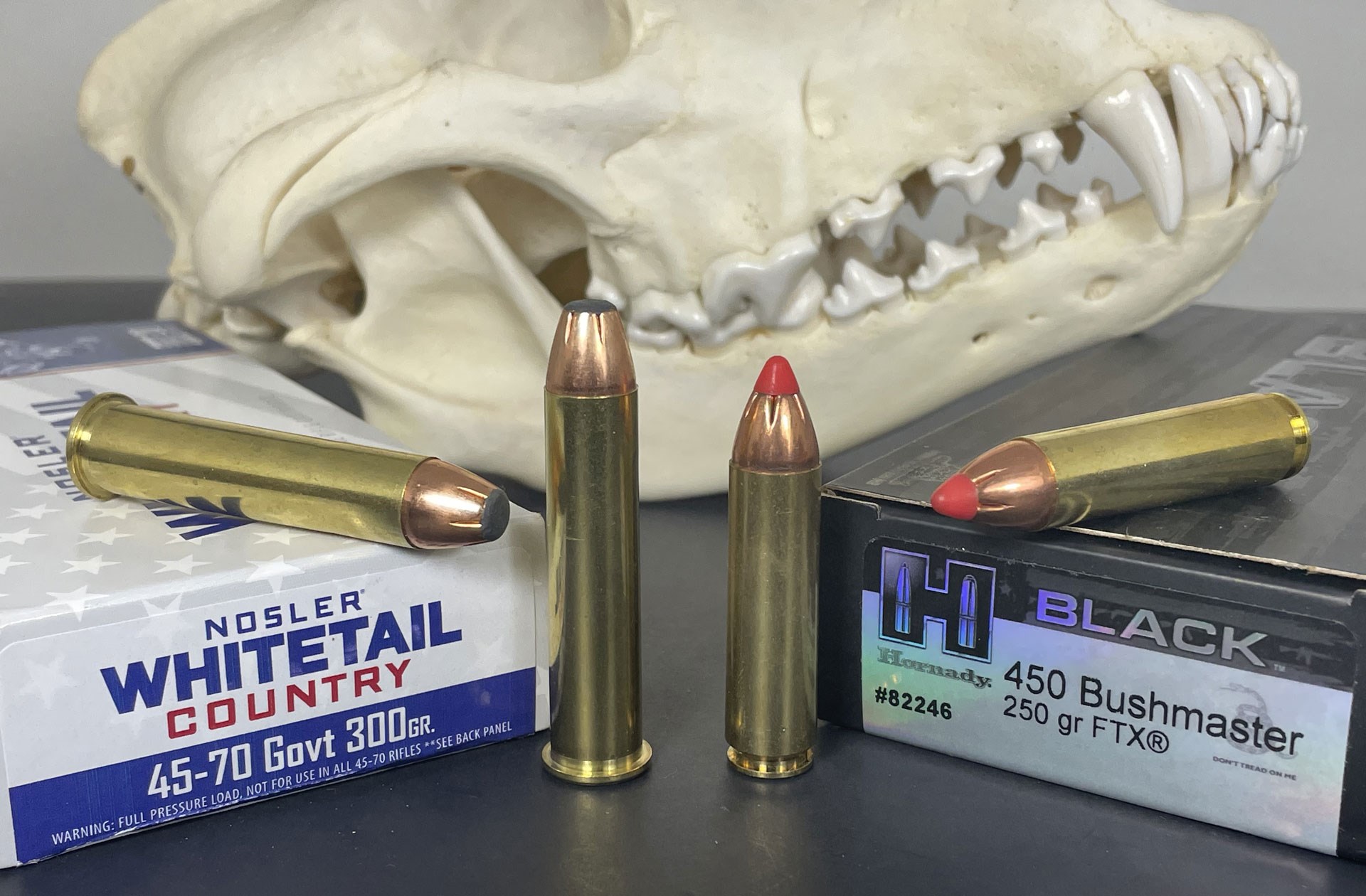
Handgun and rifle bullets need to match the animals they’ll be pitted against. Projectiles designed for range work or personal defense (against humans) should be immediately dismissed, as should light-for-caliber bullets. Penetration is paramount. In general, you want a hefty, controlled-expansion or inextensible projectile that’ll penetrate deep, regardless of what’s encountered. This includes bonded, all-copper (or gilding metal) and hard-cast, lead-alloy bullets. Simple “cup-and-core”-style bullets will work for smaller, thin-skinned and lightly muscled species, but there’s a risk of jacket-core separation and limited penetration, too, so why risk it. Go stout.
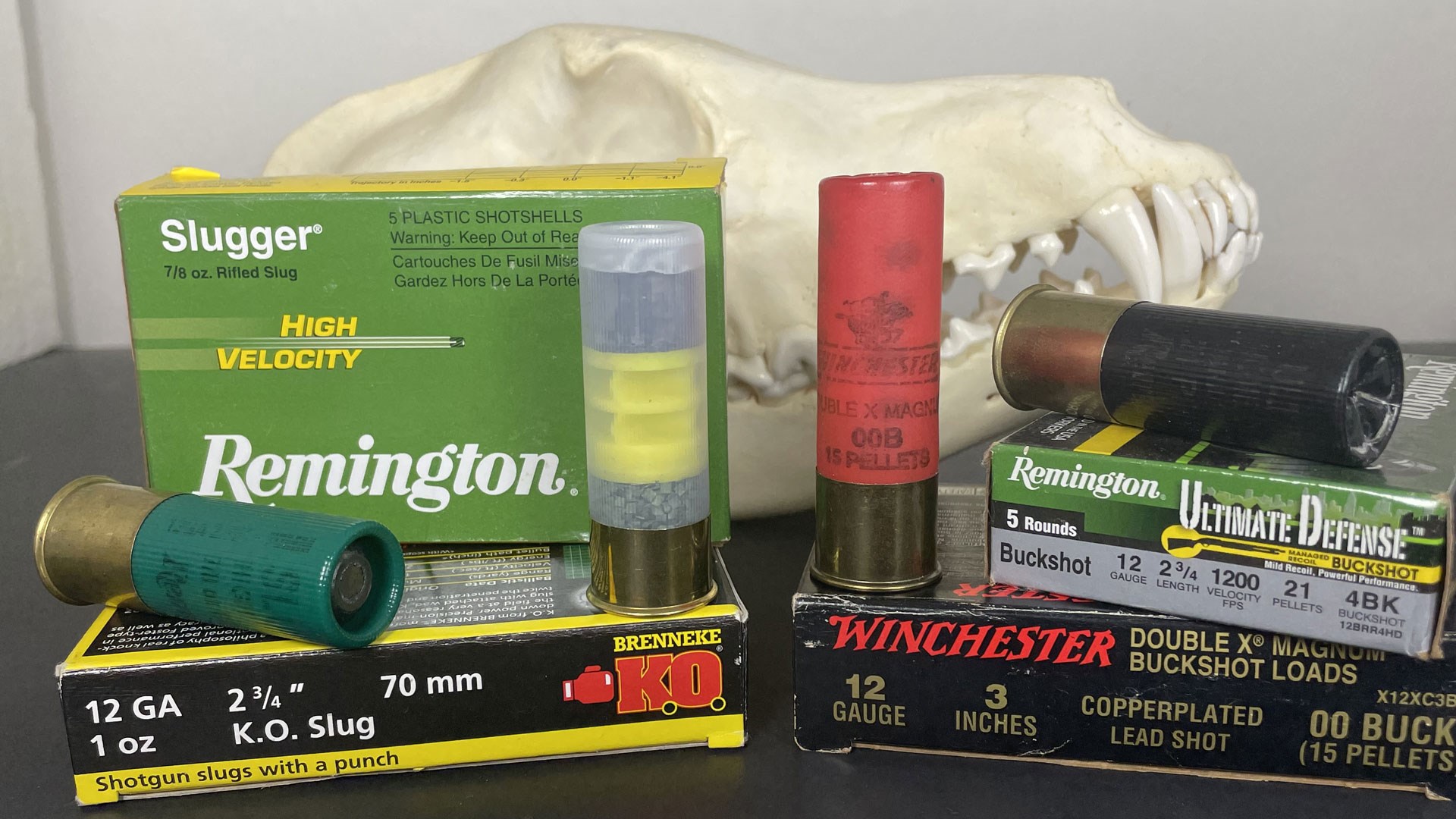
As for shotguns, the sensible choices are buckshot and slugs; however, each varies greatly, so not all are the best choice for protecting camp. Concerning buckshot, it’s available in sizes ranging from B (0.170 inches) to 0000 (quad-aught, 0.380 inches), though those extremes are rarely used for defense. Buckshot isn’t the best choice for immediately stopping an advancing bear, but it will kill it—distance and time are important. Forget about smaller buckshot; if large bears are the preeminent threat, opt for 00 (double aught, 0.330 inches) or, preferably, 000 (triple aught, 0.360 inches). Coyotes and wolves can be killed easily with smaller buckshot, such as No. 1s, but it’s better to adhere to the keep it simple, stupid (K.I.S.S.) principle—one and done.
Concerning slugs, throw out the idea of using sabot slugs destined for distant deer. Rifled bores are unnecessary, if not undesirable, at self-defense distances, and without them most saboted slugs are a no-go. Instead, you want a heavy, preferably high-antimony, heat-treated, lead-alloy slug that will drive deep, even after breaking bones and encountering thick hide and muscle. The best options are from Brenneke. Standard, Foster-type slugs are also suitable, though their wide expansion can reduce penetration depths. Mass is important here; opt for one-ounce-plus slugs, and 1¼ to 1 3/8 ounces are ideal for even the largest threats. With an increase in heft comes elevated recoil. Be forewarned. That being said, a Brenneke-style slug in one of the abovementioned weights is one of, if not the best, option to immediately stop a camp-wrecking or charging bear.
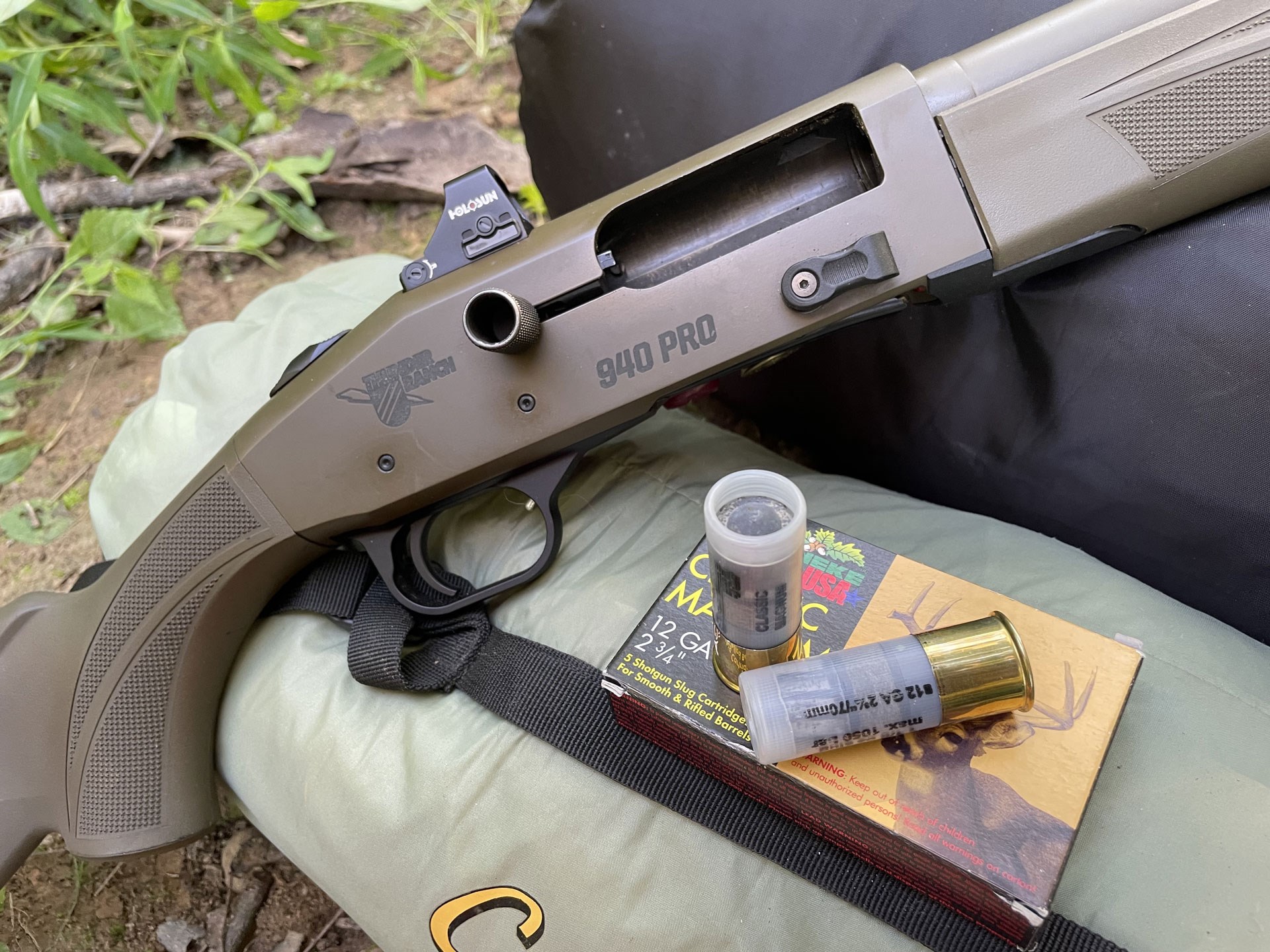
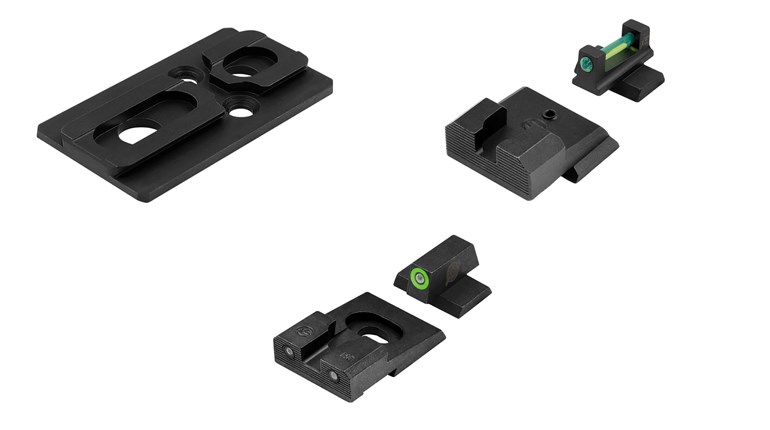
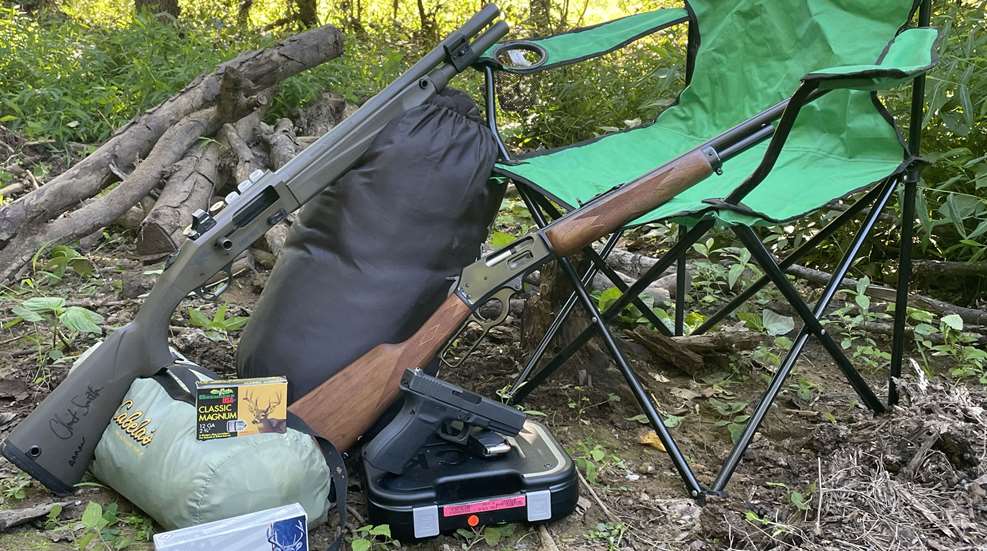
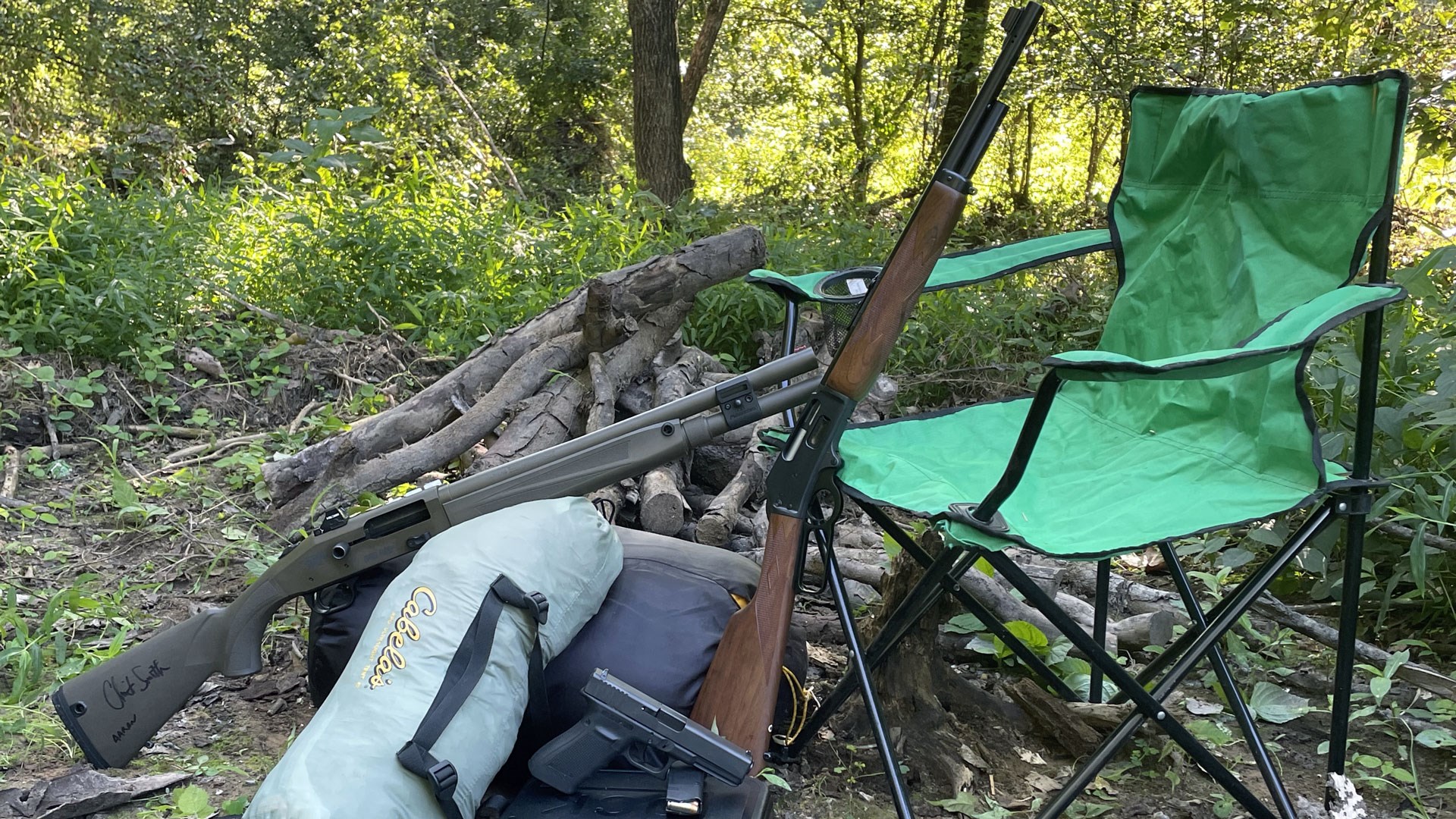
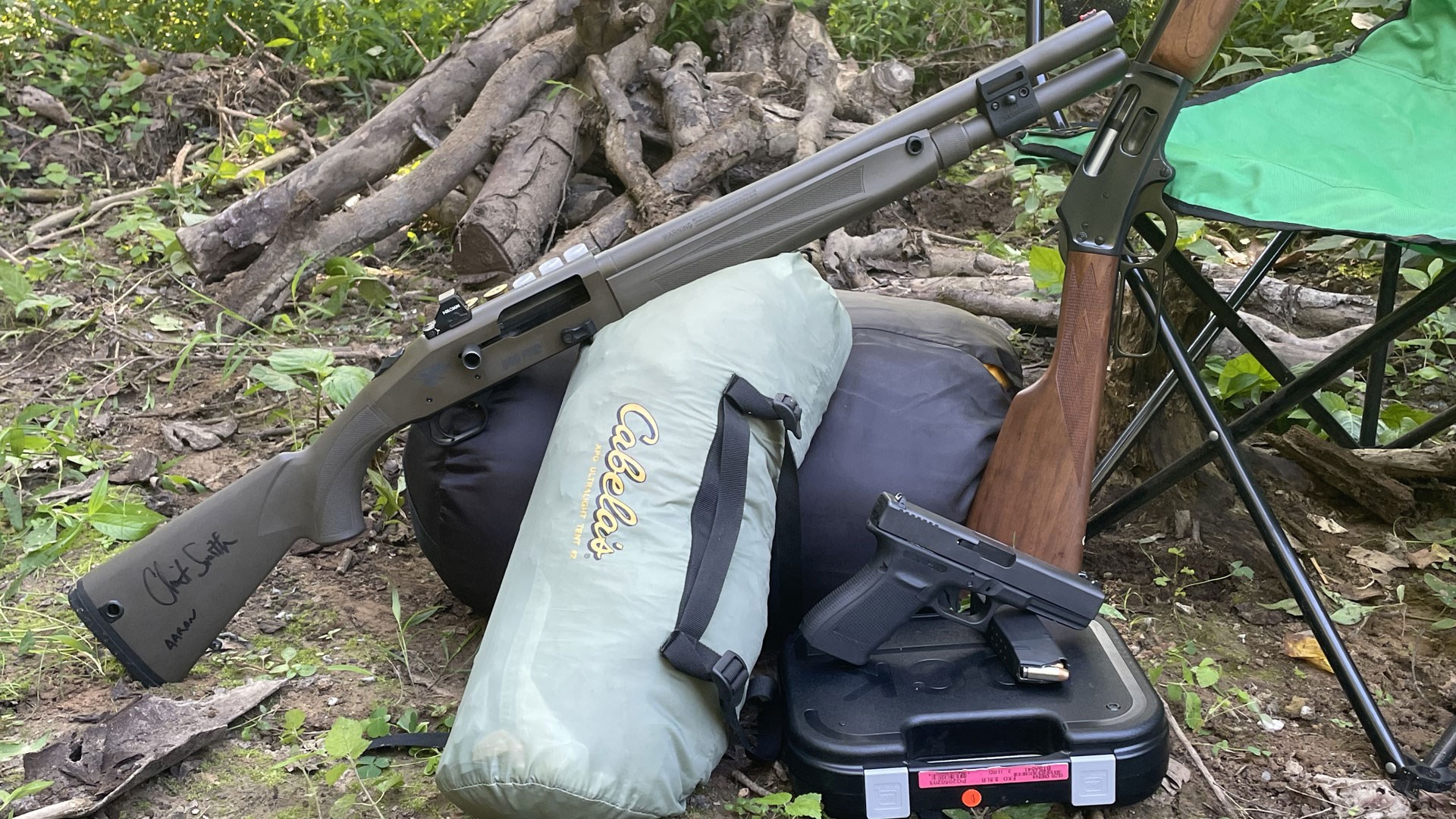
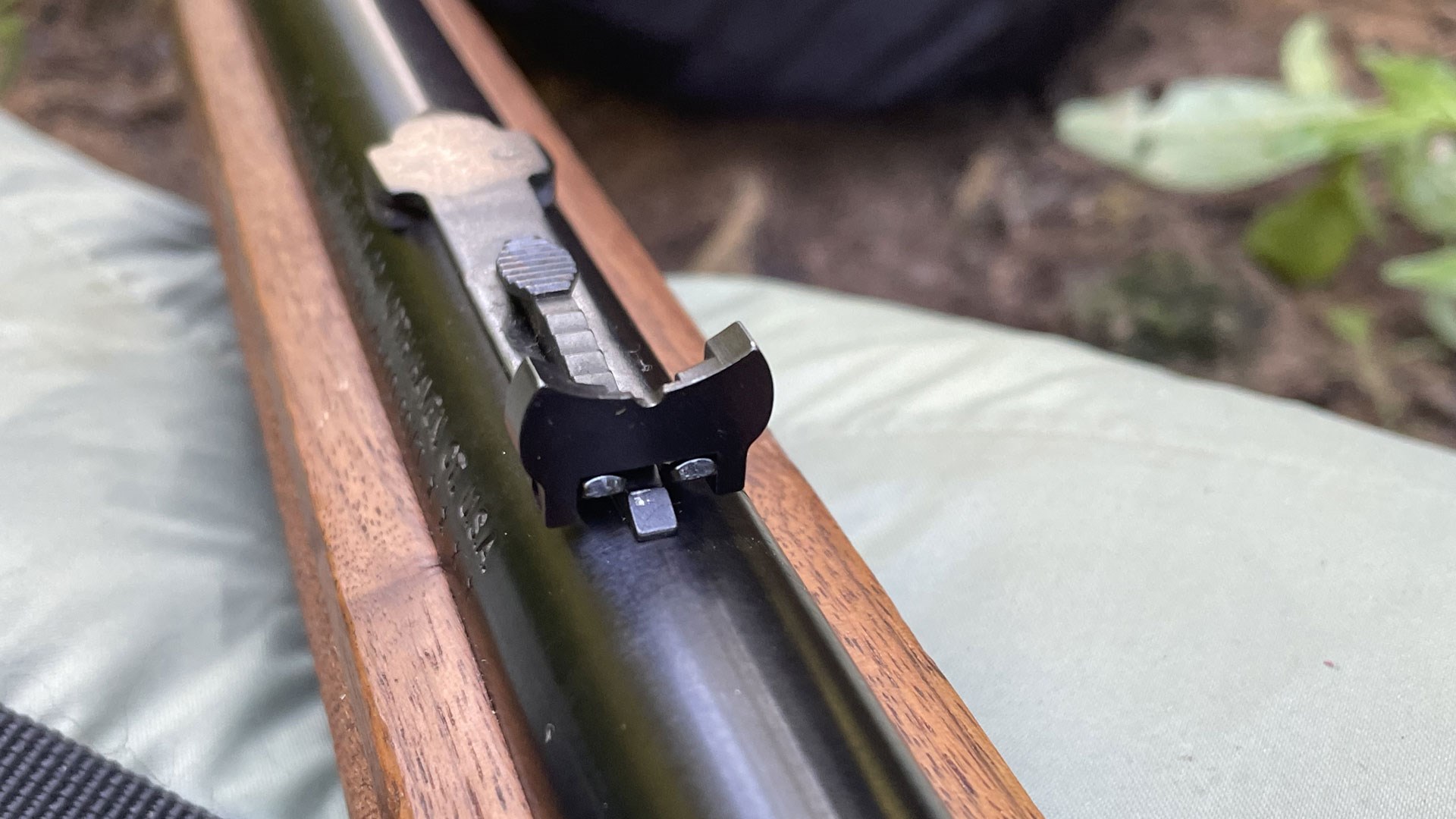
Lastly, unless of low-magnification (i.e. riflescope) or red-dot nature, forget an optic; rather, rely on your irons and/or a laser. You want an uncomplicated setup where the eye can aim instinctively, and thus fast. It should also be low profile. My choice for my defense shotgun is a Mossberg Model 940 Pro Thunder Ranch topped with a Holosun HS407K X2 open reflex sight, which enables me to engage targets quickly. The rest of my camp-defense-suitable firearms, a Marlin Model 1895 and Glock G20, only have factory open sights. All work well for the undertaking.
First-Choice Firearms
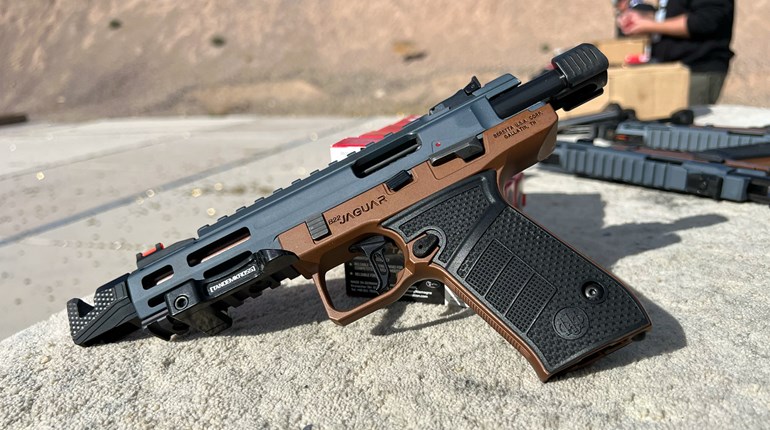
For those who favor a handgun as the camp defense weapon, or as a backup, there are some great options available. In semi-automatics, the clear choices are the Glock G20, G29 and G40—utterly failproof pistols where a magazine full of 10mms Auto rounds is at the ready. Other autoloading options include: Sig Sauer P320-XTen; Smith & Wesson 10mm M2.0; FN 510 Tactical; Springfield Armory XD-M Elite and 1911 Ronin; Colt Delta Elite; and Ruger SR1911. Additional M1911 models can be had from Rock Island Armory, Kimber, and Dan Wesson. Forty (.40) S&W-chambered autoloaders are omnipresent, so finding one for you isn’t onerous.
As previously mentioned, I’m not a fan of the .45 ACP for camp defense; however, there are a few loads that improve its threat-stopping ability. For instance, Buffalo Bore has a .45 ACP+P round loaded with a 255-grain HC FN bullet, and the projectile is used by Underwood Ammo, too. Additionally, the latter also loads Lehigh’s 200-grain Deep Penetrator—also to +P pressures. Similarly, the aforementioned companies offer a 200-grain HC FN projectile in .40 S&W, making it suitable, but not ideal, for stopping campsite assaulters. Suffice it to say that handguns chambered in .40 S&W and .45 ACP are too numerous to list here; however, if you go this route, opt for high capacity. Four-sixty (.460) Rowland conversion kits for M1911s, the FNX-45, Glock G21, G30 and G41 can provide a jump in energy, as can using a pistol cartridge-chambered long gun, such as the Ruger LC Carbine. Want a .50 AE? Choose the Magnum Research Desert Eagle.
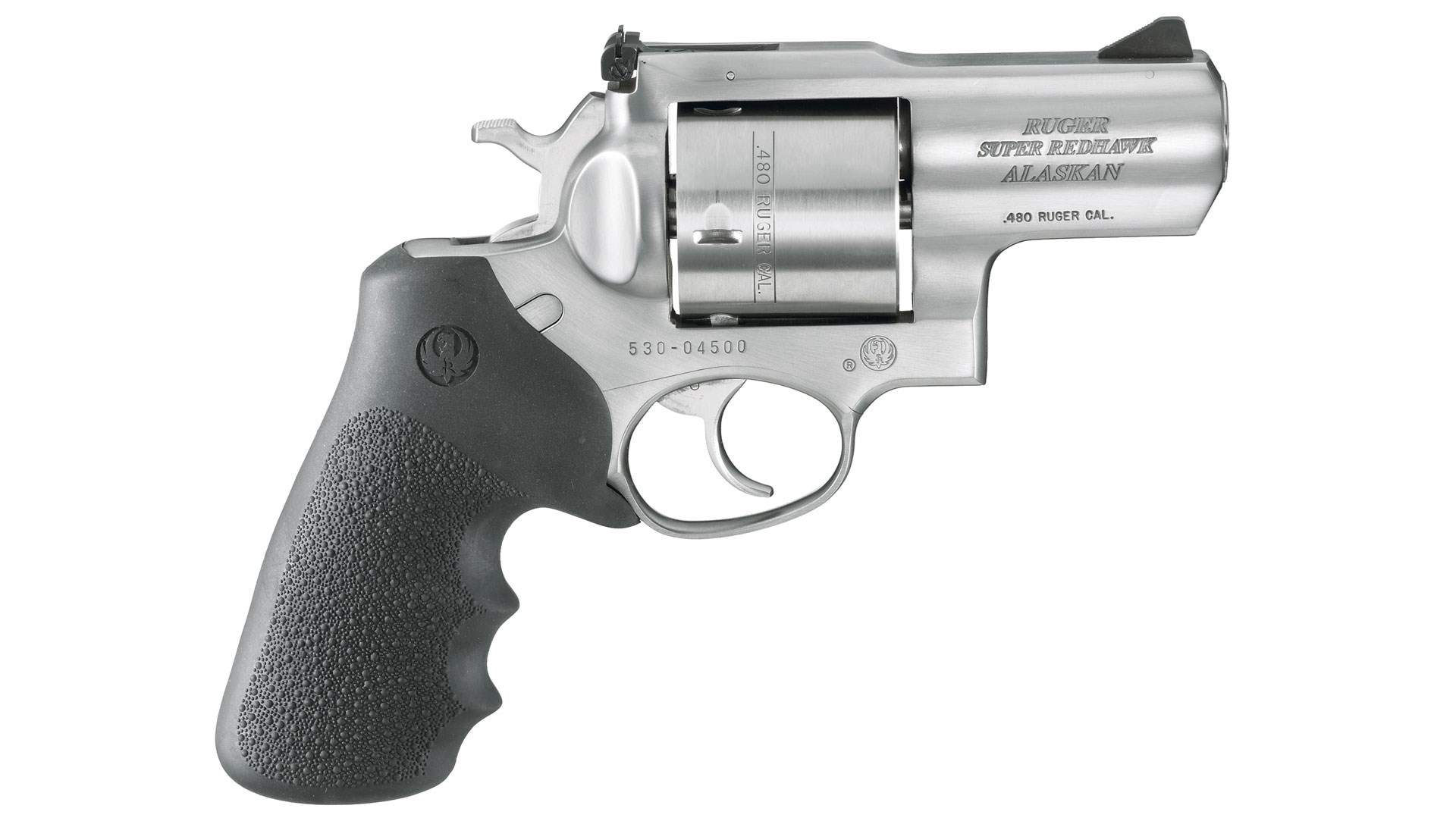
Given their hard-hitting chamberings, revolvers are a better choice for camp duty. The standout maker is Ruger. In its Super Redhawk series you can get a .44 Rem. Mag., .454 Casull, and .480 Ruger, but a 7½-inch or longer barrel can become a burden. Fortunately, the company also offers the 2½-inch barreled Super Redhawk Alaskan, which is also available in those chamberings. Talk with Alaskan residents (current or former) and they speak highly of them.
Options in .44 Rem. Mag. abound with Smith & Wesson, but the compact, 3-inch-barreled Model 629 Deluxe, 2.63-inch-barreled Performance Center Model 629, and 2.75-inch-barreled Model 69 Combat Magnum will get to work faster than their long-barreled brethren. The 26.3-ounce Model 329PD is a joy to carry, and thus will likely be on your side when needed; however, it’s decidedly less fun to shoot. The Model 57 Classic is the company’s sole .41 Rem. Mag. option. Those interested in the powerful .460 S&W Mag. have the 5-inch-barreled Model 460V and Performance Center Model 460XVR, which has a lively, 3.5-inch tube. The .500 S&W Mag. can be had in the 4-inch-barreled Model S&W500 or Performance Center Model S&W500 Hi Viz Fiber Optic with a 3.5-inch barrel.
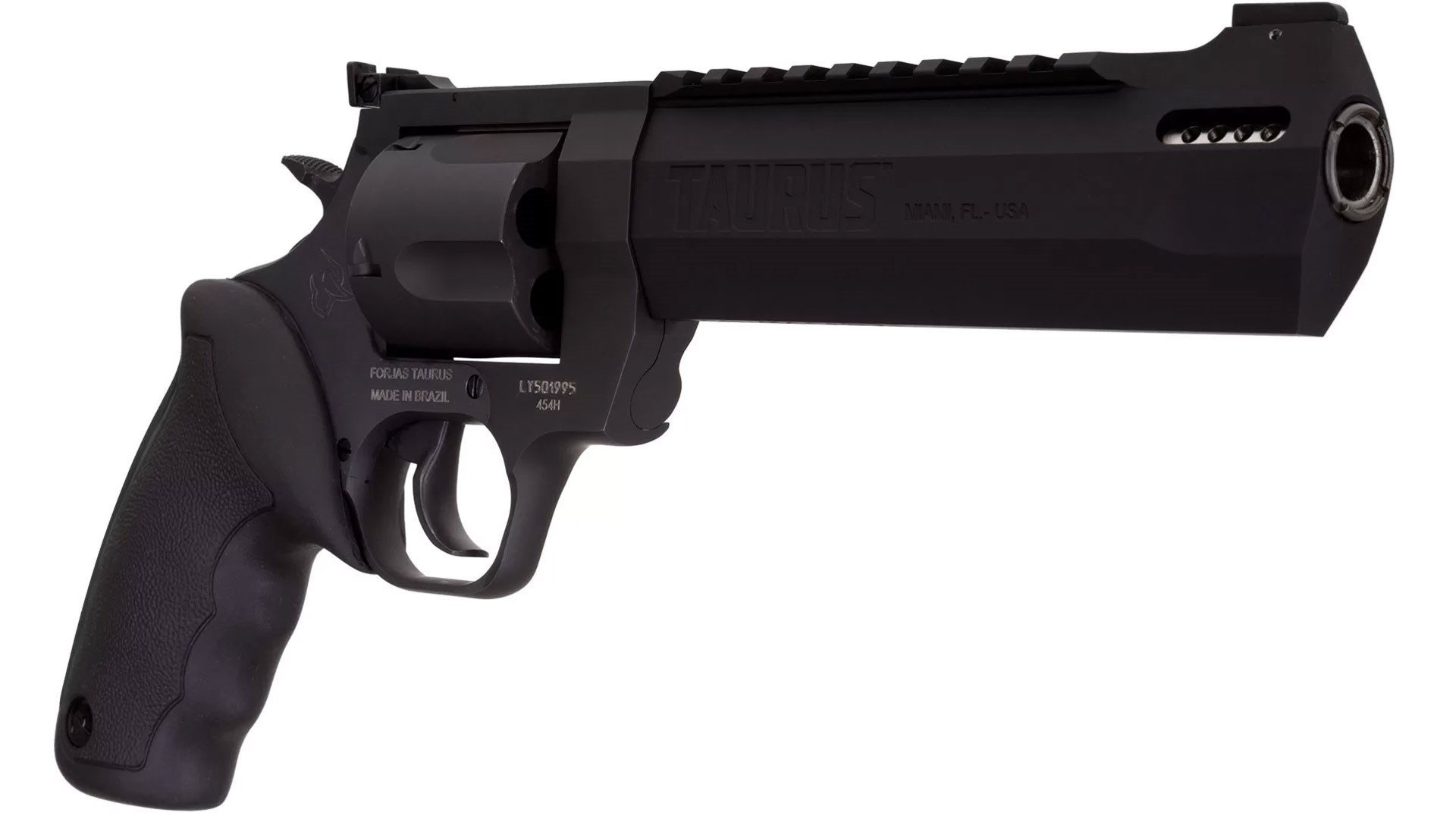
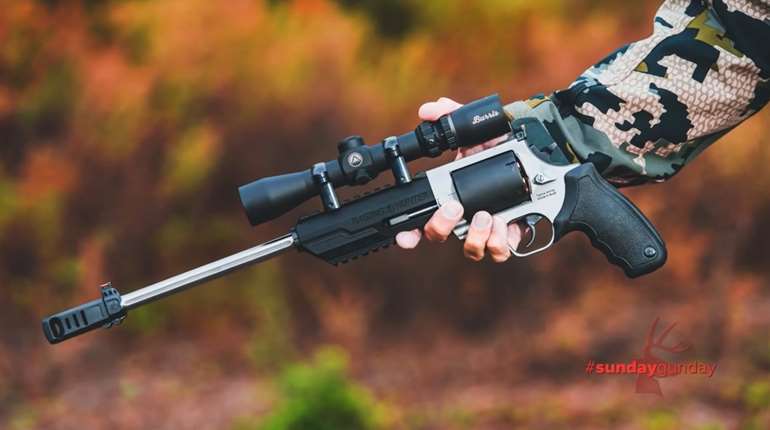
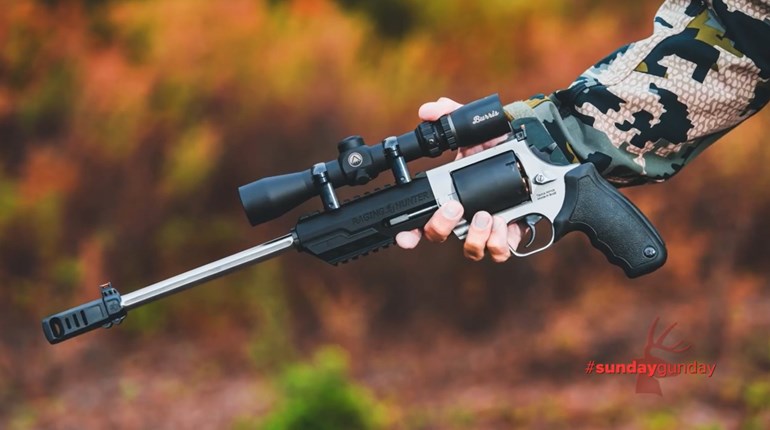
Given that Taurus International Manufacturing, Inc., was an early adopter of the .454 Casull (once approved by S.A.A.M.I.), it makes sense that the company offers consumers many big-bore options within its Raging Hunter series. Fifty S&W Mag., .460 S&W Mag., .454 Casull, and .44 Rem. Mag are available in 5.120-inch-barreled models. Concerning the latter, Taurus also has Tracker 44 models featuring 4-inch barrels. The company also created the 3-inch-barreled Raging Judge, which handles .454 Casull, .45 Colt, and 3-inch .410 bore shotshells interchangeably.
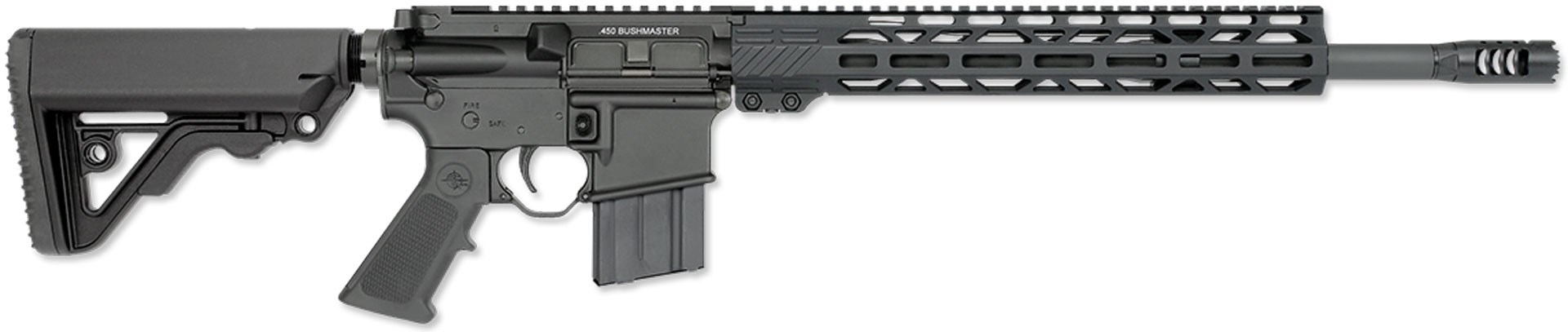
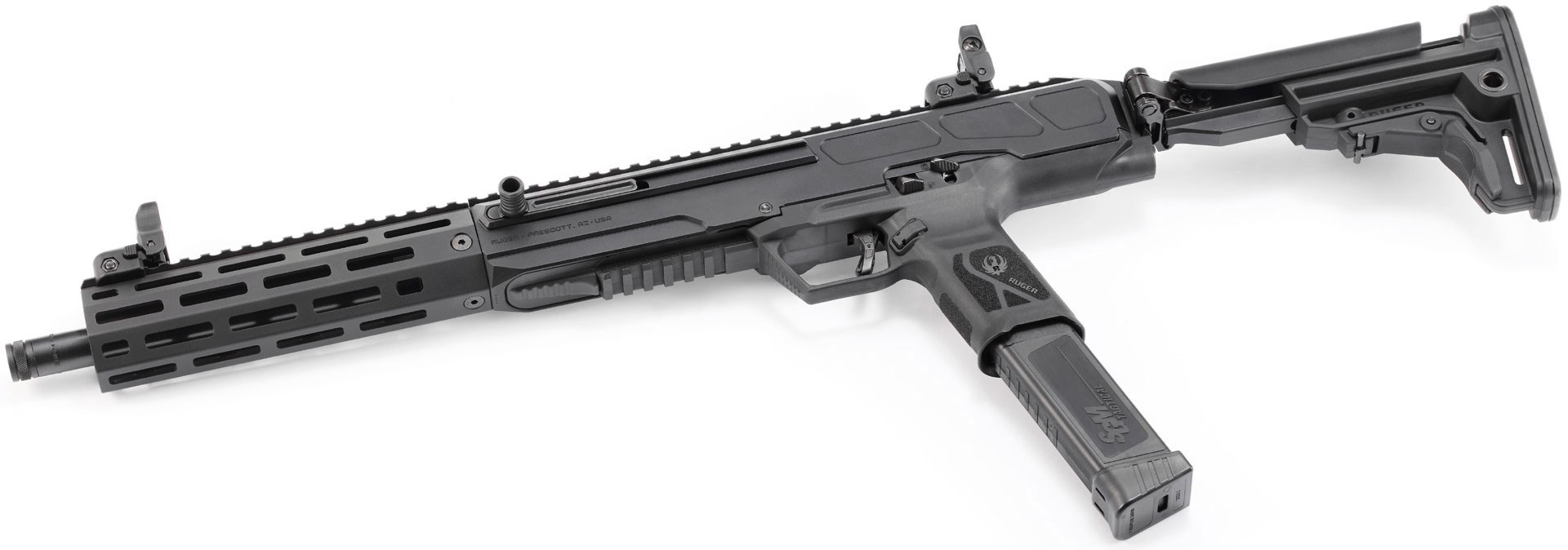
Locating an AR in one of the previously mentioned camp defense-suitable chamberings isn’t difficult. As an example, .450 Bushmaster can be had from Ruger, Bushmaster, P2A, Wilson Combat, Black Rain Ordnance and Rock River Arms, to name a few, and the slightly larger .458 SOCOM is available from Rock River Arms, P2A and Wilson Combat, among others. Interestingly, the latter chambers an AR-10 in .358 Win. The new .400 Legend is available from P2A and Bear Creek Arsenal. For those who want the ultimate power from an AR, .50 Beowulf (12.7x42mm) uppers and full rifles are sold by Alexander Arms and Bear Creek Arsenal. Many of the companies above (and others) also have ARs or other carbines—such as the Ruger LC Carbine and S&W FPC— chambered for traditional pistol cartridges; however, the previous comments still apply. As a word of caution, when selecting an AR (or upper), don’t skimp on cost; a determined killer closing the distance isn’t when you want to be reassessing the cost-quality ratio of the firearm in your hands.
As for threat-stopping lever-actions, the foremost company is Marlin, which, as of 2020 is owned by Sturm, Ruger & Co. The distinguished model is the 1895, be it the new SBL or from the myriad Trapper and Guide Gun rifles—both new and old. There’s also a .45-70 Govt. version in the Dark Series. Currently, the .44 Rem. Mag. can be found in all those mentioned above, as well as the Classic Series. If you can find one, the older Marlin 444S will get you a fine camp-defending cartridge, the .444 Marlin. Purists should also consider Smith & Wesson’s 1854 Traditional Walnut in .45-70 Gov’t, while the 1854 Stealth Hunter in .44 Rem. Mag. will appeal to newer shooters.
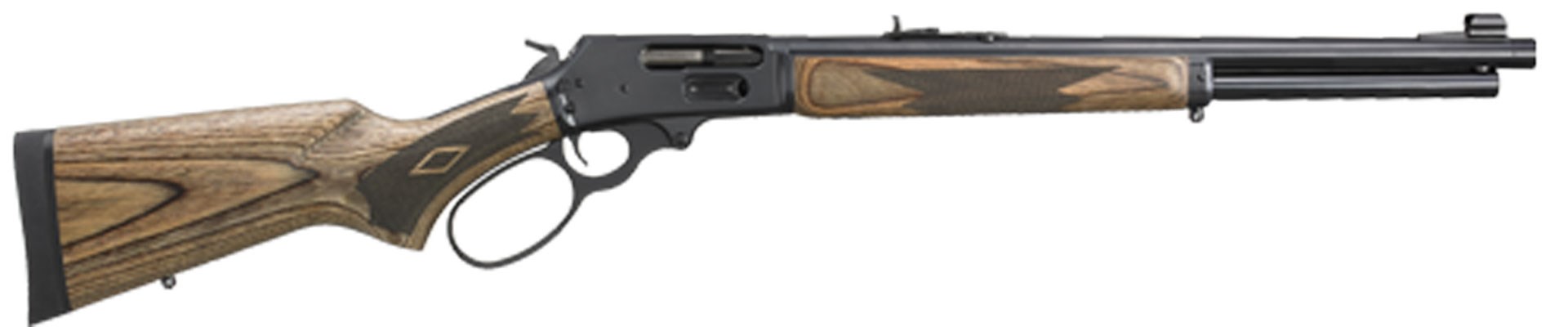
Another source of camp-protecting lever-actions is Henry Repeating Arms. Diversity is the key word here. Among the best is the company's new SPD HUSH Series, which is available in .44 Rem. Mag. and .45-70 Gov’t. The company’s All-Weather, All-Weather Picatinny Rail and Steel models are great choices. Honestly, any such rifle with a sub-20-inch barrel would work, but these are standouts. Those looking to save some coin should seek out Rossi’s R92 (.44 Rem. Mag. and .454 Casull) and R95 (.360 Buckhammer, .44 Rem. Mag., .454, Casull .444 Marlin, and .45-70 Gov’t) or those from Heritage and Citadel. Again, options abound for lever-action lovers.
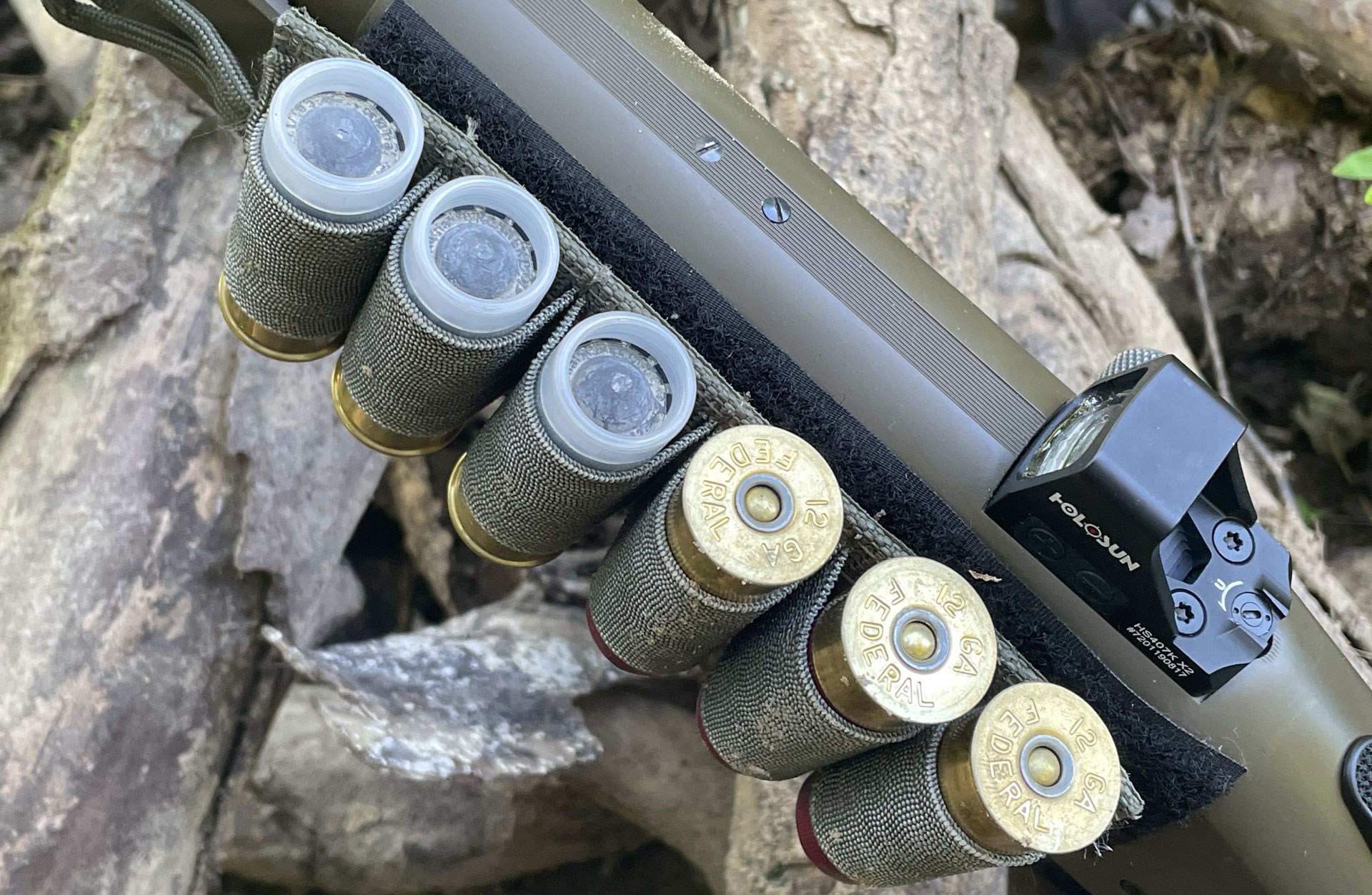
Finding a suitable shotgun is equally simple. Most autoloaders and pump-actions work wonderfully for defending camp; however, I do recommend sticking to those scatterguns with 24-inch barrels (or less)—preferably sub-20-inch tubes—and models that are renowned for their reliability. Concerning the latter, examples are: Mossberg Model 500, 590, 835 and 940; Remington Model 870; Beretta 1301 and A300; Benelli Super Black Eagle (2 or 3), M4 and M2; Stoeger M3000, M3020 and M3K; and Military Armament Corp. (MAC) M1014 and M2 clones. Side-by-side “coach” guns will work, but their two-shot capacity could be problematic.
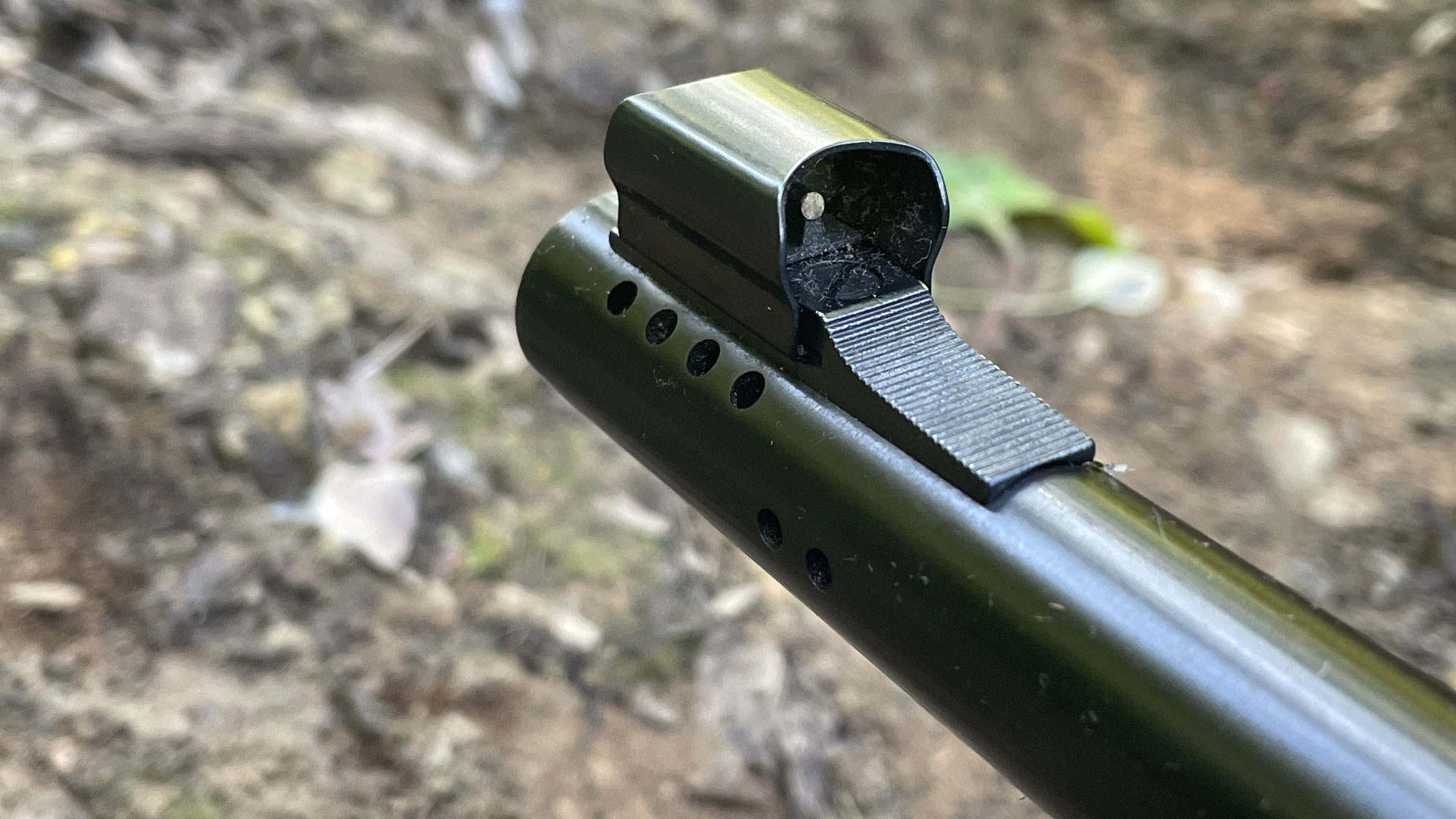
Regardless of the shotgun you choose, stick with smooth bores; rifling is a hindrance. A Cylinder or Improved Cylinder choke provides sufficient constriction for buckshot at camp distances, and each plays nicely with simple slug designs (i.e. Brenneke and Foster) as well. As for sights, the common bead is useful, but a ghost-ring setup or red-dot is optimal. Select what configuration is fastest for you. Lastly, some shotguns, like rifles, are outfitted with M-Lok or similar accessory mounting options. Only you can decide if they’re worth the extra cost.
When a wolf is at the edge of camp or a bear is shredding your tent with you in it, the time for preparation has ended and it’s time to act. If you’ve followed the suggestions within this article, you’ll be able to stop that threat in short order. And, if that scenario never occurs, so much the better. Now break out the smores.