“Two-Seventy.” Utter that simple phrase around the fire at hunting camp, and immediately you’re going to hear references to ‘The Professor,’ Jack O’Connor and how a good .270 Winchester is really all you need. While O’Connor was the cartridge’s strongest supporter early on, he was around for only 53 of the cartridge’s 100-year lifespan. Yet, in spite of all the developments in cartridge design, projectiles, optics and rifle construction, the .270 Winchester seems to be steadily plodding on as one of America’s favorite sons. What is it about the ’06 Springfield’s little brother which remains so damned appealing to the hunting public? Perhaps a bit of investigation will shed some light on the topic.
Imagine it is 1925, and the lever-action rifle far-and-away rules the roost. Winchester has just released its Model 54—with the new cartridge referred to as the “270 WCF” on the barrel stamp. Optics were a rarity at best, as one look at the comb of the Winchester 54 will clearly indicate, so the cartridges of the day were only as effective as the iron sights provided on the correlative rifle. The speedy, new .270 Winchester must’ve seemed seriously cutting edge, on par with the .300 Holland & Holland released the same year. For you rifle cranks, there is strong evidence that an earlier iteration of the 270 Winchester was issued in the 1919 Model 51, labeled as “27 cal” on the barrel. I have not seen any of these first-hand, but have seen auctions and sales featuring this “Imperial” rifle, though I cannot attest to the ammunition.
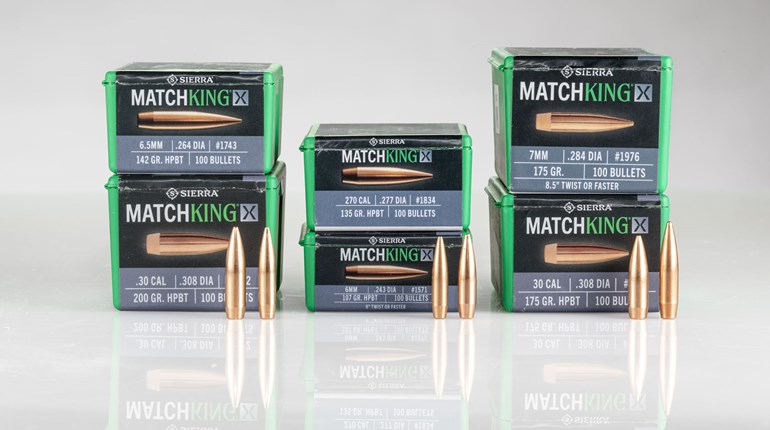
The .270 Winchester shares many attributes of the .30-06 Springfield, such as the .473-inch case head diameter, the 17½-degree shoulder angle, and the 1.948-inch datum line (from base to shoulder), yet it uses the longer 2.54-inch case length of the earlier .30-03 Springfield. It seems to be lost to history exactly where the .277-inch projectile diameter came from; like the .338 caliber, it seems to be a slight variant of existing projectiles, presumable to be “uniquely Winchester,” though that is purely my own speculation after years of researching. A 1:10-inch twist barrel would see the cartridge served by bullet weights between 100 and 150 grains, with a handful of round nose 160-grain slugs being able to be properly stabilized in that barrel. The cartridge will push the 130-grain bullets (possibly the most popular choice for deer hunters) to just over 3000 fps, and the 150-grain bullets will leave the muzzle somewhere around 2850 fps. Both loads will deliver roughly 2,700 ft.-lbs. at the muzzle, and offer a very useable trajectory for the big-game hunter. The 130-grain bullet has a sectional density of 0.242, and the 150-grain bullet comes in at 0.279; this roughly translates to the 165- and 180-grian bullets in .30-caliber, which is not a bad place to be at all. Though the 100-grain bullets have long been available, I don’t know many hunters who do much varmint or predator hunting with their .270 Winchester.
Outdoor Life’s Jack O’Connor purchased the Model 54 in .270 Winchester in 1925, and became a very outward supporter, using it to take not only pronghorns, deer, bear and the sheep he’d become so famous for, but larger species like moose and elk as well. His articles would go onto inspire the shooting public, especially once the Winchester Model 70 arrived in 1936, and in the post-WWII era, when peacetime saw a huge return to the woods and mountains. The largest comparison has been between the .270 and the .30-06 Springfield, as the military cartridge was much more readily available, and had a much wider selection of bullet weights. In fact, on paper and in practical application, both the 7mm and .30-caliber cartridges offer a much more flexible platform, in that the bullet choices are much more diverse, though I've found that the .270 Winchester folks don’t really seem to care about that very much. They seem to find a bullet weight that shoots well in their particular rifle, and just go hunting. Maybe there is some wisdom in that simplicity …
With a firm foothold in the hunting community, there have been a number of challengers to the .270 Winchester, starting with the .270 Weatherby Magnum, and followed by the .280 Remington. The Weatherby offering still has a good following, yet the cartridge enjoys a small fraction of the popularity that the Winchester variant enjoys. The .270 Winchester Short Magnum—released in 2002—offered a short-action cartridge in the .277-inch bore diameter, bettering the velocity of the 270 Winchester by 100 to 200 fps, and it did well for quite a while. Of late, the 27 Nosler gives us a case loosely based on the .404 Jeffery, with a healthy case capacity to deliver screaming velocity numbers, and Winchester/Browning has even revamped the .270 WSM to develop the 6.8 Western. The latter cartridge is a particular favorite of mine, as it uses a 1:7.5 or 1:8-inch twist to use projectiles as heavy as 175 grains, giving the .277-inch bore diameter a definite shot in the arm. However, there is no doubt that even at 100 years old, the .270 Winchester still sits proudly at the head of the class within its cartridge group.
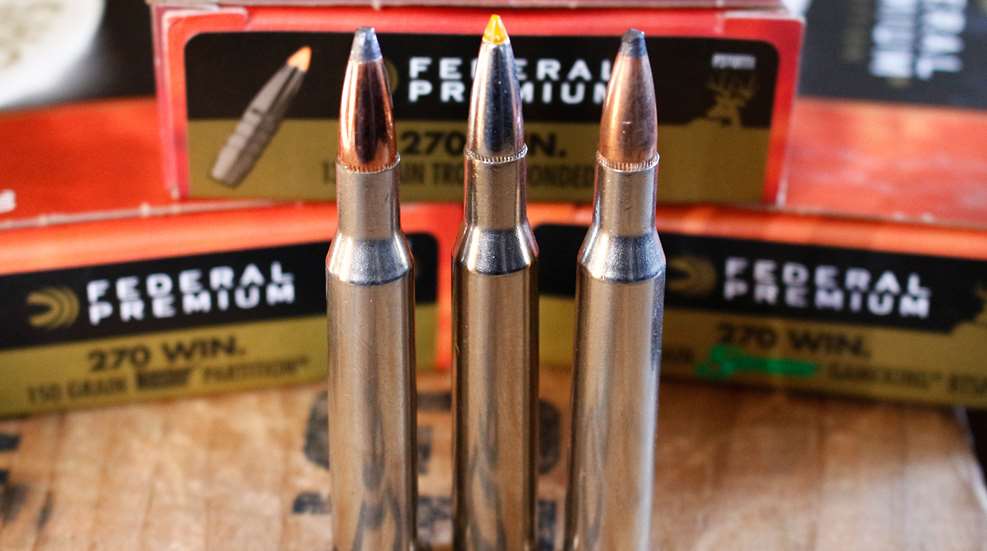
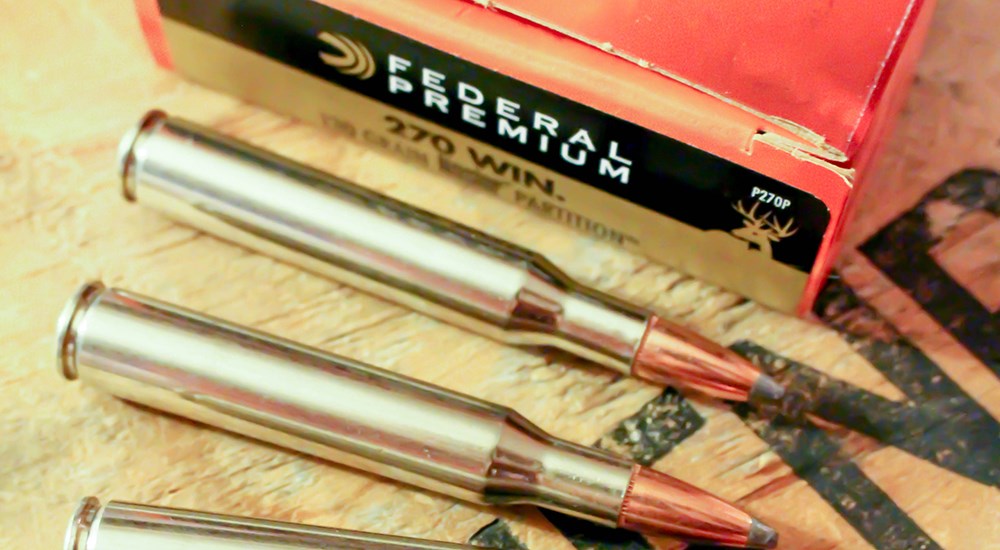
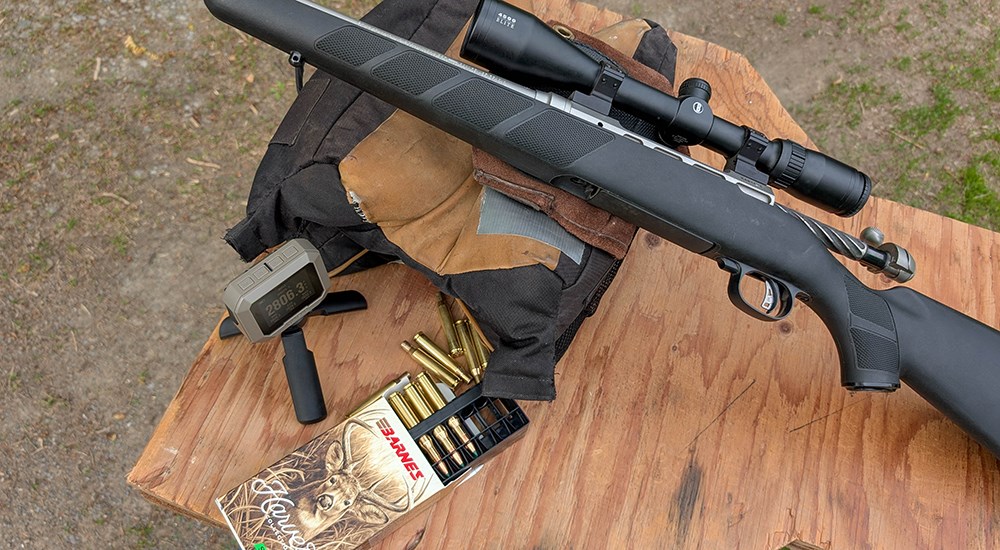
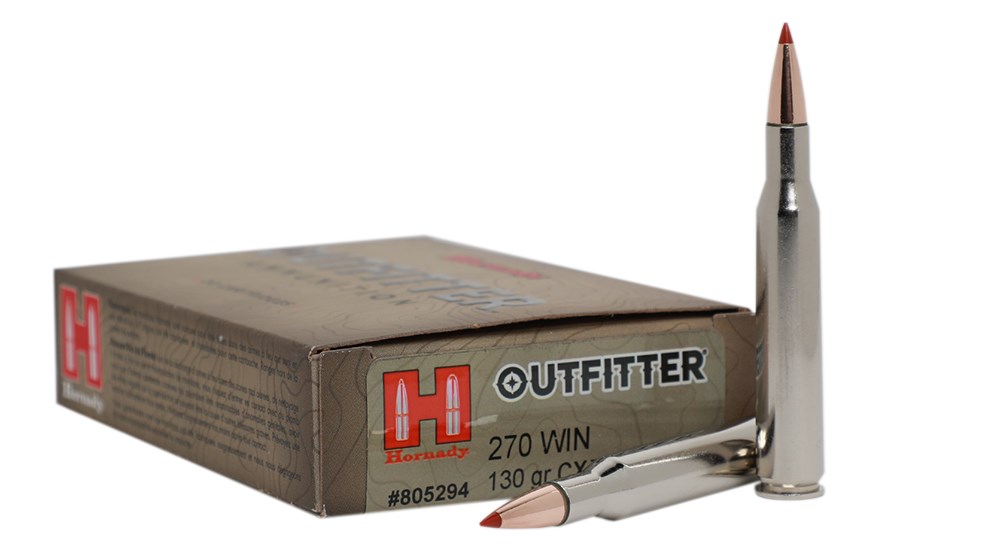
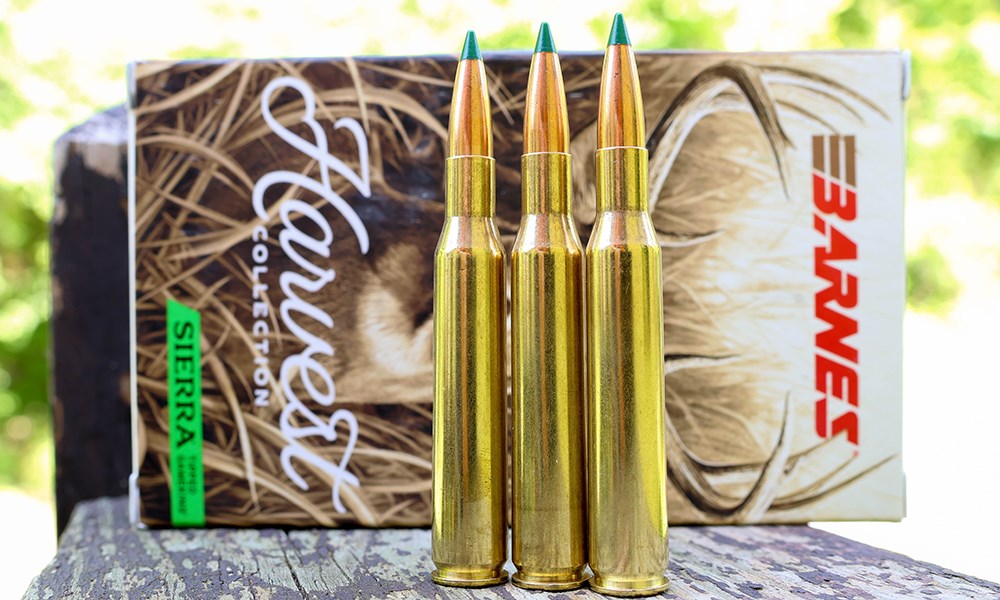
I think there is a double-edged sword in the cartridge industry: popularity equates to availability, and availability surely assures popularity. With a century’s worth of rifles on the market, and a proven track record on the most popular North American game species, it’s no real surprise that the .270 Winchester remains high on the list of strong-selling cartridges. It is relatively easy on the shoulder—definitely easier than the 7mm Remington Magnum or .30-06 Springfield—yet highly effective. The wide selection of projectiles, ranging from the traditional designs like the Winchester Power-Point and Remington Core-Lokt, to the modern designs for long range work like the Federal Terminal Ascent and Swift Scirocco II, to the toughest designs like the Nosler Partition, Swift A-Frame and Federal Trophy Bonded Bear Claw, the .270 Winchester has it all. My own rifle is a Savage Model 116 Lightweight Hunter, and it’ll put three 130-grain Nosler Ballistic Tips into a group measuring 0.6-MOA, giving me all the accuracy I could ask for in a hunting rifle, and that combination is absolute hell on deer.
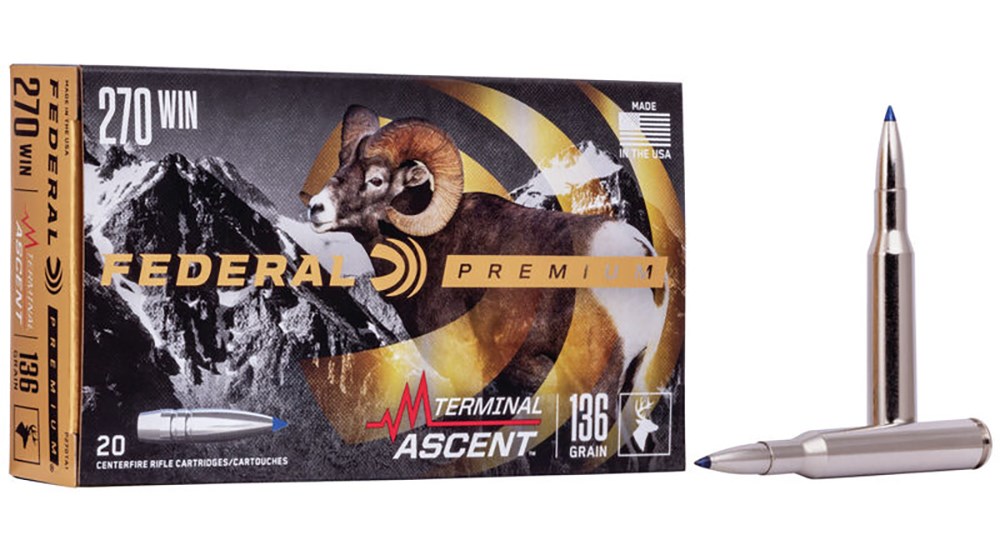
Sometimes the designers get things right the first time, and if you wanted to develop a cartridge to rival the venerated Ought-Six, the .270 Winchester comes about as close as is practically possible. Has the influence of Mr. O’Connor faded? Well, I still hear his name quite often, despite the fact that he passed in 1978. We often choose out cartridges based on those used by our hunting heroes, and it seems that the .270 Winchester has achieved immortality based on the last century of both performance and hero status. Happy 100th birthday to a great design, and may you stick around for another century.