“Griffin & Howe.” Before the name is done rolling off your tongue, images of Ernest Hemingway, the .35 Whelen, and the Frankford Arsenal have come to mind. And while the history of G&H is certainly an important chapter in their story, it is only one chapter, and the tale shows no signs of slowing down. Yes, James Howe worked under Col. Townsend Whelen at the Frankford Arsenal, and yes, he and Seymour Griffib—cabinet maker par excellence—paired in the 1920s to offer sporterized Griffin & Howe rifles based on existing military designs, out of the Abercrombie & Fitch store. And yes, the firm built the .30-06 Springfield rifle that Ernest Hemingway took to Africa, and highlighted in his novel Green Hills of Africa. Sadly, the decades were not very kind to the Griffin & Howe brand in the latter half of the 20th century, but all that has changed of late, and the changes are for the better.
Fast forward to the company’s centennial celebration in 2023, and you’d find yourself in Andover, New Jersey, on the largest contiguous tract of land in the state: Hudson Farm. Where Messrs. Griffin & Howe (the latter was only involved for a few months) made the most with what space and time they had to work with, I’m certain neither could have imagined that their namesake would evolve into the company that exists today. My own introduction to the modern iteration of G&H came through the American Custom Gunmakers’ Guild, where I met the Rossiter brothers, Dan and Chris. Dan’s forte is in stock making, while Chris specializes in metal engraving, though both have vastly expanded their horizons.
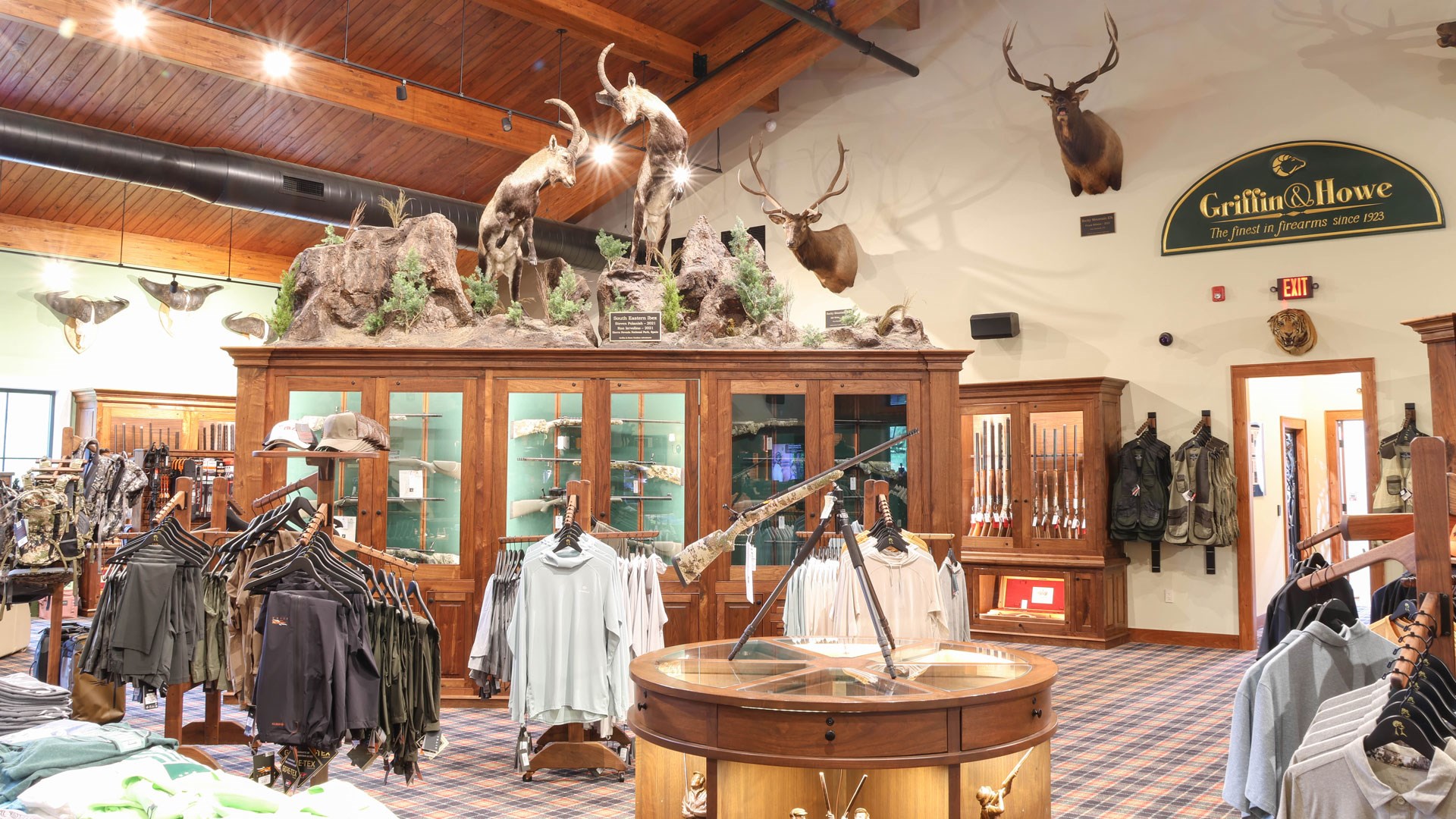
Upon arrival at Hudson Farm, the grounds are immediately impressive. Pulling up to the main showroom, you’ll pass dining halls, guest quarters, beautiful ponds and streams, and a well-manicured setup which rivals the finest country clubs. The report of shotguns graces your ears, and upon entering the showroom you are greeted by one of the knowledgeable and friendly staff. No, I’m serious, everyone who works there seems genuinely happy to be there, unlike the rest of the modern world where most folks do the least amount necessary to get along. The showroom is filled with beautiful taxidermy—from moose to deer to Cape buffalo to elk, and even a tiger shoulder mount—as well as fine firearms and hunting clothing.
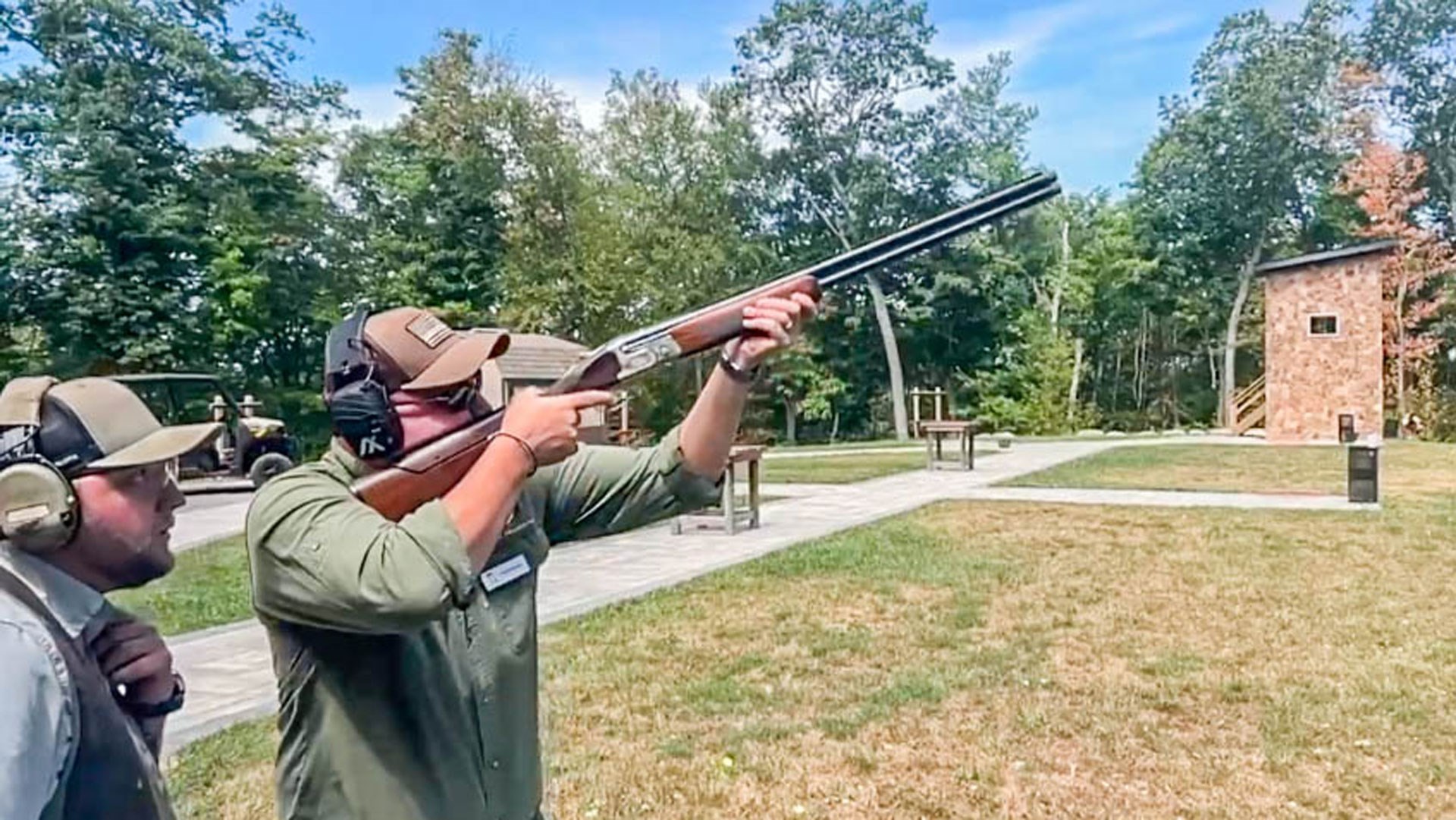
The instructors at Griffin & Howe’s shooting academy are world-class, and I benefitted from a shotgun class with Hans Aichem. After fitting me with a properly set-up Cesar Guerini 12-gauge stack barrel, Hans had me quickly modifying my (admittedly terrible) technique, and hitting 45-yard crossing clays, as well as back-bending overhead clays simulating driven birds. He teaches with a gentle-yet-effective demeanor, and I came away learning a bunch from him. Thank you Hans!
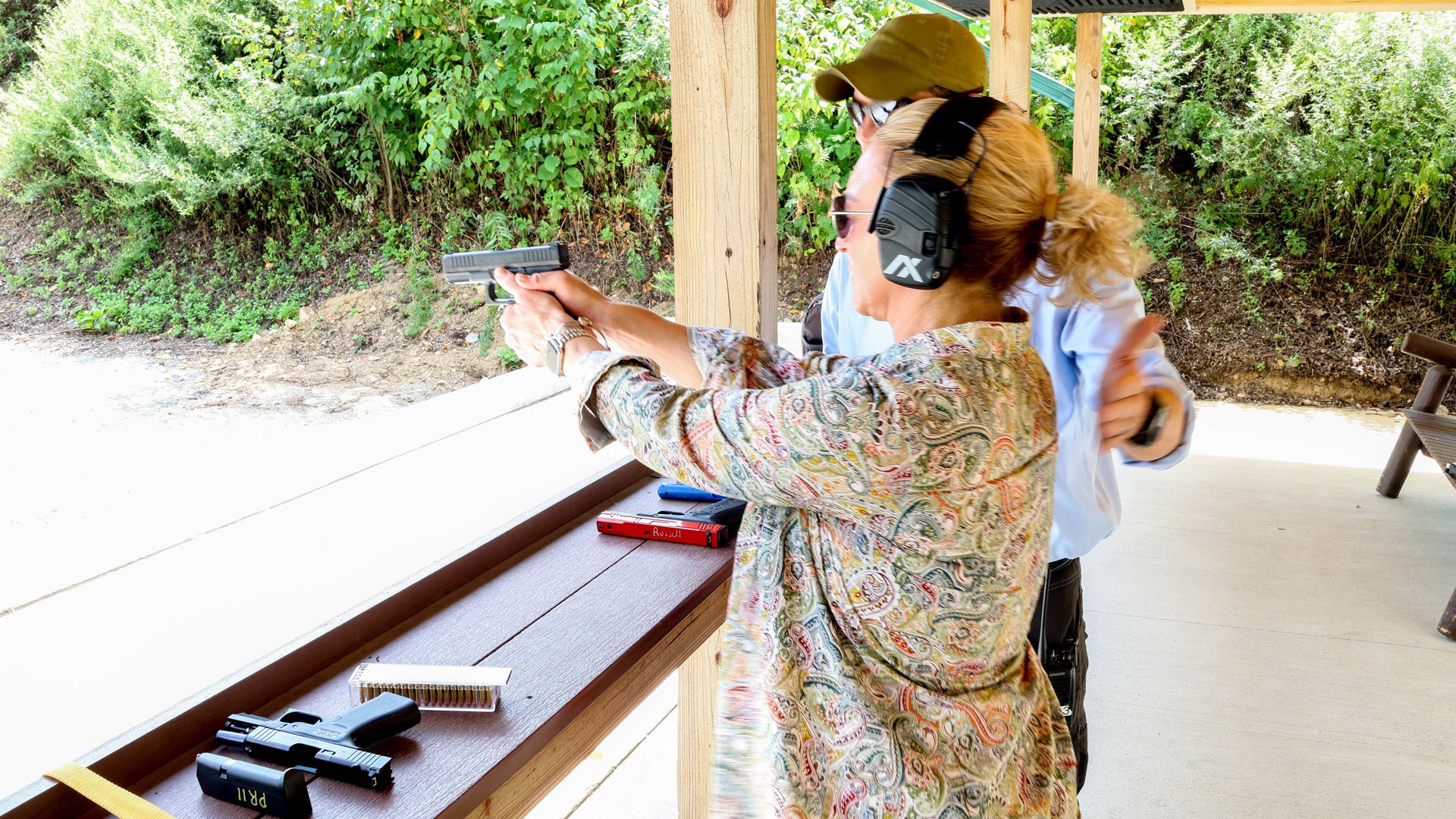
Tristan Russell took Mrs. Massaro and me out for a morning’s worth of handgun instruction, where we both improved our techniques greatly. I have much more experience behind a handgun than does my wife, but she quickly put Tristan’s instruction to work and was knocking over plates consistently and safely. He, too, had a wonderful teaching demeanor which neither rushed the student nor dwelled upon that which was already understood. The following day we took the Hunter Prep Course with Tristan, where he walked a new rifle hunter through the basics of rifles safety, set up, trajectory and more. Within a short time, he had the shooters placing accurate shots on life-sized silhouettes of varying species out to 300 yards and a bit more, all off of irregular rests, as you’d find in the hunting fields. This course was equally valuable to the novice as it was to an experienced hunter. Bottom line: Griffin & Howe runs an exceptional shooting instruction program, which any level of shooter or hunter could benefit from.
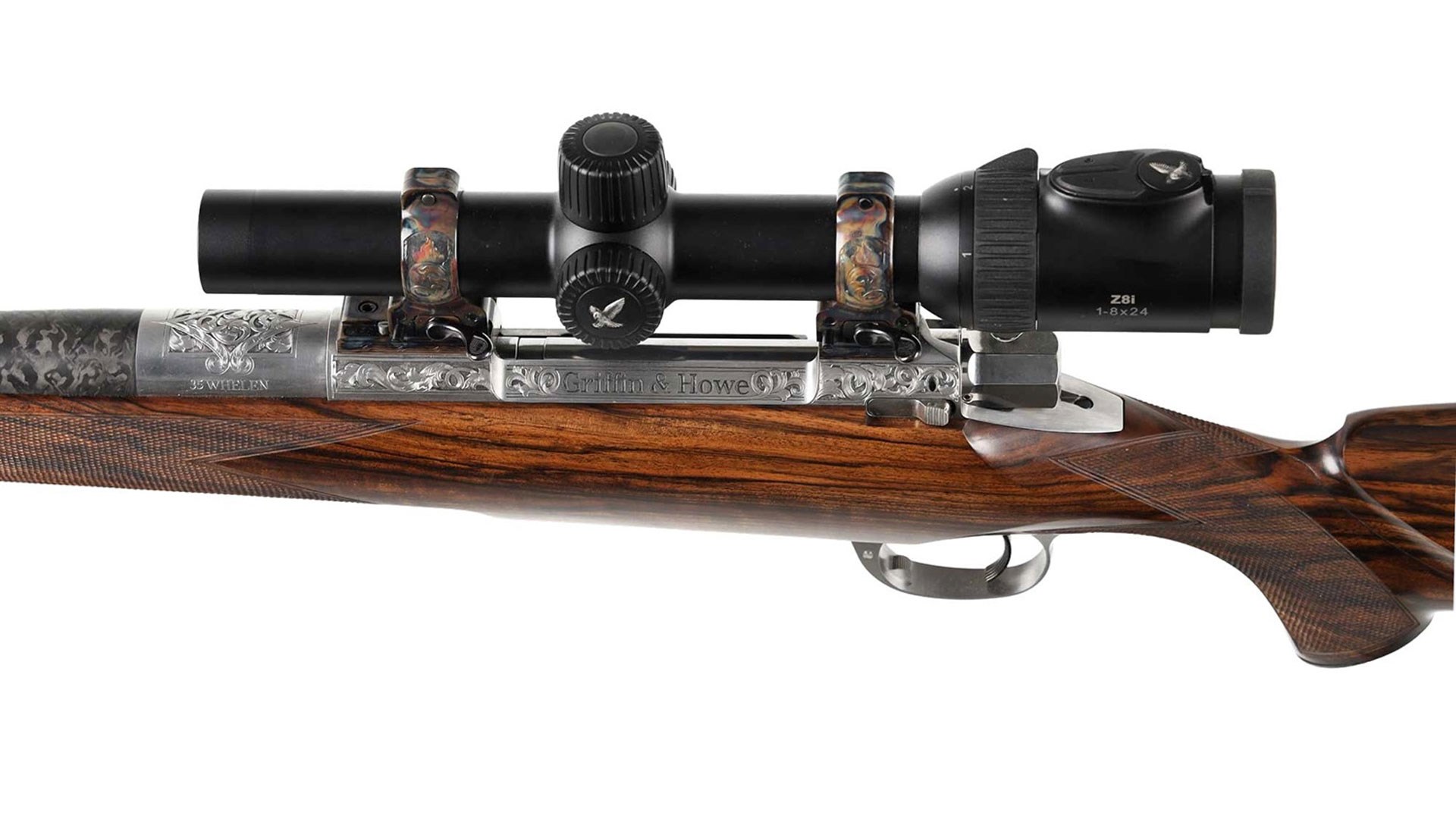
What thoroughly intrigued me—and you might not be surprised—was the gunsmithing facility at Griffin & Howe, as they are producing some wonderful stuff right now. Harkening back to the G&H Centennial, one of the guns that immediately grabbed my eye was the Highlander rifle, duly chambered in .35 Whelen. It mated a Dan Rossiter-designed sporting stock and a carbon-fiber barrel from Proof Research (capable of mounting express sights), in a controlled-round-feed action.
“The concept for the Highlander Safari got its start as a result of a separate rifle build. In 2021 Griffin and Howe conceptualized a limited-edition .35 Whelen rifle built for our 100-year anniversary showcase. This build was intended to provide our clients with a modern-day Griffin rifle, which still epitomized and paid homage to our fine classic sporting rifles. We utilized Griffin and Howe’s proprietary quick detachable scope mounts for rapid access to the iron sights when needed. The .35 Whelen Anniversary rifle was offered as both a working rifle with synthetic stock or fully bespoke with handmade walnut stock, custom designed engraving, and color case hardened accents. It proved to be highly accurate, extremely reliable, versatile, and in bespoke guise very attractive, moreover the feedback we received was overwhelmingly positive,” Dan Rossiter explained. However, due to requests from clientele for a do-all African version of this rifle, Rossiter showed me the Highlander Safari—the same thematic construction, but now chambered in the revered .375 Holland & Holland Magnum, long respected as the do-all cartridge for a hunter in Africa. While the look might deviate from the classic blued-steel and hand-rubbed walnut, it does represent a blend of traditional design and 21st-century technology.
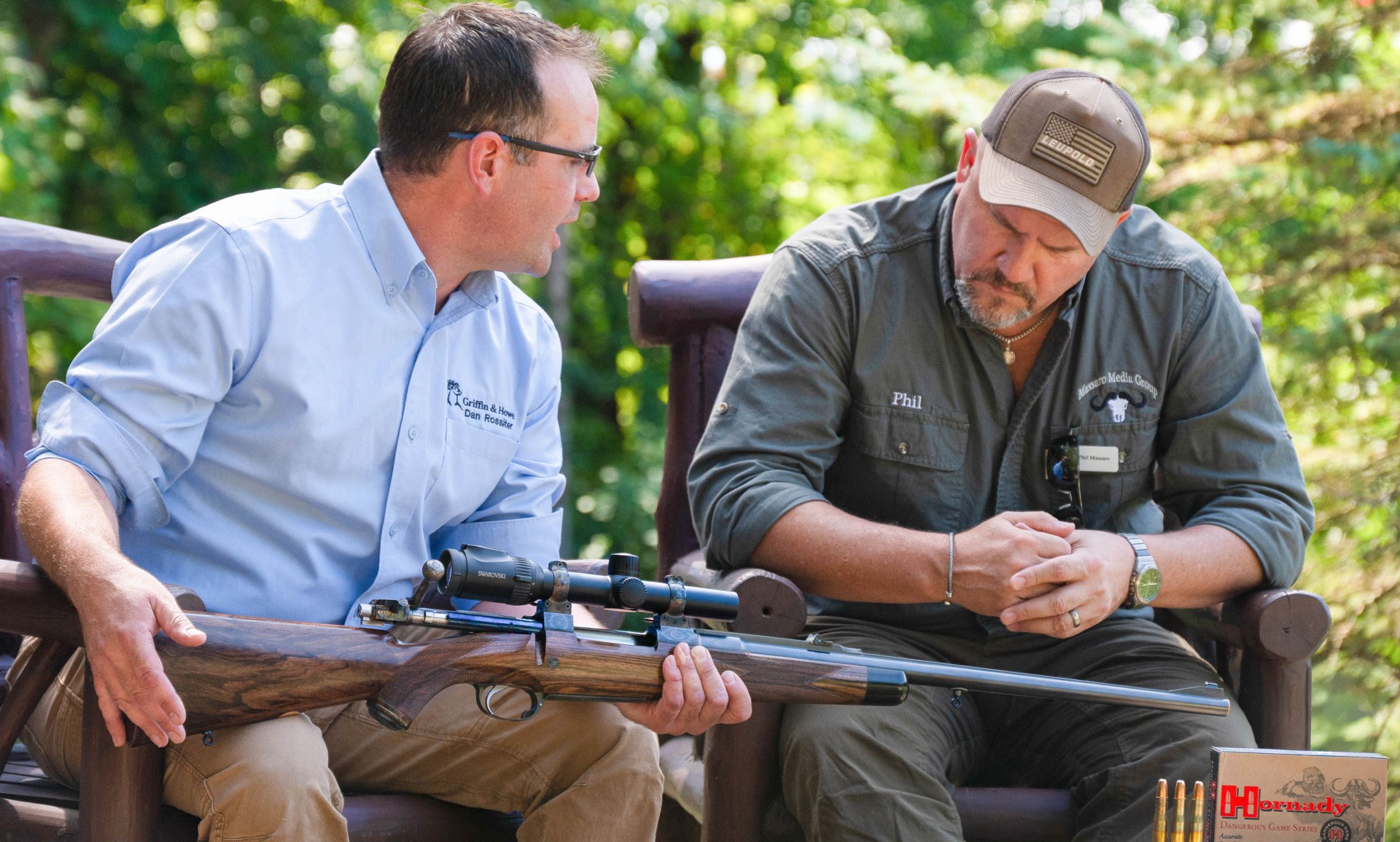
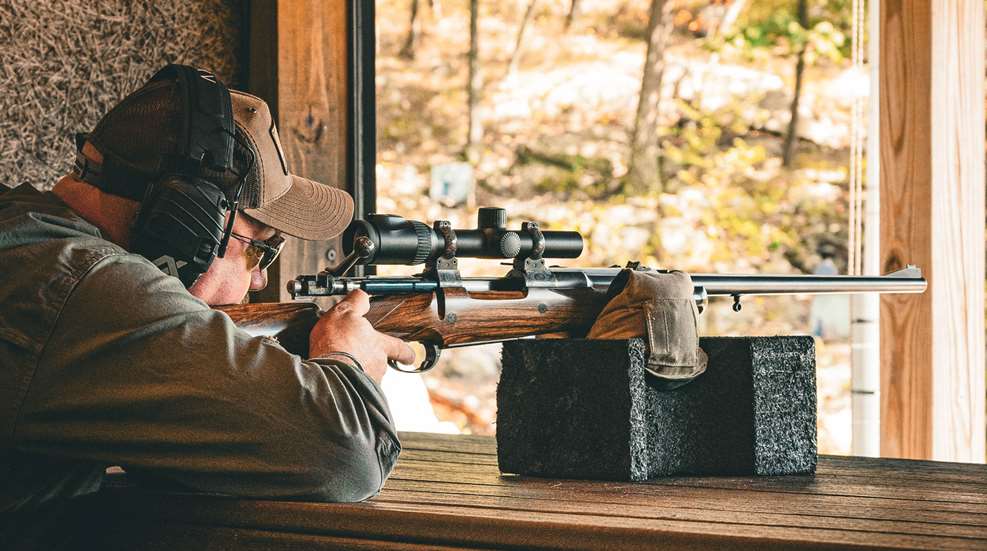
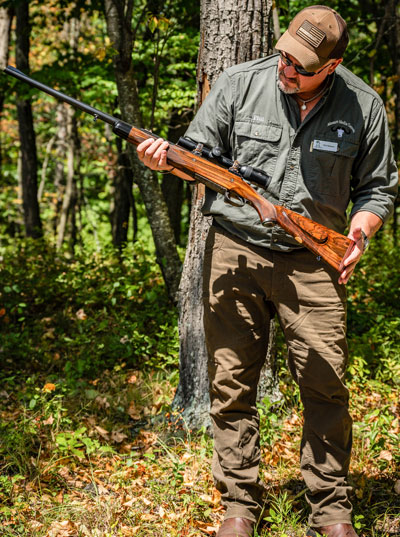
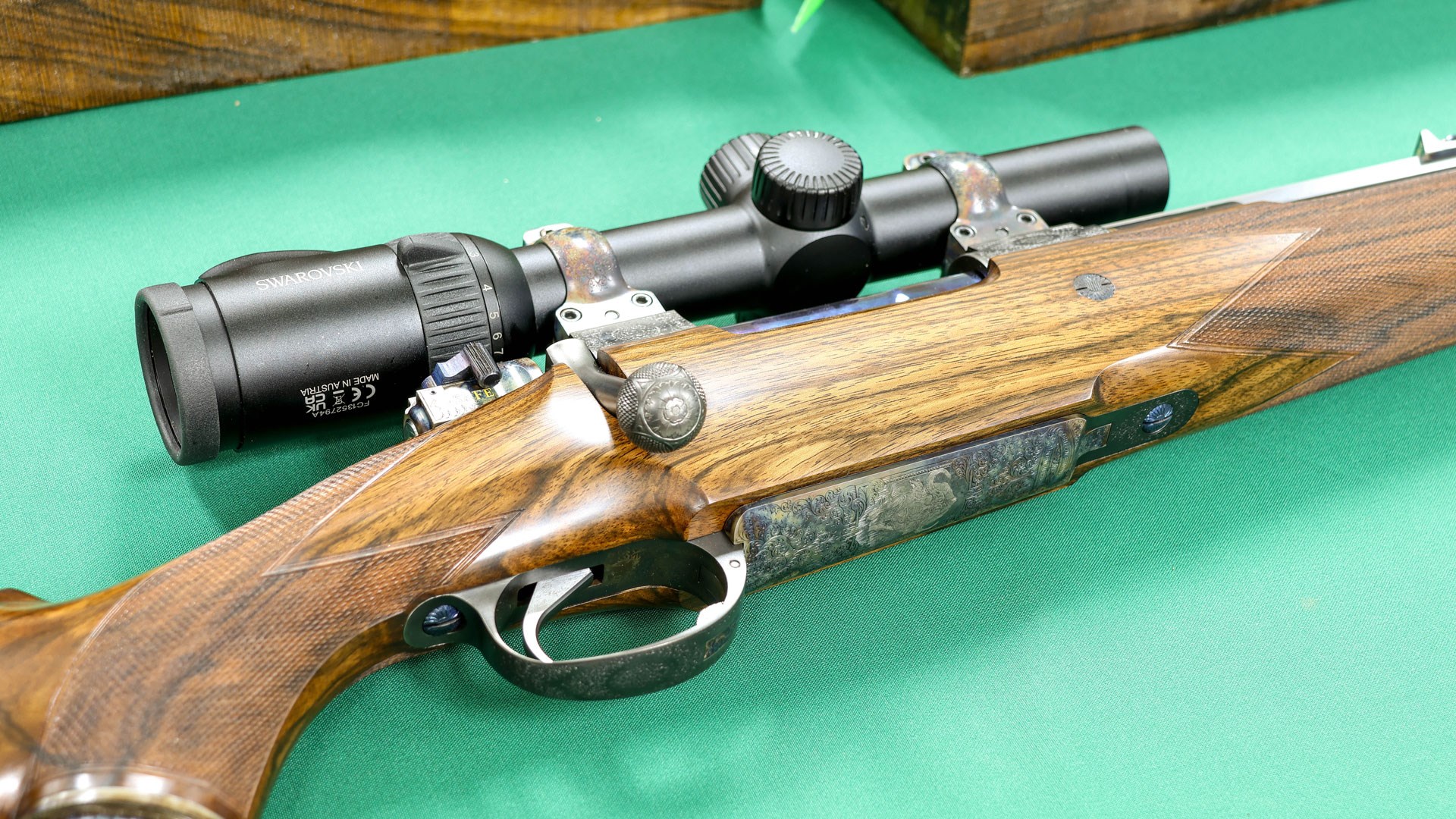
For those looking for the classic bespoke bolt-action rifle capable of taking any and all of the world’s game, but bearing the Made in America tag, you’ll want to look long and hard and G&H’s new Criterion rifle. Here we see a double-square bridge Mauser action, with a proper three-position wing safety, with a traditional blued-steel barrel, featuring a rib running the length of that barrel. The figured walnut stock—again a Dan Rossiter design—features a sweeping pistol grip at an angle which works well with the hard-kicking dangerous game cartridges, and a cheek piece and comb which are perfectly aligned for use with the safari-style express iron sights. The proprietary Griffin & Howe detachable scope mounts facilitate the use of an optic, while allowing the hunter to quickly access the iron sights for the follow up of dangerous game. The entire package is only made better when embellished by the G&H color case hardening and the fruits of Chris Rossiter’s labors—his engraving on the Criterion rifle I shot was nothing shy of fantastic. The scroll along the receiver and rings, the charging Cape buffalo bull on the floor plate, the gold ring at the muzzle—and all the subtle little workings on the grip cap and more—truly turn a great rifle into an indisputable heirloom piece. The leather recoil pad is perfectly installed—no easy feat—and the rifle was stocked with a 14 ¼-inch length of pull, which fits me perfectly. Those proprietary scope mounts are purpose built to help the scope stay put and best handle the recoil of the hard-kicking dangerous game cartridges, and the Swarovski Z8 1-8x scope gave plenty of flexibility.
Dan Rossiter had this to offer, regarding his new dangerous game gun: “Griffin and Howe’s Criterion rifle was designed with two primary goals in mind. First and foremost was to provide our clients with bulletproof safari rifles that would be the exemplar of strength, function and reliability when the chips are down. As such we utilize a modern magnum-length Mauser 98 action that incorporates all the features necessary for a dangerous game rifle. The paramount features found on this action include controlled round feed, Winchester style safety, flawless feeding, integral mounts for our G&H quick detachable scope rings and uncompromised strength and safety inherent to the 98s design.
Secondly the Criterion rifle is an American made bespoke product intended to stand alongside the finest bolt rifles that Britain and Europe have to offer. This new offering allows our rifle makers to execute their finest work. This craftsmanship and attention to detail can be found on every element that comprises the finished product. The barrel is a perfect example of this attention to detail. We utilize a Krieger cut-rifled barrel that begins life as a massive 1 ¾ inch tube. The barrel’s striking profile is machined, filed and polished to perfection and takes a minimum of 50 hours to complete. Featuring an integral quarter rib that transitions to an intermediate rib and terminates with the integral front sight ramp, the exterior of the barrel is beautifully sculpted yet sacrifices nothing in accuracy department. The stock is fit to each client and handmade from the finest Circassian walnut. Engraving is designed to each individual’s aesthetic sensibility. Metal finishing incorporates traditional methods including slow rust bluing, color case hardening, and inter bluing. Every Criterion rifle is a unique reflection of the individual client truly fulfilling the bespoke intention.”
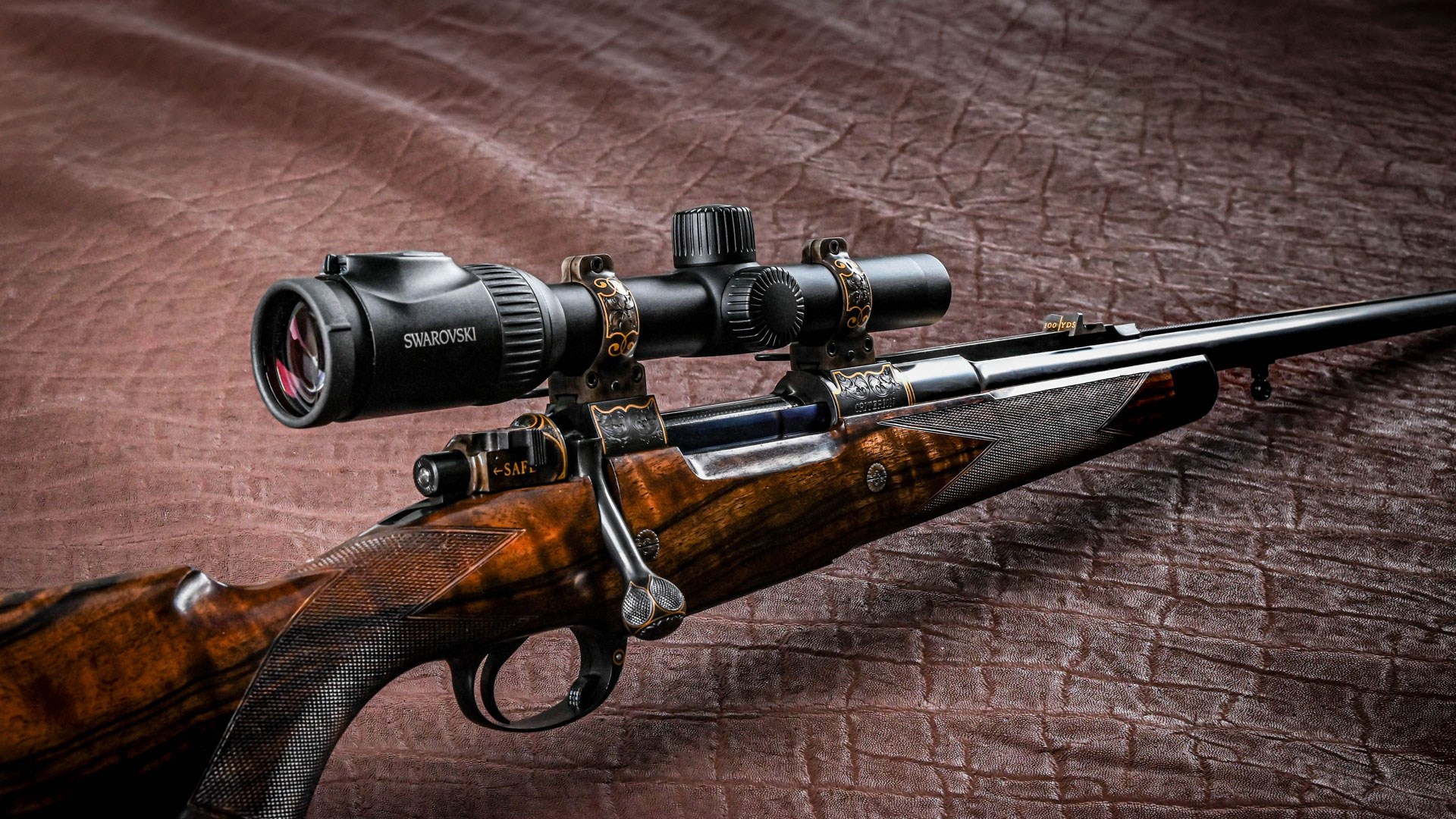
This particular Criterion rifle is chambered in my favorite DG cartridge: the .404 Jeffery. Driving a 400-grain bullet of .423-inch-diameter to a muzzle velocity of nearly 2,300 fps in the Hornady loads used for regulation, the Criterion rifle would stack three of these into a group hovering around the ¾-MOA mark; this is accurate enough for any hunting situation where a .404 Jeffery is suitable. We took the rifle not only to the bench, but took turns using it on steel plates out to 150 yards off sticks with excellent results: the rifle handled wonderfully, and the stock design helped to bring it quickly and naturally to the shoulder, with the eye quickly obtaining either sighting system. Removing and reinstalling the scope showed no noticeable change in point of impact, and whether scoped or not, the rifle was an absolute pleasure to shoot. If you’re looking for an heirloom rifle, made entirely in America, which will rival the finest English and European makers, look no further than the Criterion from Griffin & Howe.
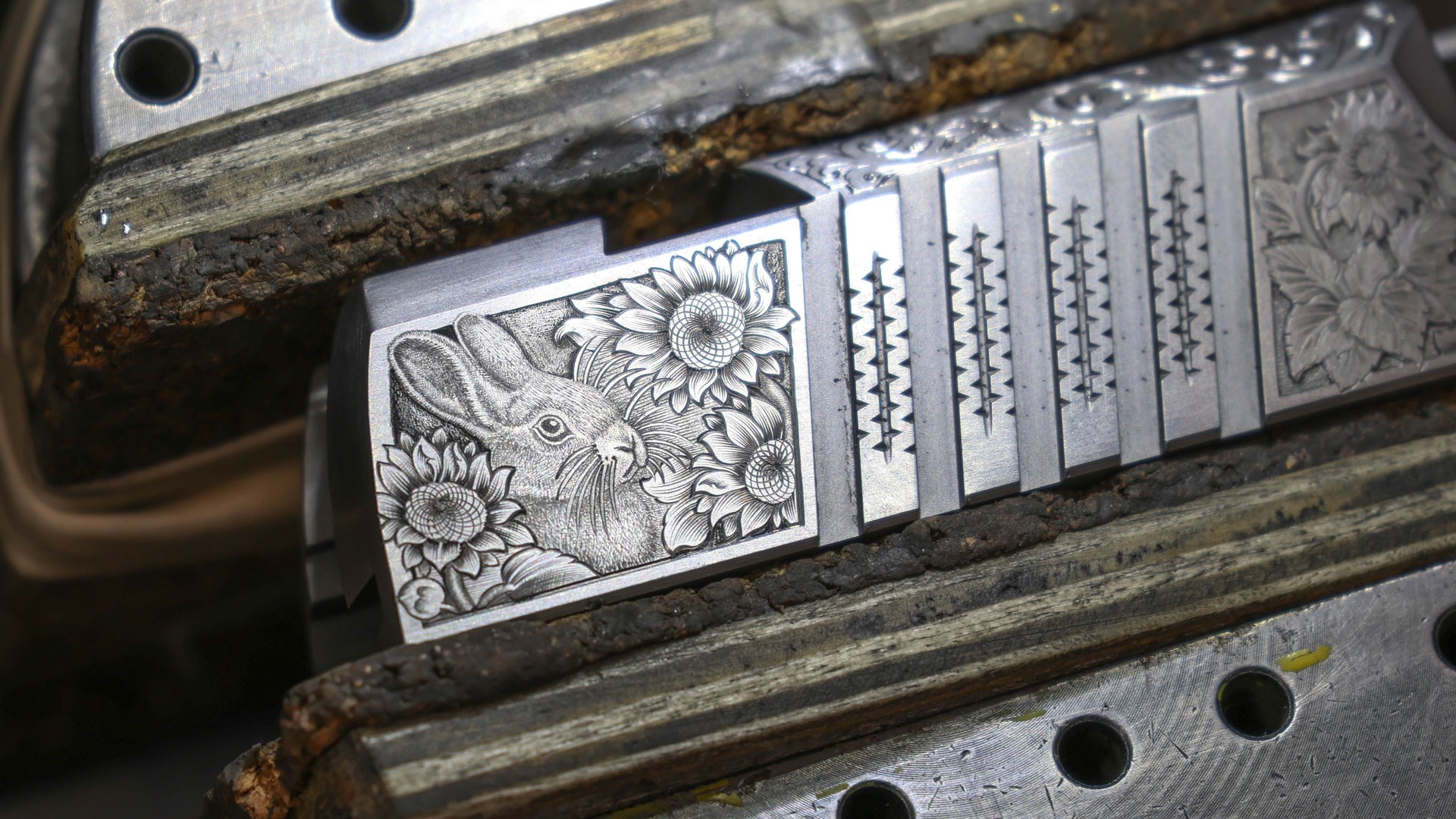
Strolling through the G&H workshop, you will see a crew of very talented individuals, each confident in their duties. Whether it is a full restoration of a vintage lever-gun, or a new set of rings for a modern scope on the G&H sidemount on a Pre-’64 Model 70 Supergrade, it is all handled at the G&H workshop. They have CNC machines to custom make screws and other needed parts, racks of barrel blanks and premium walnut, but most importantly they have the craftsmen needed to handle the job properly. I was mesmerized watching Chris Rossiter’s efforts on a TV screen above his station, as he put the ‘graver to work on a Cabot 1911, expertly crafting a sunflower theme for a lady client. Chris’ dog Jackson was looking at me as if I were a simpleton, watching his master’s precise work come to fruition. Everyone in the shop had a specialty, with Dan Rossiter handling the important stockmaking duties—the Criterion is assuredly his baby—while also managing the overall operation. All said, it’s a fantastic place to visit if you’re into the behind-the-scenes stuff.
I left the Hudson Farm grounds with the sense that this company has not only risen from the ashes, but represents the pride of American craftsmanship. While maintaining a proper respect for their history and lineage, the Rossiter brothers have breathed new life into the name, and through these new designs will once again put the Griffin & Howe name where it belongs: in the hunting fields.