Some folks may be quick to declare that semi-automatic pistols are the clear winners for daily concealed carry these days. But the pistol-versus-revolver debate is still a lively one in the outdoor adventure circles. It's true that polymer-framed, striker-fired pistols are gaining traction as trail guns, especially those chambered in 10mm Auto. But the big-bore single-action and double-action revolvers have yet to be de-throned due to the useful features they bring to the table.
I have to admit that some of the reviews I've seen that pit revolvers against pistols for use as trail guns or bear medicine are somewhat disappointing. This is because the guns used often result in an apples-to-oranges comparison. A 4.5-inch barrel, 15+1-shot polymer 10mm Auto is simply not in the same class as say an 8-inch barrel, 6-shot .44 Magnum revolver. We can compare results and see which one is more powerful but cannot clearly state that one is better or the 'best' option for the job at hand.
That is why for this evaluation of the 10mm Auto pistol cartridge's performance potential, I did everything I could to level the playing field. If I was going to pit a pistol against a revolver, both would have to be in the same caliber (no cross-caliber comparison here) and have the same barrel lengths. This was not as easy to accomplish as one might think. The selection of 10mm pistols has been growing but the revolver options are relatively slim. As for barrel lengths, even the guns made by the same manufacturers are shipped with barrel lengths that differ by fractions or whole inches.
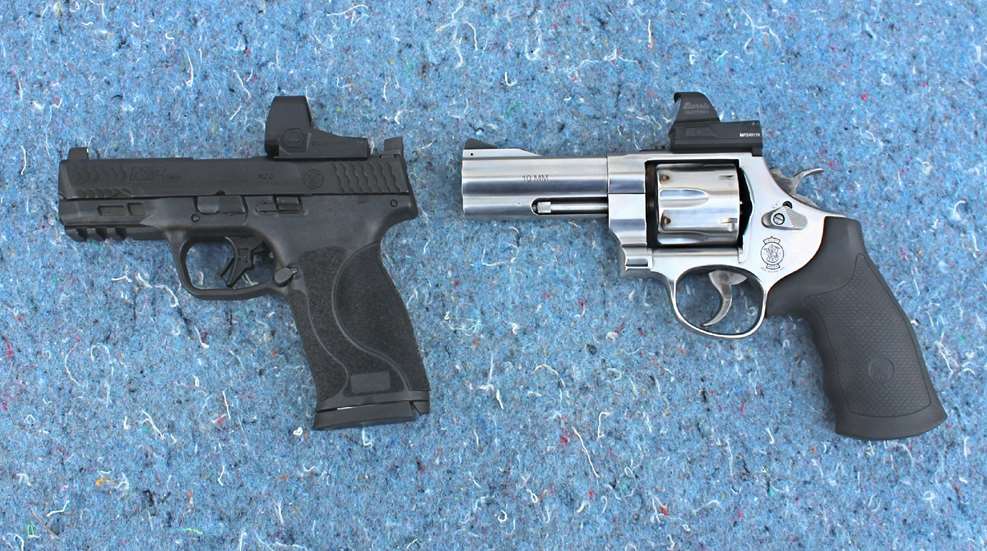
But I finally found just what I was looking for in the Smith & Wesson catalog. This company currently offers a recently released version of the M&P 2.0 polymer-framed pistol, along with the N-Frame Model 610 double-action revolver, both of which are chambered in 10mm Auto and sport 4-inch barrels. These two models also offer a handy balance of size, weight, features and ammunition capacity for use as trail guns.
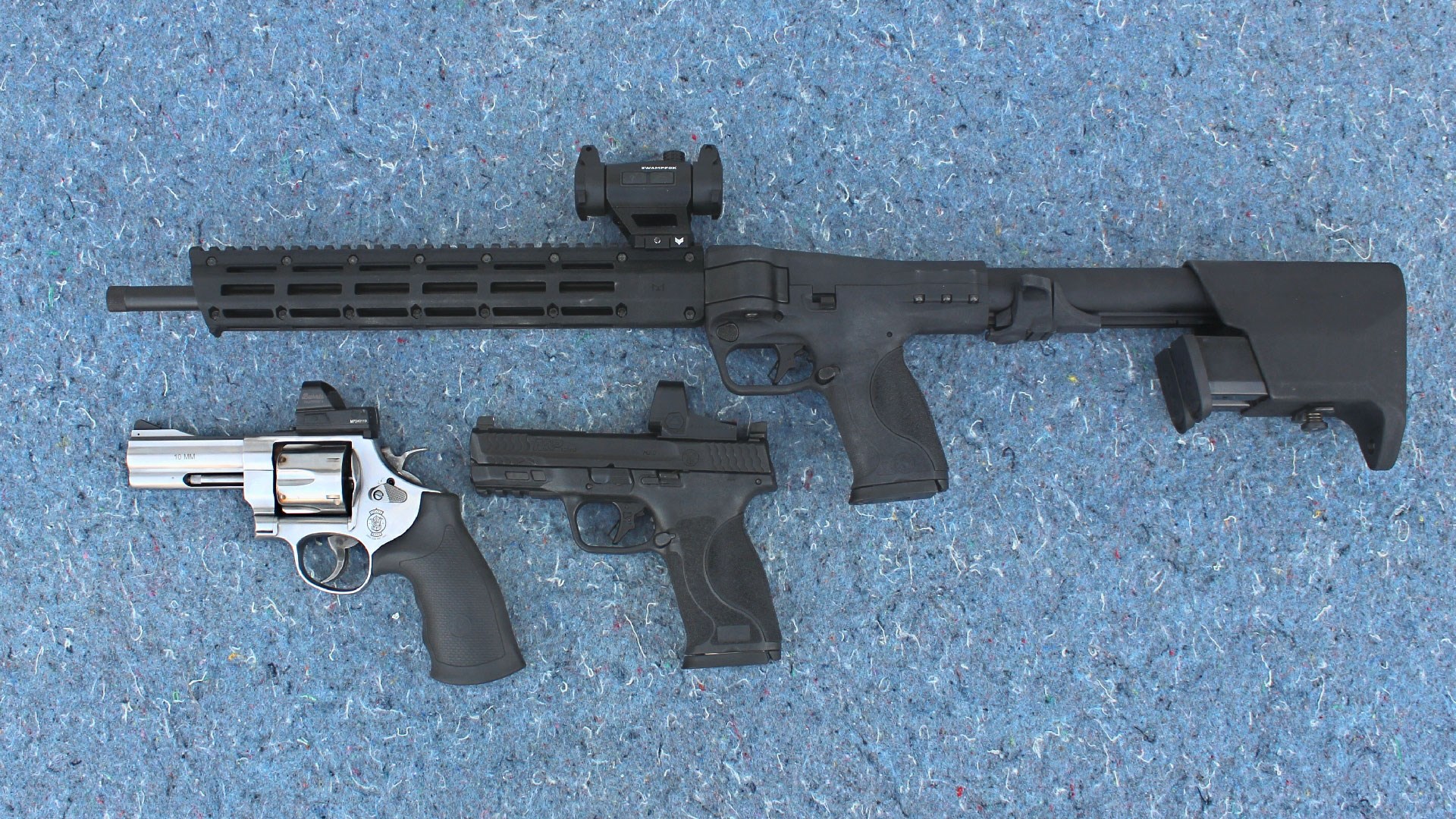
In fact, Smith & Wesson is one of just a few manufacturers that offers a 10mm Auto trail gun trifecta. In addition to the pistol and revolver options, they also offer their folding pistol-caliber carbine, or FPC, in this caliber. The folding carbine will be the subject of another review. For this evaluation, let's take a look at what the M&P 2.0 and Model 610 bring to the table and see how their ammunition performance compares.
The Smith & Wesson M&P 2.0
Considering that Smith & Wesson was founded more than 170 years ago, its polymer-framed pistols represent a fairly recent addition to its product line-up. The first models to market were members of the SW, or Sigma, series launched in 1994. After running into marketing and legal problems with the Sigmas, the company would re-invent its polymer pistol options with the launch of the M&P series introduced in the summer of 2005. In the two decades since, the M&Ps have been among the most successful and popular American-made pistols in this class. The 2.0 versions of the M&P began shipping in 2017 and the model options have expanded to include the 4-inch barrel 10mm Auto version shown here.
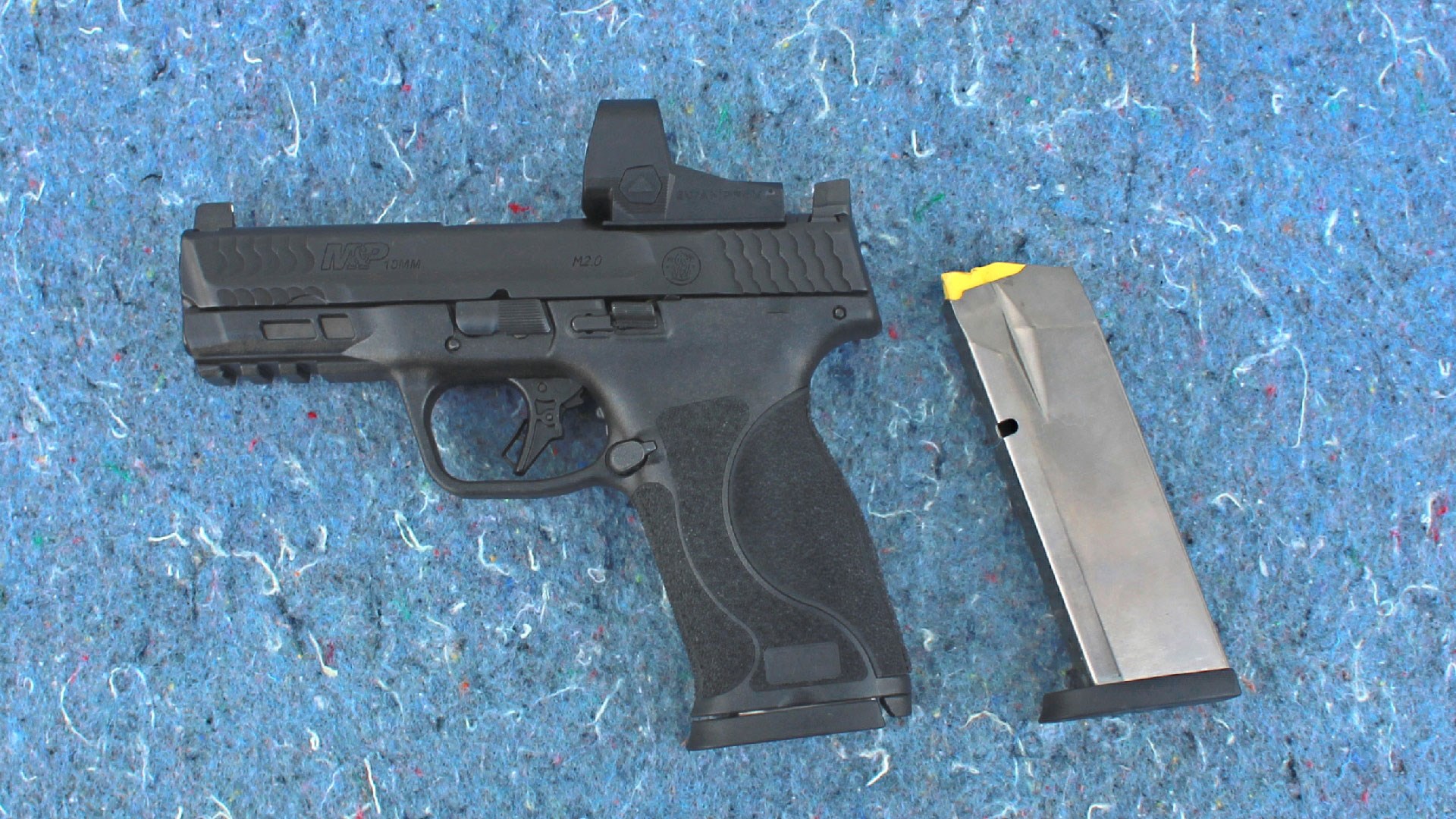
The M&P 2.0 is a full-size, recoil operated and striker-fired polymer framed pistol. The stainless-steel slide features front and rear scalloped cocking serrations and a durable black Armornite finish. The metallic optic-height white dot slights are dovetailed into the slide with the rear sight adjustable for windage. The 4-inch stainless steel barrel features 1:10-inch right-handed rifling and a matte-black finish to match the slide. The barrel is supported by a recoil assembly consisting of a one-piece steel guide rod that captures a single flat-wire recoil spring.
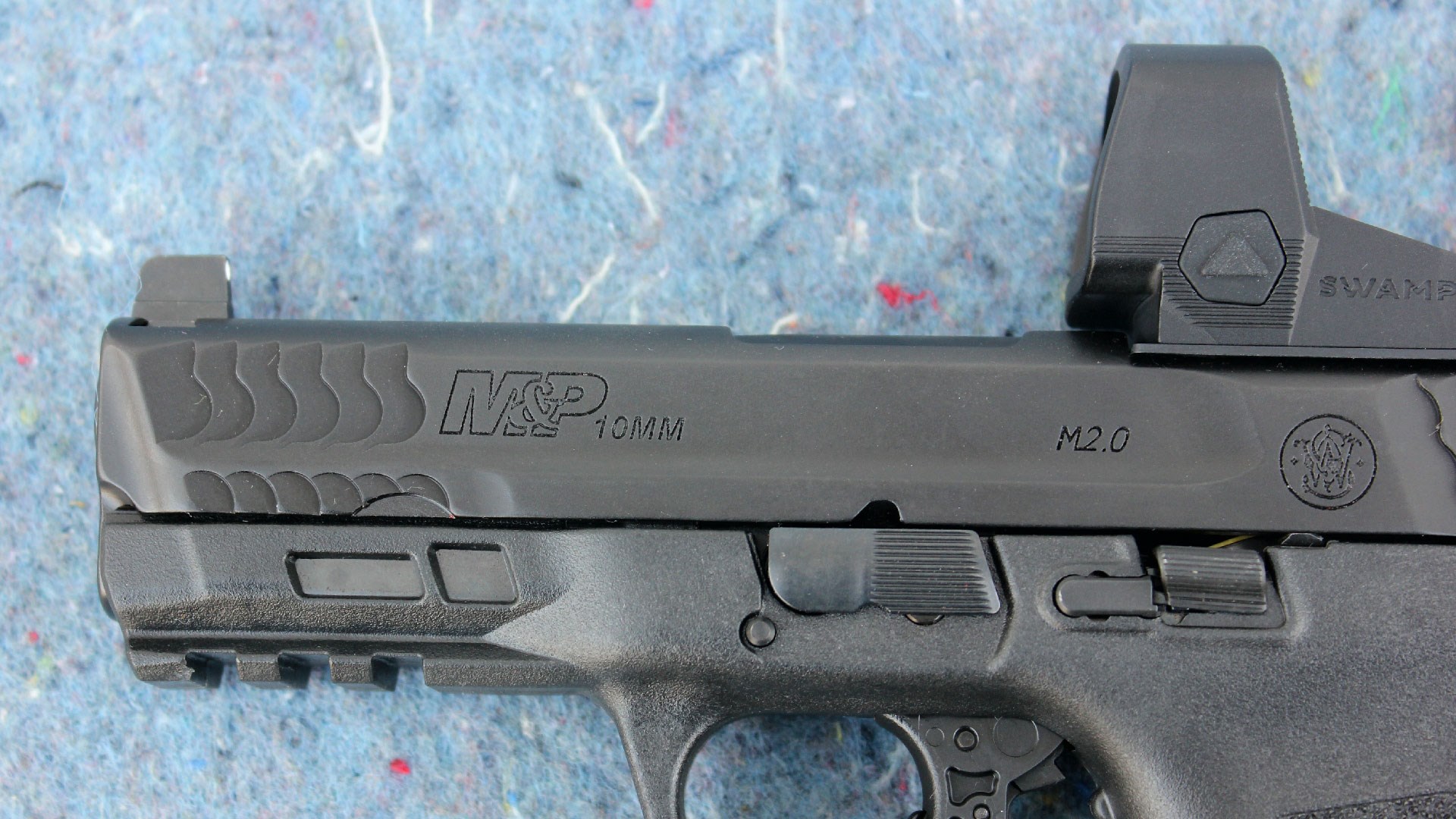 The stainless steel slide is treated with a durable Armornite finish
The polymer frame features an embedded stainless steel chassis for increased rigidity. The dust cover's molded-in four-slot accessory rail is 1.75-inches long to accommodate a variety of light and laser modules. The external controls include the left-side takedown lever, an ambidextrous slide stop, a reversible magazine release button and a M2.0 flat-face trigger with an integral trigger safety lever. The trigger tested exhibited a relatively light take up with a firm stop before breaking cleanly with 4-pounds 9-ounces of pressure, according to a Lyman Products digital trigger gauge. This pistol arrives with two 15-round magazines and a total of four interchangeable back straps for the aggressively textured grip frame.
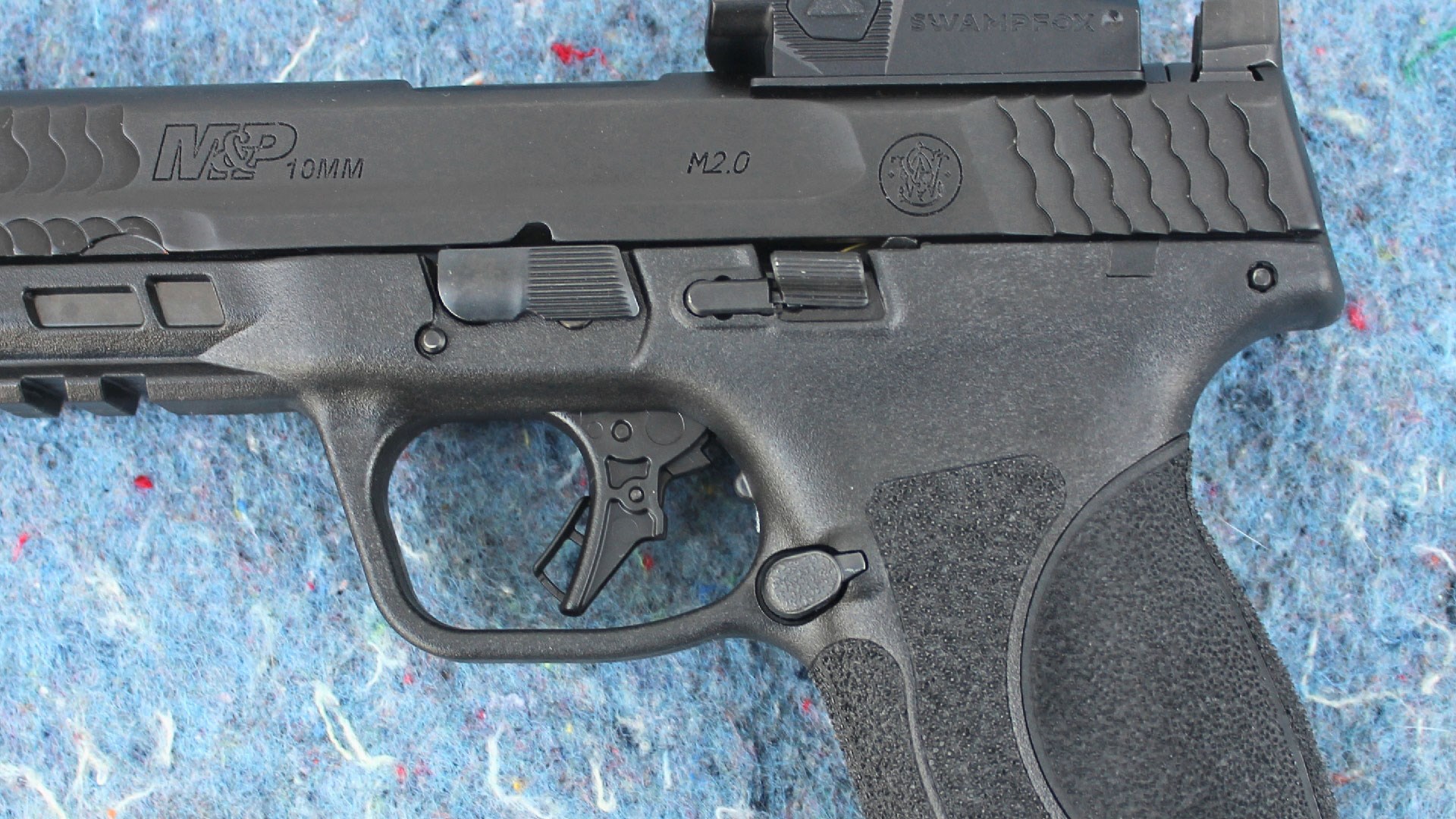 Features include optic-height sights, a flat-faced trigger and aggressive grip texturing.
The slide for this version of the M&P 2.0 ships with the Smith & Wesson C.O.R.E. optics mounting system. The slide's optic cutout is covered by a removable polymer filler plate secured with two screws. An optics mounting kit was provided which included seven plates and a set of screws to fit most of the available micro red-dot optics currently on the market. For this range test, the pistol was topped off with a Swampfox Justice II. This RMR footprint 6-MOA red-dot is fitted with a generously sized 30-mm ruby-coated lens which provides a wide, clear field of view. This makes it a great fit for a trail gun like this one.
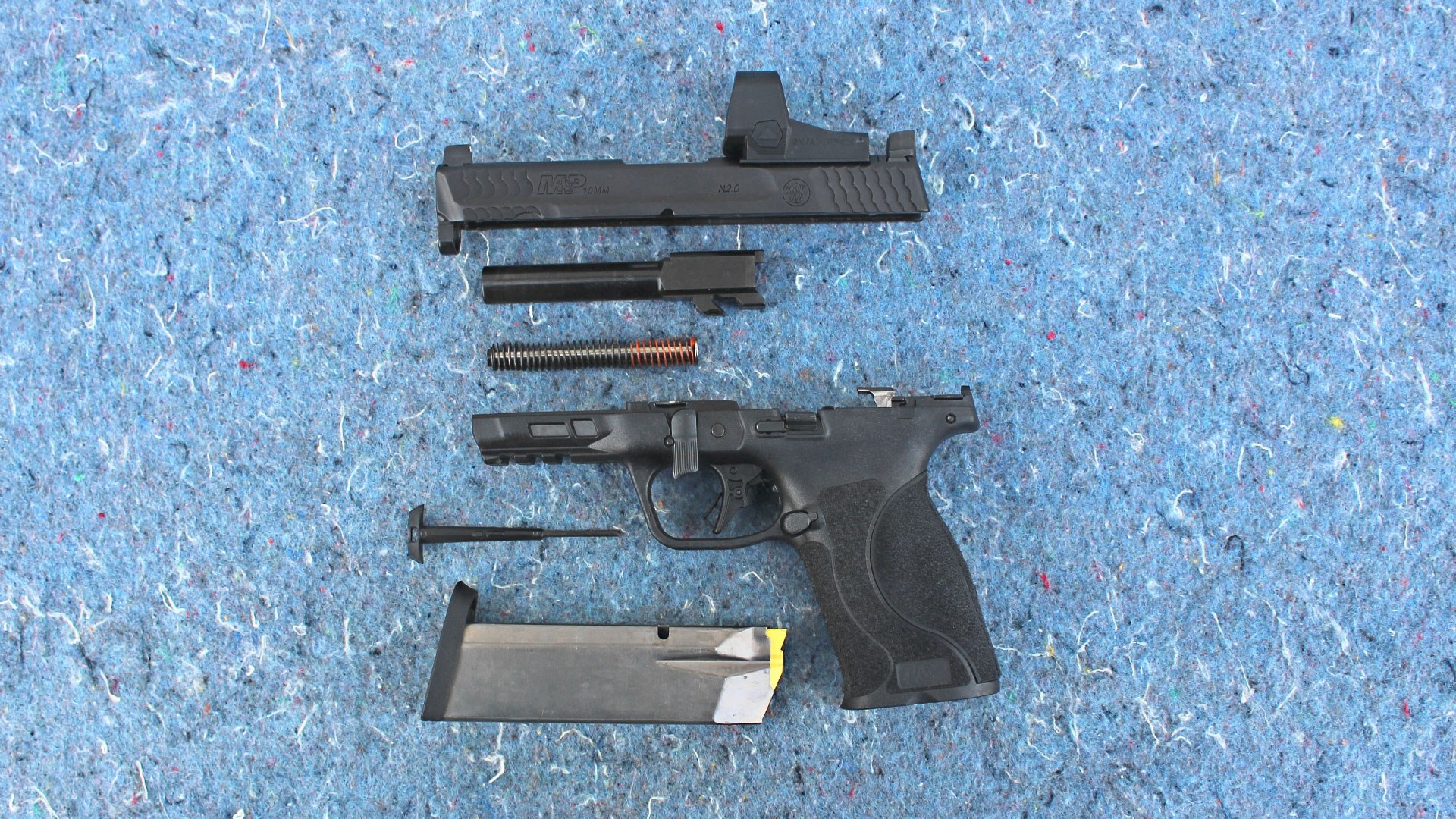 Like other M&P models, this pistol can be disassembled without pressing the trigger.
Smith & Wesson's Model 610
Smith & Wesson found its double-action revolver footing back in 1899 with the release of the .38 Hand Ejector model. The company would introduce its first N-Frame (large frame) models soon after in 1907. When the .357 Magnum cartridge came along in 1935, the N-Frame was among the first revolvers chambered for it. This frame would eventually form the foundation for the Model 29 .44 Magum of Dirty Harry fame, the 8-shot Model 327 .357 Mag. and the subject of this conversation, the 6-shot Model 610 chambered in 10mm Auto.
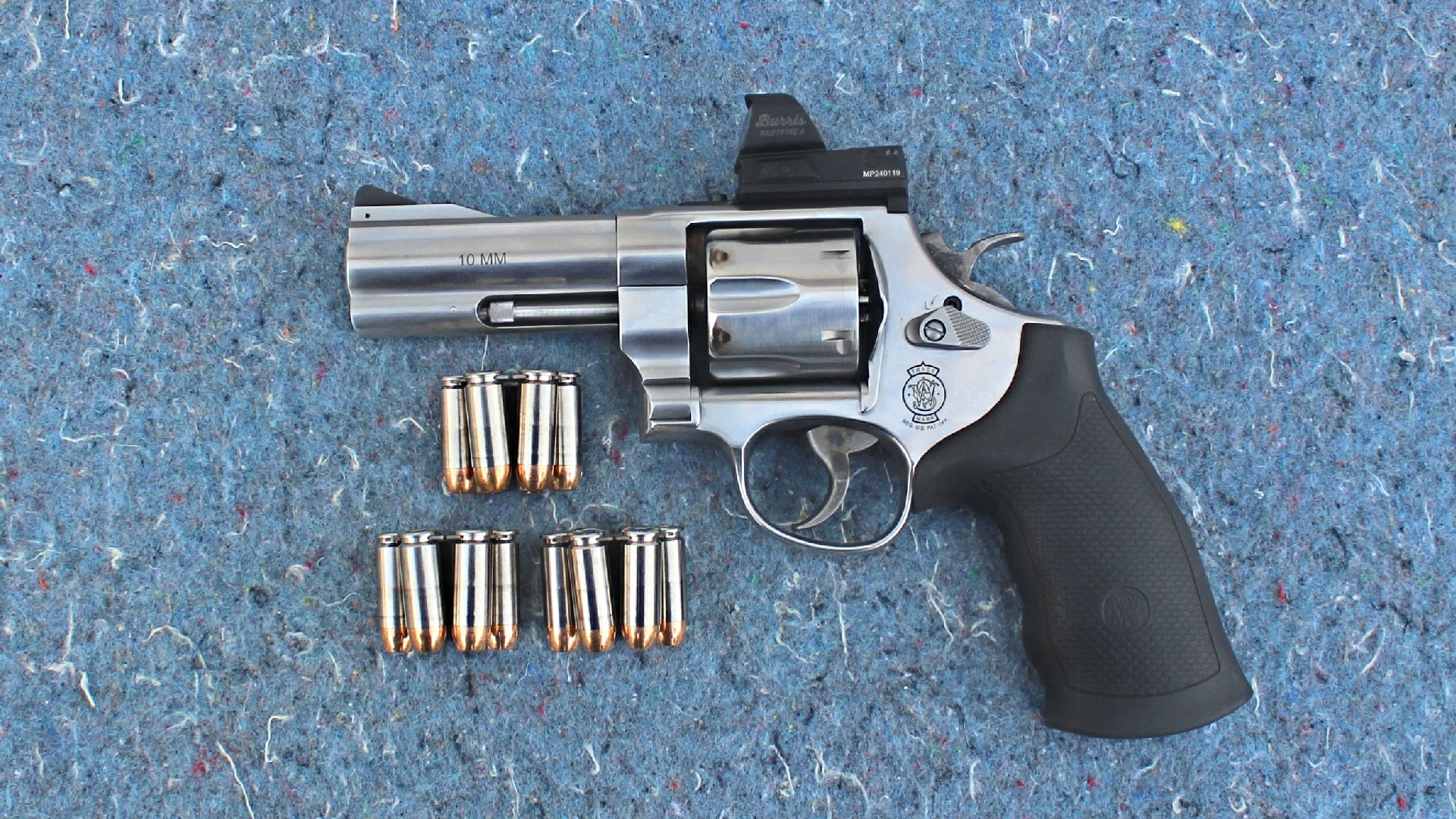
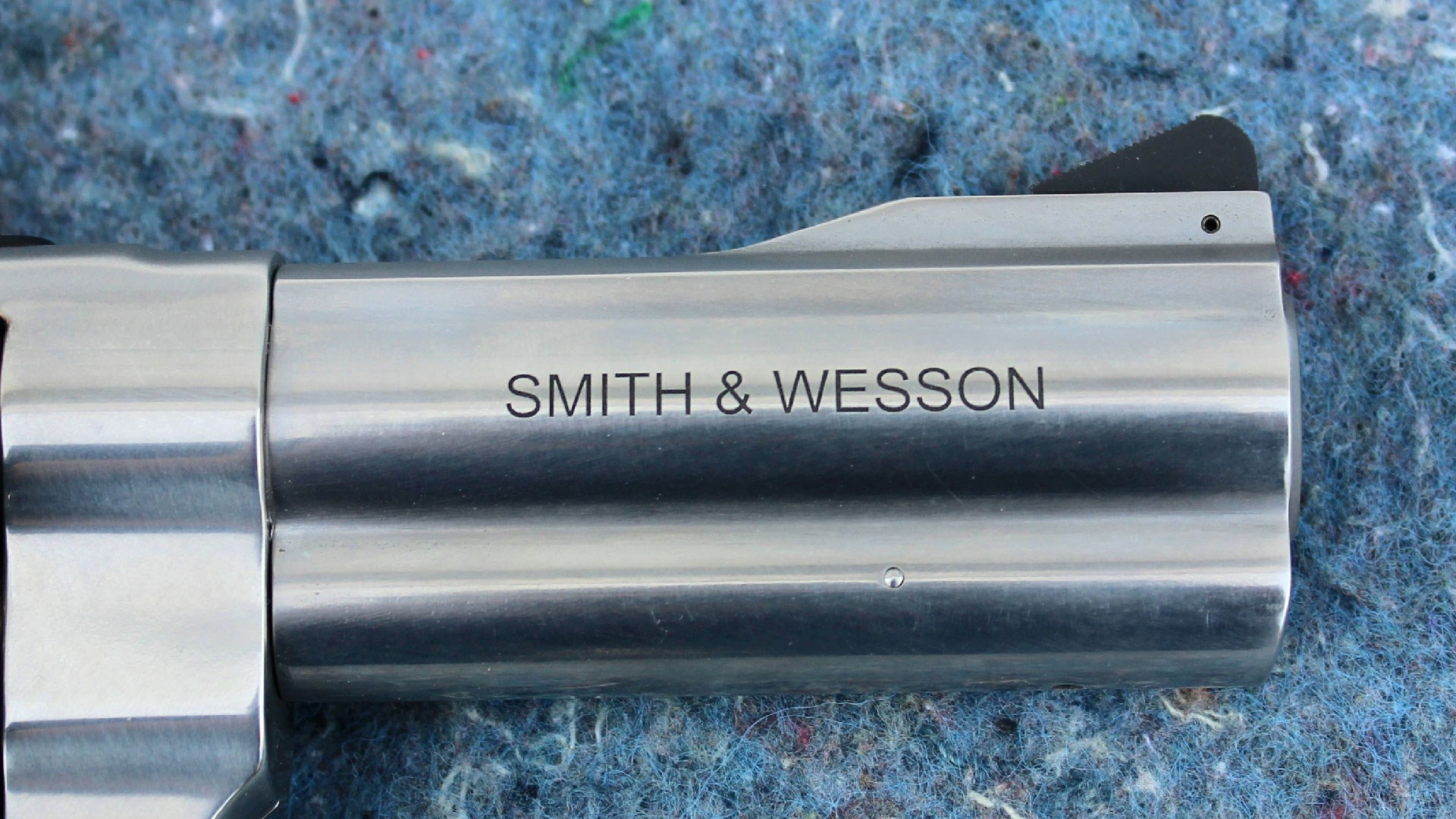
Introduced in 1990, the Model 610 is an all-stainless steel, double-action revolver with a satin finish. The sights consist of a pin and serrated front sight paired with a fully adjustable square notch rear sight. The 4-inch barrel features a full underlug with a hollow that shrouds the ejector rod. The 'pie wedge' cylinder release, located on the left side of the frame, is checkered for added purchase. Just above the release is the port for the Internal Locking System (ILS). Two keys are provided. The wide spur of the exposed hammer, like the cylinder release, is deeply checkered.
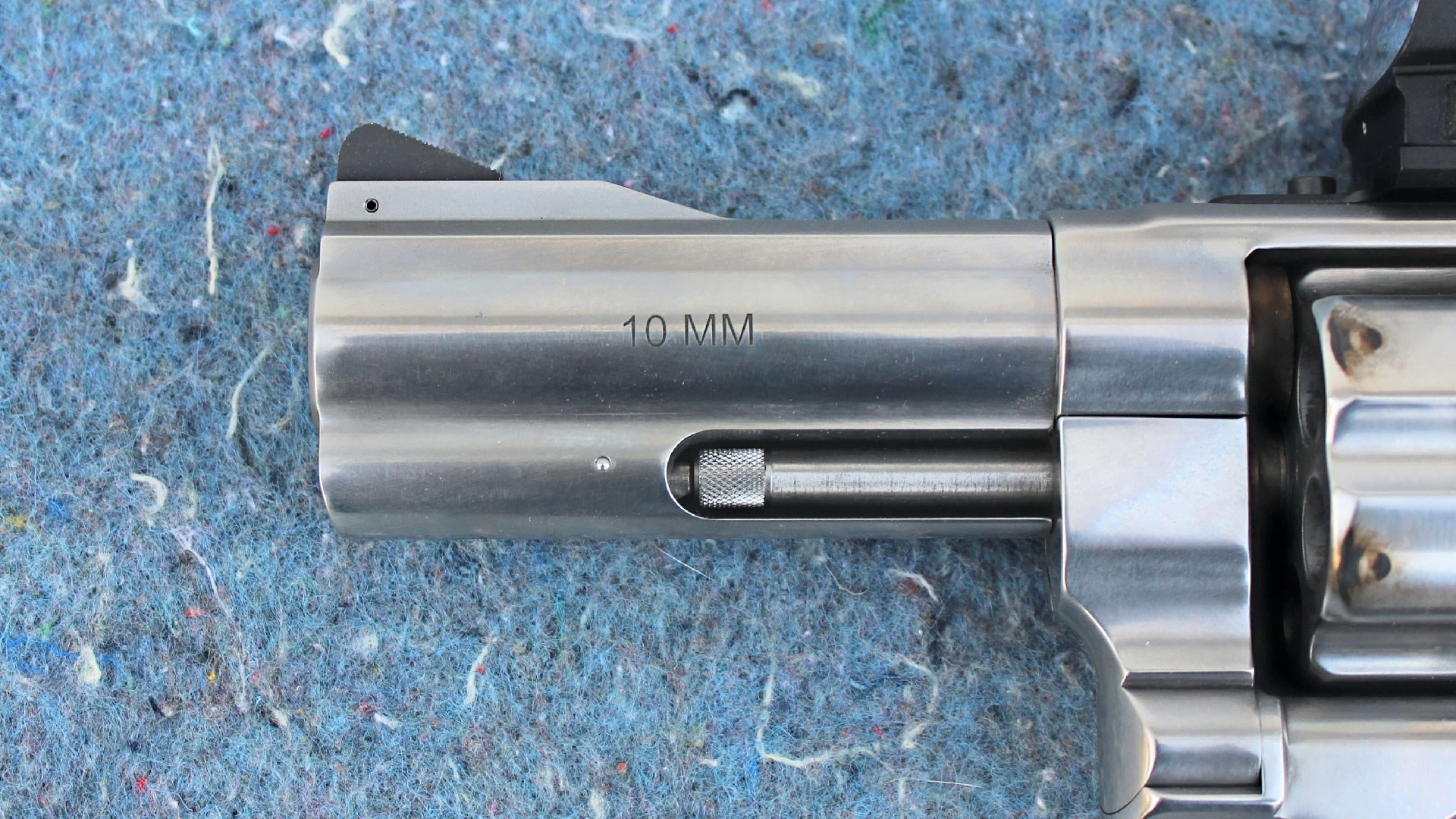 The barrel’s heavy underlug reduces muzzle rise and shrouds the ejector rod.
Pressing the cylinder release allows the fluted 6-shot cylinder to swing out to the left side of the frame. This model arrives with three full-moon clips to support the cartridges as they are inserted into and ejected from the cylinder. The wide, untextured trigger of the revolver sent for this review was smooth, clean and unexpectedly light. A double-action trigger pull can weigh in at 12 pounds or more. In this case, the double-action trigger was just 9 pounds 12 ounces. Manually cocking the hammer for single-action fire reduced the pull weight to 4 pounds 1 ounce. The revolver is capped off with a hand filling, textured soft rubber grip that covers the grip frame for more comfortable shooting.
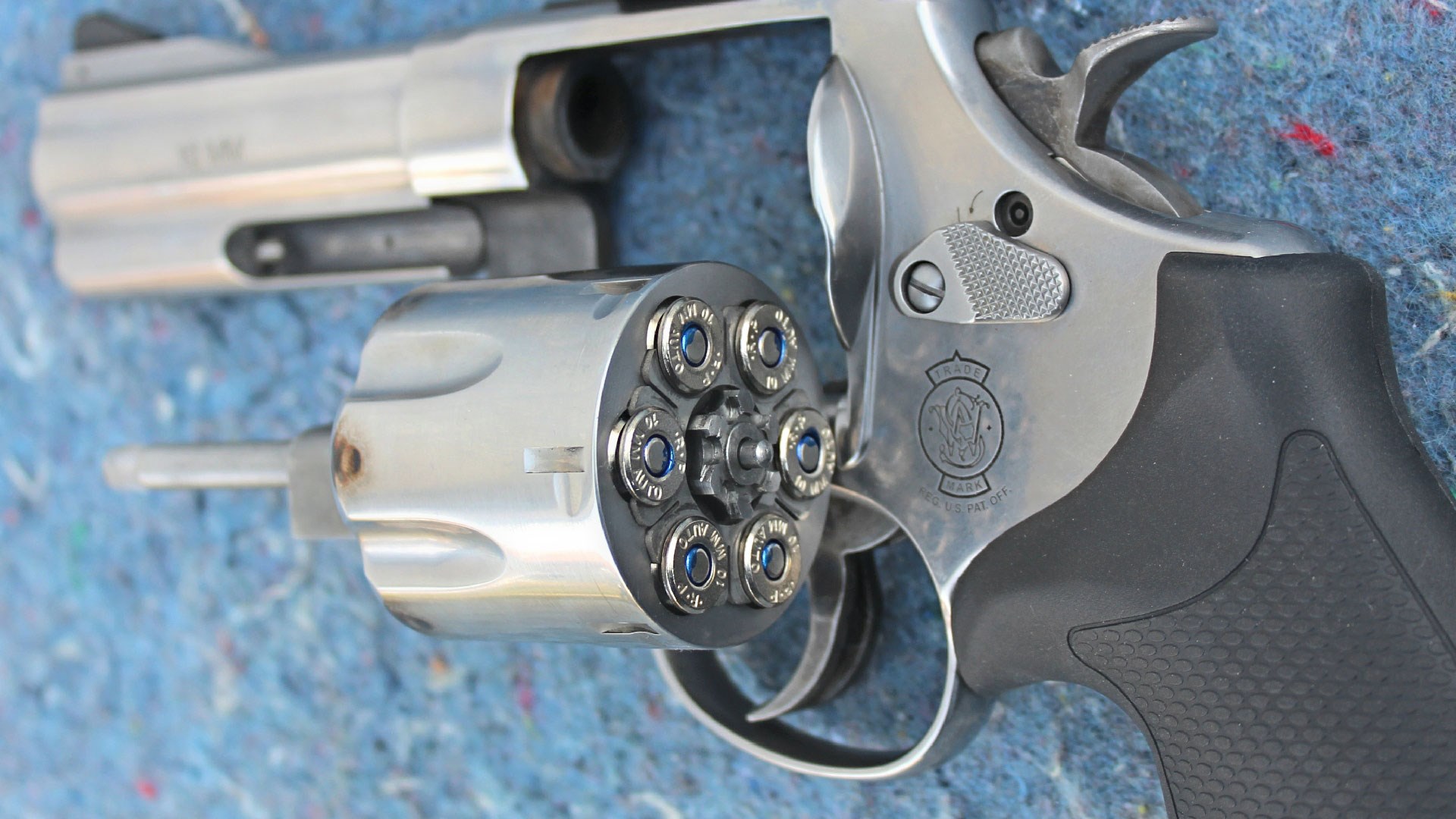 This model uses full-moon clips to load and eject 6-rounds of ammunition at the same time.
Although modern Smith & Wesson revolvers are not listed as 'optics ready,' technically speaking, they are. The rear sight assembly is secured by a pair of screws that allow it to be removed and replaced with aftermarket optics mounting plates. Weigand Machine and Design offers Picatinny rail and direct-mount plates for Smith & Wesson revolvers. In this case, the Model 610 was fitted with the Direct Attachment MINI MICRO Red Dot Mount ($39.95). This mount was used to support a Burris Optics FastFire 4 ($456) red dot optic which features four reticle settings and a screw-on weather shield to enclose the optic.
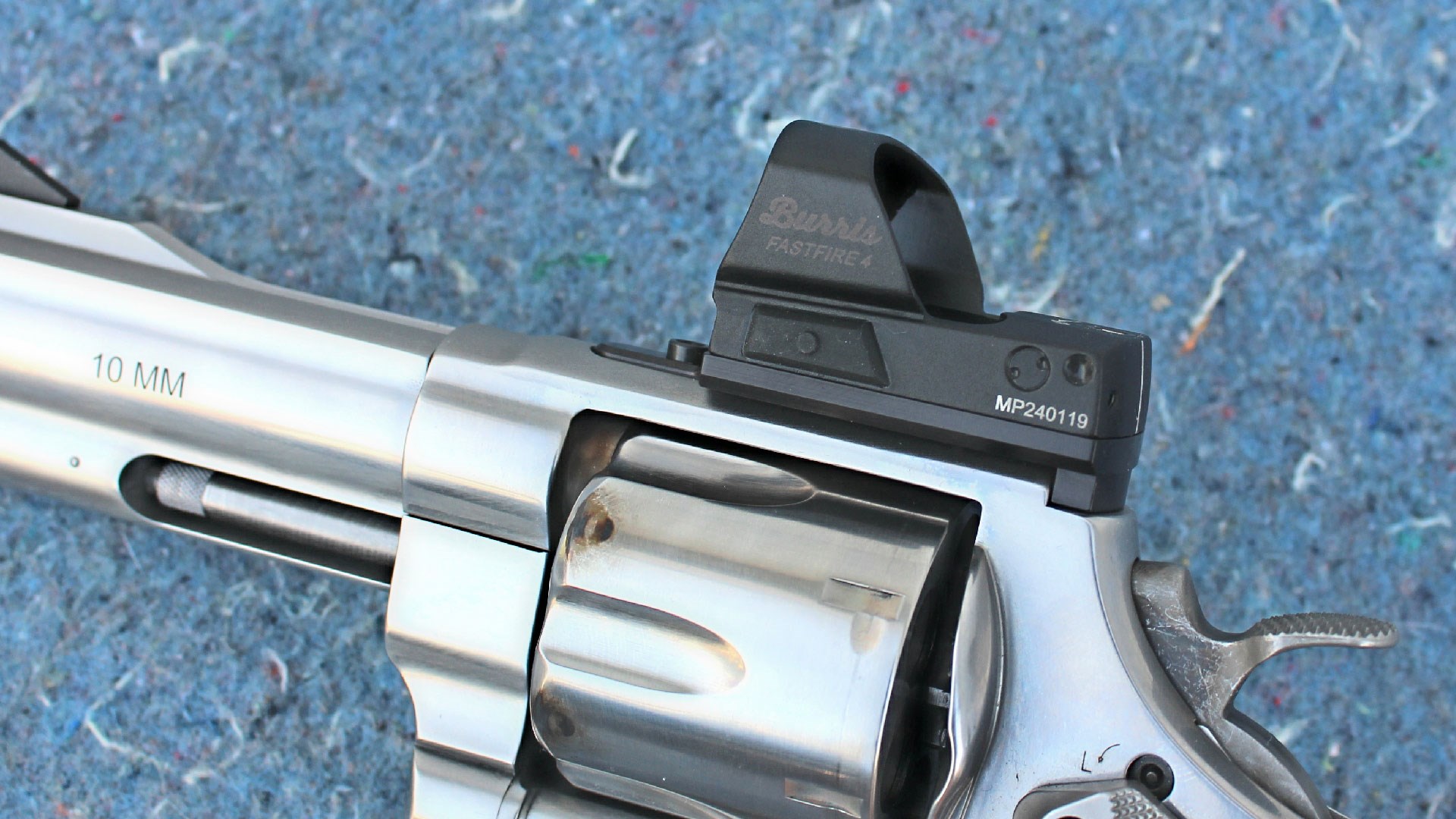 The Burris Fastfire 4 was fitted to the Model 610 using a Weigand micro red dot optics mounting plate.
10mm Auto Ammunition Selection
Today's selection of 10mm Auto ammunition is much more diverse that it used to be. This is especially true now that this round has expanded from its original law enforcement and defensive roles into handgun hunting and bear medicine applications. And since we are comparing pistols to revolvers, it did not seem like just three loads would do the trick. Expanding the test ammunition to include a fourth load is still just scratching the surface of available options but it is more representative of what is available.
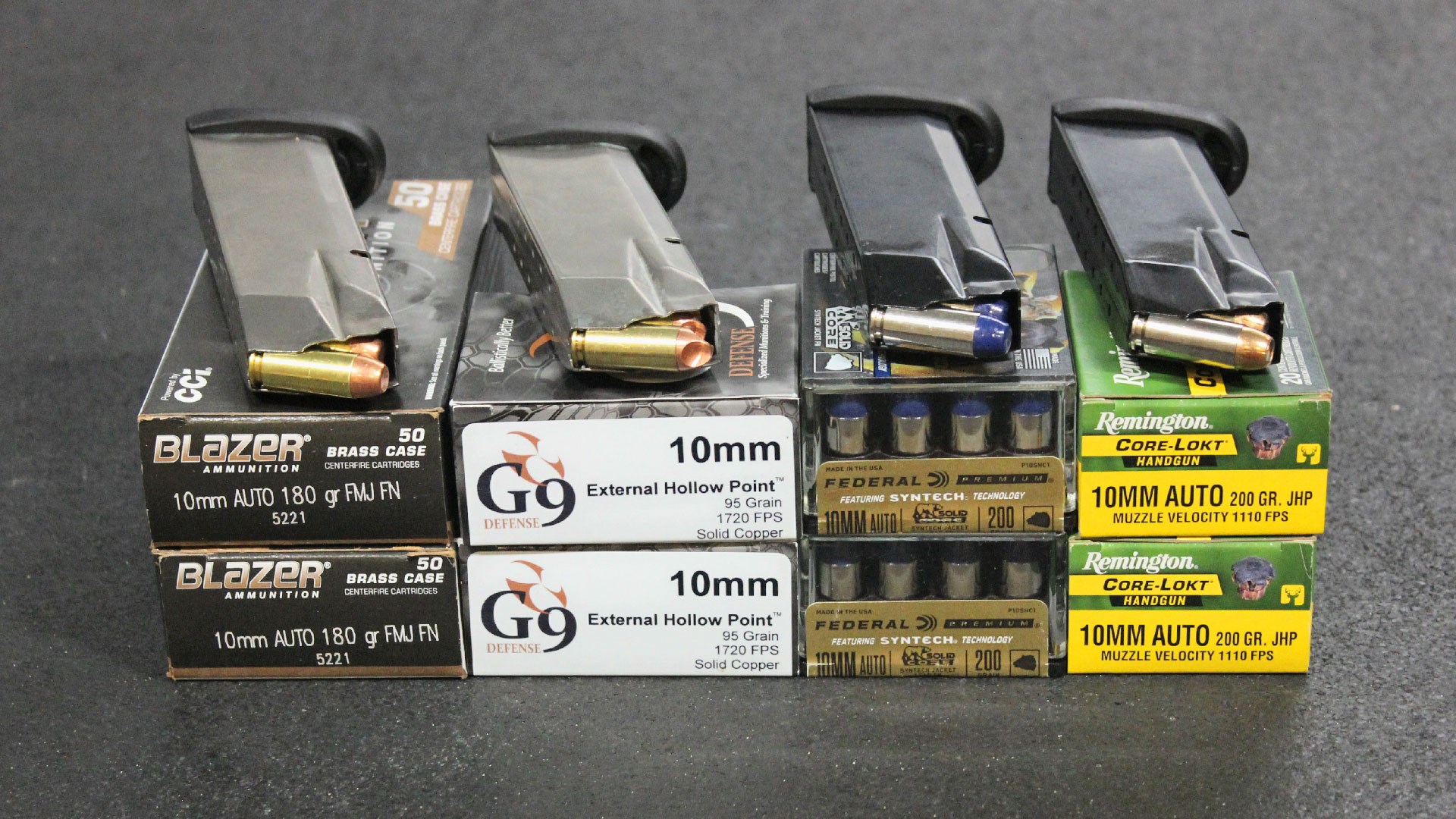 Test ammunition included practice-grade, hunting and defensive loads.
The more common practice-grade loads for this caliber are topped with 180-grain full-metal jacket bullets launching at listed velocities of around 1,000 to 1,200-fps. This category was covered by CCI's Blazer Brass round listed at a warmer 1,200-fps. Although there are more energetic options available, this mid-grade load can serve double duty as a practice and bear defense load if it's what you have on hand.
The dedicated hunting and defense against dangerous game deep-penetration load was represented by Federal Premium's recently released Solid Core option. This round fires a 200-grain, flat-nose bullet composed of hard, high-antimony lead, totally covered with this company's Syntech polymer coating, at a listed velocity of 1,200-fps. The company states the total polymer jacket eliminates lead fouling and reduces friction without the need for a gas check.
Some ammunition makers offer speedy 10 mm Auto loads topped with atypically light-weight bullets. One such company is G9 Defense which has yielded positive results in the course of various tests I've conducted. They offer an External Hollow Point series load topped with a 95-grain fluted-copper solid listed at 1720-fps. The rounds generate more moderate levels of felt recoil with impressive gel block results.
I flipped a coin on the last round to test. Should it be an uber-hot, ramped-up wrist breaker load from a boutique manufacturer, or, something more moderate which would be more suitable for in-town, personal protection? The winner was Remington's Corlokt Handgun round firing a 200-grain jacketed hollow point at a relatively sedate 1110-fps. Its more moderate levels of recoil and muzzle flash are better suited to threats of the two-legged variety.
At the Range
Having owned and tested a variety of Smith & Wesson products over the course of three decades, I expected the M&P 2.0 and Model 610 to be on their best behavior at the shooting range. They did not disappoint. Using a total of five factory 15-round magazines, the M&P 2.0 fed, fired and ejected all ammunition tested without any pistol or ammunition related malfunctions.
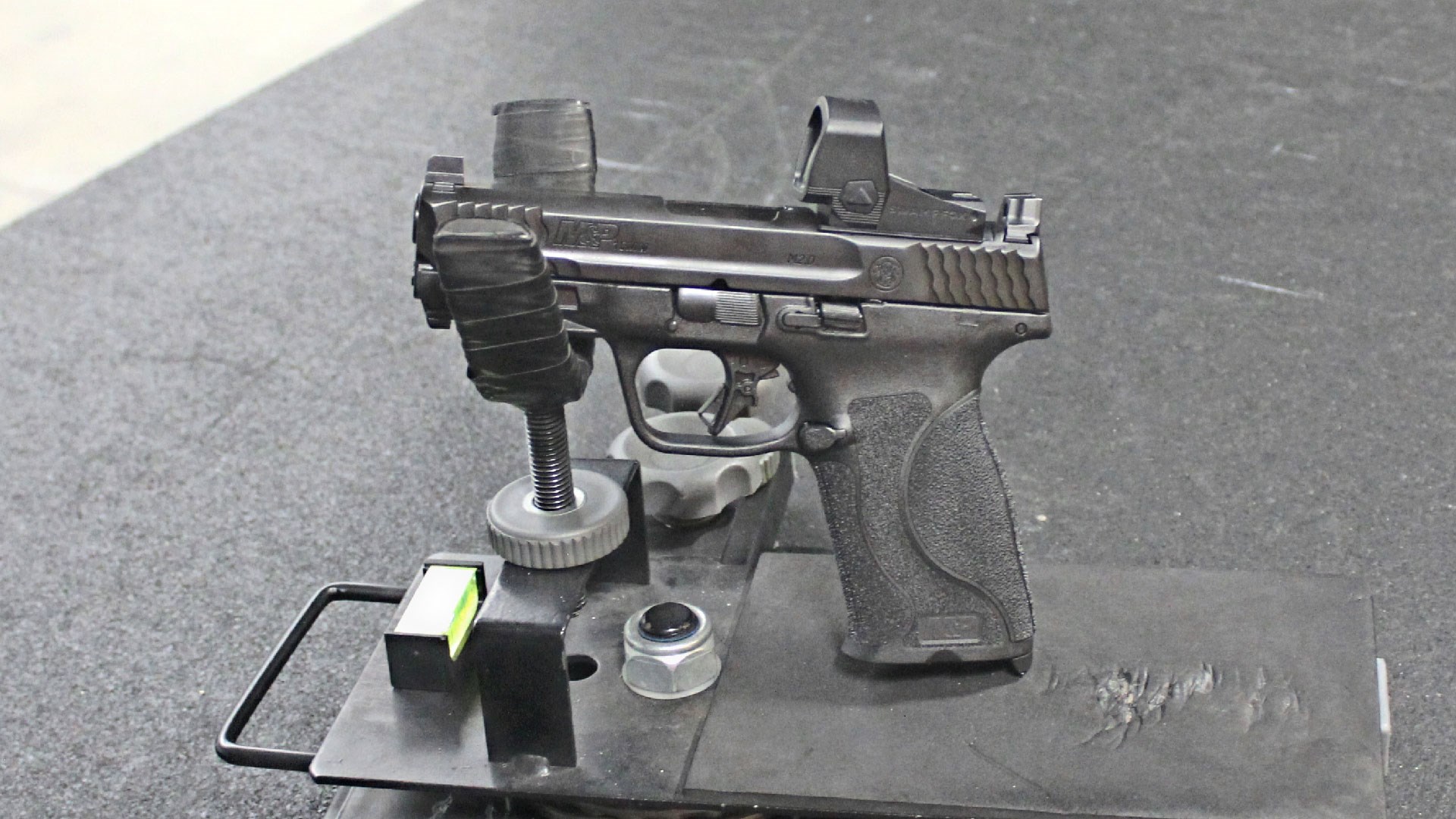 The M&P 2.0’s double stack magazine hold up to 15-rounds of ammunition.
Some folks assume that when barrels are the same length, a semi-automatic pistol is going to generate greater bullet velocity due to its closed chamber. However, pistol barrels are measured from end-to-end. That means the 4-inch length includes the chamber. A 10 mm Auto cartridge case has a nominal length of 0.992-inches. This means that this gun's 4-inch barrel provides just about 3-inches worth of rifled bore. When it comes to handgun ammunition performance, changes in barrel length as little as half an inch can make a difference.
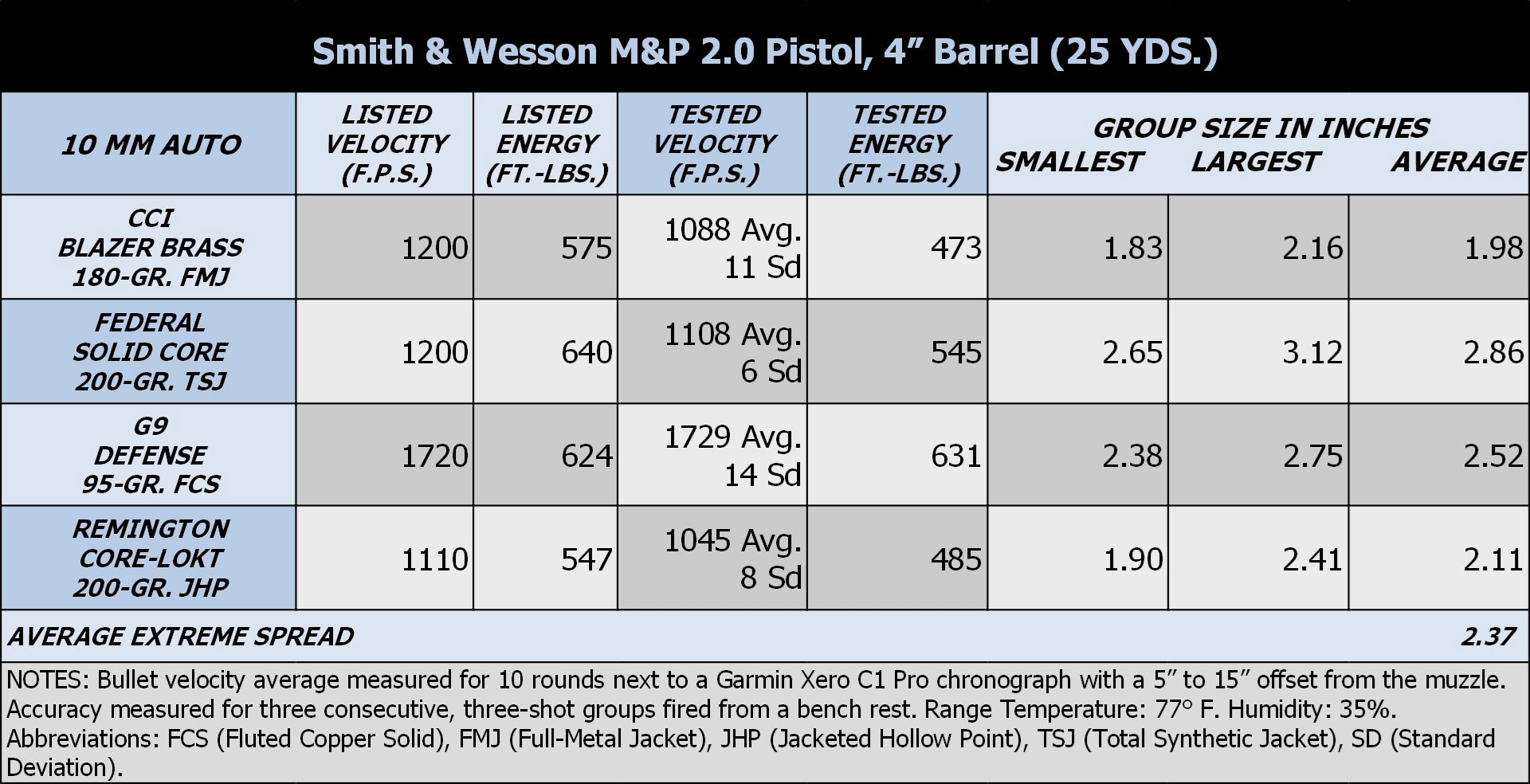
Formal bench rested testing consisted of firing three 3-shot groups, using red-dot optics to aim, into paper targets posted at a distance of 25-yards. The bullets' velocity at the muzzle was measured for 10-shot strings using a Garmin Xero C1 Pro chronograph. Here are the pistol results:
Using all three of the provided full-moon clips, the Model 610 was as equally reliable as its semi-automatic compatriot. The clips dropped in with ease, the revolver closed, fired and ejected the clips with no issues. For those who would prefer not to manage their moon clips unaided, please take a look at the top notch TK Customs mooning and de-mooning tools mentioned here.
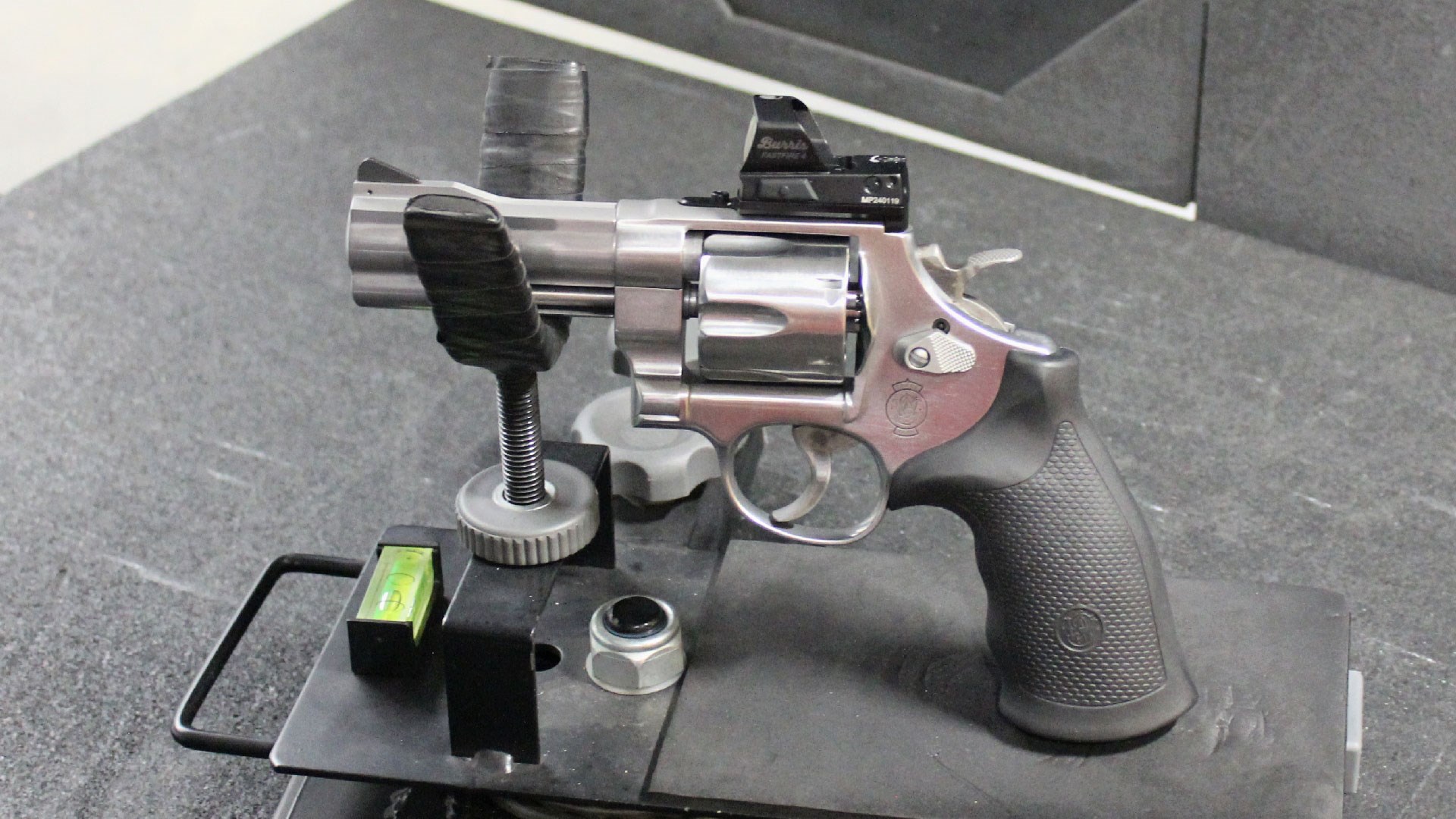 The revolver’s weight and grip shape work to reduce levels of felt recoil.
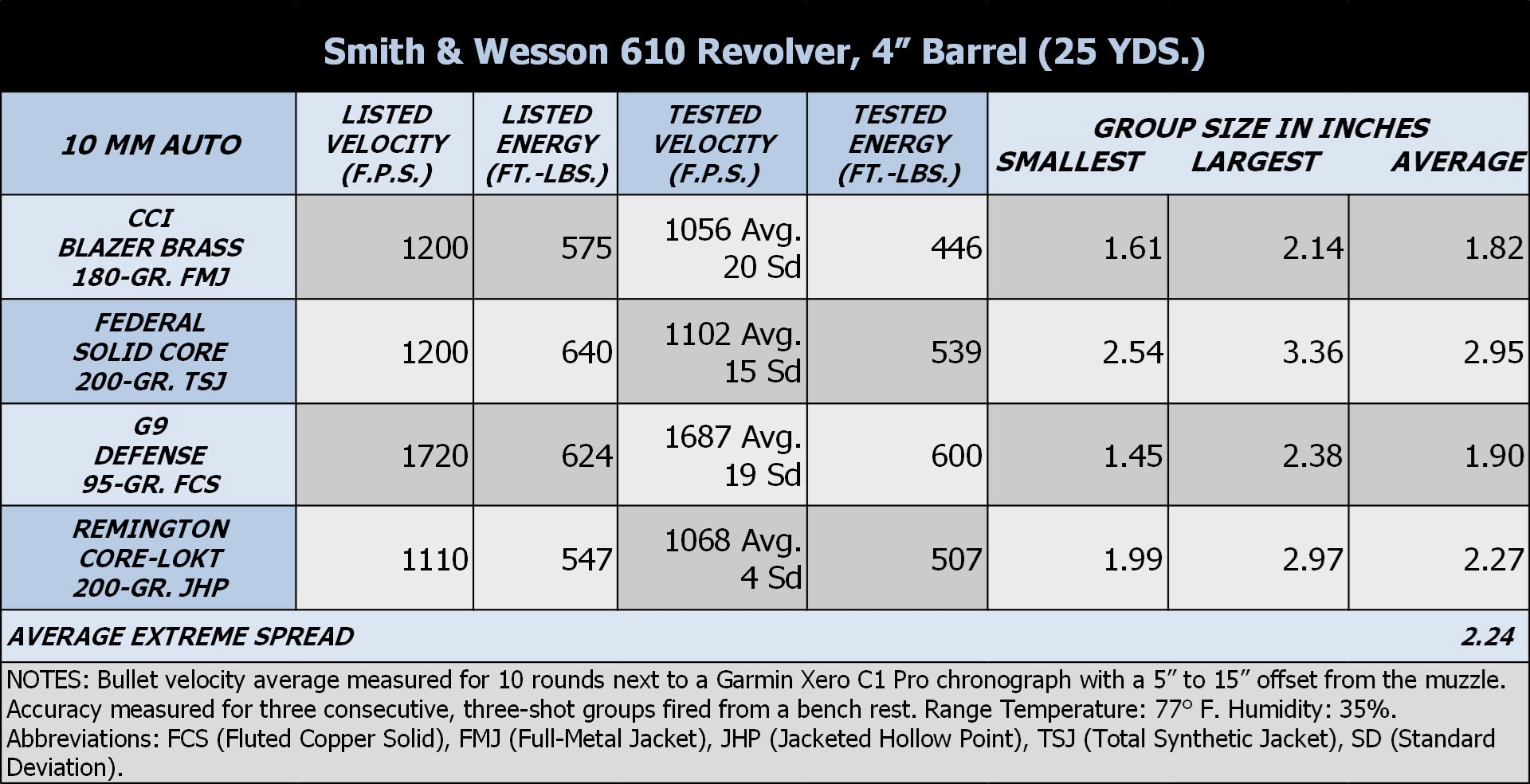
Revolver barrels are measured for length from the muzzle to the forcing cone. This particular Model 610 has a 4-inch barrel which means it provides roughly an inch more bore than the pistol does. However, the cylinder is 1.58-inches long. This means the bullet travels through about 0.6-inches of un-rifled cylinder chamber before jumping through the gap between the cylinder face and the barrel's forcing cone, where some pressure is lost. How does this affect bullet energy and accuracy when compared to the pistol? Here are the results:
Parting Shots
For those who came to this evaluation in hopes of finding a final, once and for all resolution to the pistol-versus-revolver debate, you have my condolences. Pistols and revolvers each have their own distinct advantages which explains why both are still in production. But what I can say is that the M&P 2.0 and the Model 610 both proved to be commendable options but for different reasons.
If a friend or family member came to me and asked which one to get, my question to them would be this: which one are you most likely to practice with and actually carry in the field? Both guns proved to be utterly reliable and either one can be fitted with a red-dot optic. If ammunition capacity and speedy reloading are high priorities, then the M&P 2.0 neatly punches that ticket. It also costs less to buy.
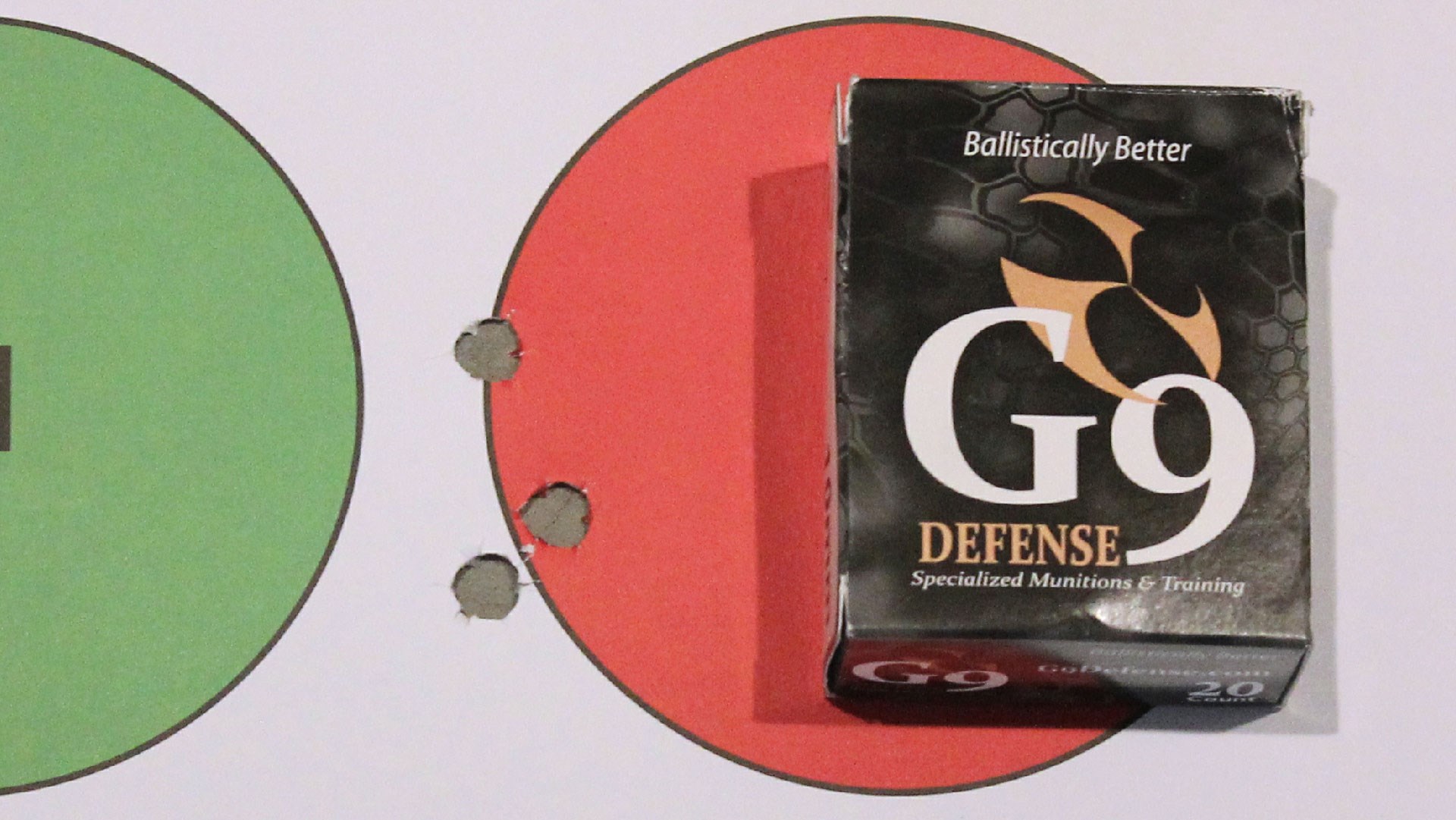 The best individual 3-shot group of 1.45-inches was fired with the revolver using the G9 Defense load.
But when it comes to shootability, I enjoyed working with Model 610 more and shot it a bit more accurately. It is the more expensive option, but if I was going to shoot it on a regular basis, the revolver would be the more tempting of the two based on this side-by-side range test. As is so often the case with comparing two quality handguns, it comes down to what your needs and personal preferences may be. For more information, visit smith-wesson.com.
Smith & Wesson M&P 2.0 Pistol Technical Specifications:
- Type: recoil operated; semi-automatic; centerfire pistol
- Caliber: 10mm Auto
- Magazine: M&P 2.0 removable box; 15-round capacity
- Barrel: 4” stainless steel; black Armornite finish, 1:10-inch RH twist
- Trigger: double-action only; 4-lbs. 9-ozs. as tested
- Sights: optic height three-dot, optics-ready slide with plates provided
- Grip: textured black polymer
- Metal Finish: matte black Armornite
- Overall Length: 7.9-inches
- Height: 5.6-inches
- Width: 1.15-inches
- Weight: 29.3-ozs. unloaded with magazine
- MSRP: $679; smith-wesson.com
Smith & Wesson Model 610 Revolver Technical Specifications:
- Type: double-action/single-action revolver
- Caliber: 10mm Auto
- Capacity: 6 rounds
- Barrel: 4” stainless steel; satin finish, 1:10-inch RH twist
- Trigger: double-action, 9-lbs. 12-oz.; single-action, 4-lbs. 1-oz. as tested
- Sights: blade front, fully adjustable square notch rear
- Grip: textured black rubber
- Metal Finish: satin stainless steel
- Overall Length: 9.6-inches
- Height: 5.9-inches
- Width: 1.7-inches
- Weight: 40.2-ozs. unloaded
- MSRP: $1159; smith-wesson.com