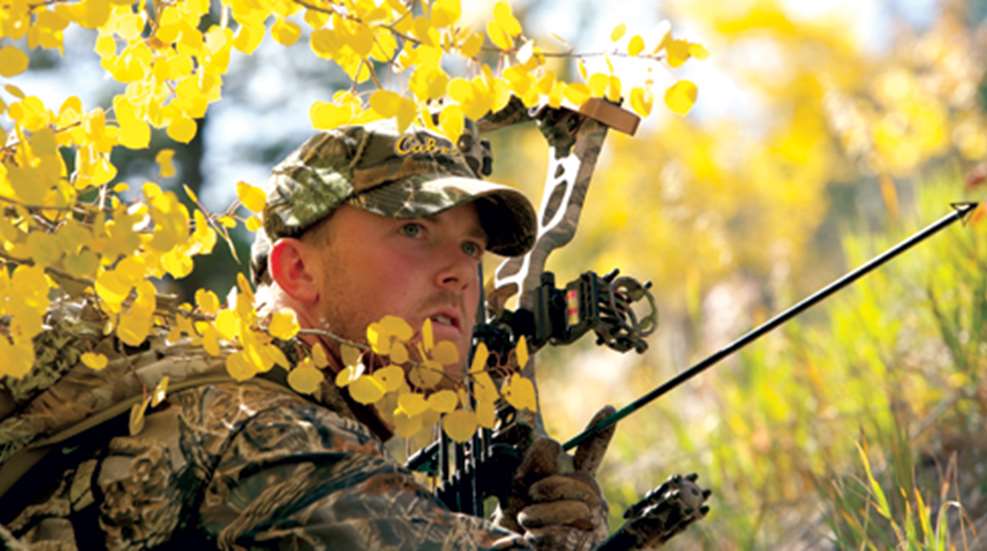
If I had to pick one week each year for my deer-hunting vacation, I would take Nov. 3-10 every year and pray for cool weather. November 3-10 is the wild week when the first does come into estrus in my hunting area in Iowa. But there is more to success than simply picking the right days, you also need a solid plan. The wild week is the most exciting seven days of the year for whitetail bowhunters. Without a good plan, it is easy to let that excitement drive you to hunt stands that are too risky, too early. To get the most out of your vacation, adhere to three principles: spend your time where the does concentrate; hunt from the outside in; and save the high-risk, high-reward stands for the last two days.
By early November, the bucks are aggressively searching for does so you need to target the does too, or more accurately, target the places where does concentrate. Ideally, your stands are already up; however, the only ones you absolutely have to put up before you start hunting are those near bedding areas.
Day 1. Most people will run straight to their best stands. This makes sense, but if you aren’t successful right away and you educate the deer in the core of your hunting area early in the week you’ll become frustrated. Instead, you need a great starting point, a pure travel-route stand that is not near bedding or feeding areas but on the fringe of your hunting area. A good example is a stand near a creek crossing where the creek runs through relatively flat terrain (to keep swirling winds to a minimum) and where a brushy fence line gives the deer some cover. It is easy to get to and from such a location without spooking deer.
During late morning, get down and scout a few field edges or look for tracks crossing farm roads. This is also a good time to put up a stand or two in easily accessible places. These fringe stands offer a clean vantage point for studying deer movement.
Day 2. It is time to ease a bit deeper into your hunting area. Go out of your way to find and hunt stands near ditches and creeks because these waterways offer the ultimate in low-profile access. Normally you can find good crossings between two doe bedding areas. These are great spots, but because of how easily you can sneak in and out, they fit our conservative strategy perfectly. They can be good all day, so rather than make extra, deer-alerting trips into the area, plan to spend the entire day here.
Day 3. Your third setup should take you even closer to more sensitive, high-activity areas. As you move in a little deeper, stick with the strategy of hunting between doe bedding areas. These funnels can be as simple as an open gate, a saddle or even a neck of cover between two larger blocks. Again, you can hunt this spot all day if you have the patience. If you can’t hack it, move to a stand near a feeding area for your evening hunt. As the rut goes on, does are harassed so much by bucks that they start to avoid open areas. But early in the rut does are still active in their typical feeding areas.
Day 4. I love small, secluded food plots. I would hunt them every day of the rut if I had enough of them. If possible, your hunting area should have at least a half-acre plot nestled in cover near bedding areas. Now is the time to hunt one; keep hunting it as long as the wind is right, morning or evening.
Day 5. You only have a few days left in your rut vacation so you can afford to push harder if you feel the need. Everyone wants to hunt the area with the most sign, but high-activity stands also present higher risk. With lots of wary does coming and going through core-area bottlenecks, you run a much higher risk that they will detect you. But this is Day 5 and so it just might be a risk worth taking. Just don’t get sloppy. You still have to be able to at least get in clean if you hope to see deer. Continue to spend as much time as possible hunting near creeks and ditches, because they offer low-impact entry and exit routes. Hunt right near the area’s best doe bedding area in the morning and then move close to the best doe feeding area in the evening. That is the way to finish the week strong.
Day 6. It is finally time to hunt the stand overlooking all the sign that you wanted to hunt on Day 1. A heavily used bedding ridge is a classic late-week hotspot. Don’t be subtle. It is time to get right up to the edge of the bedding area for the morning hunt. Spend the evening hunting one of the stands you hunted earlier in the week. No doubt, you have learned a few things about where the deer are moving best; now it is time to put that information to good use.
Day 7. By now you have probably realized how many other great stands there are on the property and that the stand you’ve dreamed about all summer isn’t all that much better than others that are much easier to hunt without being detected. You may even have your buck already.
It is time to go for broke. If you have seen deer using one area more than others, now is the time to hunt right in the middle of that spot for one last all-or-nothing trip to the tree. Make it an all-day sit, if possible.
If your morning stand is not also a good afternoon stand, make your final play near a heavily used food source. Hunt the trail you think the deer are most likely to use even if you don’t think you can get out of there clean at the end of the hunt.