I spent most of the first afternoon of my western Kentucky deer hunt wondering if I had made a mistake by passing on the buck I had seen that morning. He was a good deer—mature with tall tines and wide antlers—and he was totally engrossed in the doe he was pursuing across the CRP field. I had my Browning X-Bolt rifle shouldered and the crosshairs centered on his chest, but I couldn’t shoot. Not that early. In many parts of the country, there would have been no question about taking that deer, but I knew there were larger bucks in the area. I fretted, looked at him through my binos, and thought about shooting twice more. Eventually, I let him pass. A few hours afterward, I was regretting that decision. But that regret wouldn’t last very long.
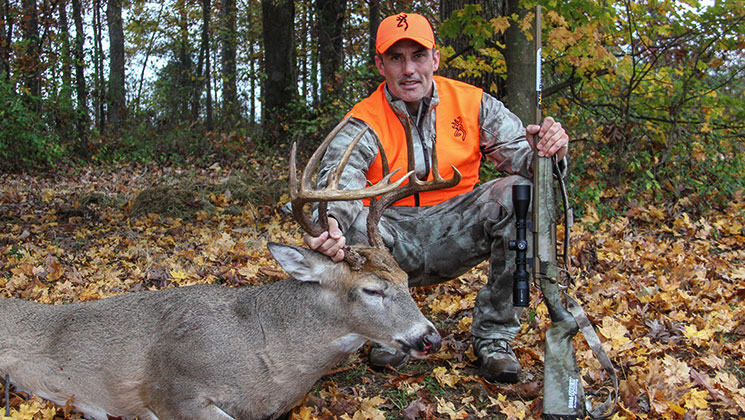
With daylight fading, I heard a crashing in the trees behind my stand. Within a few seconds, a doe trotted into the CRP field—her ears cocked, tail held high. I heard a buck grunt twice, then heard the leaves shuffling as he followed the doe’s trail out into the field. When he broke cover, any regrets I’d had about not shooting that morning faded away—this buck was appreciably larger than the deer I’d seen earlier—just the kind of buck I had come to Kentucky to find. Without hesitation I raised my rifle, centered the scope’s reticle and fired. The 120-grain Browning BXS bullet struck just where I aimed and the deer was down.
Hunters from around the nation are slowly realizing that Kentucky is home to more than fast horses and smooth bourbon. The state is one of the best-kept secrets in whitetail hunting, and there are few places I’d rather be during the November rut. Here are five reasons that you should plan to chase deer in the Bluegrass State.
1. Superb Genetics
If you’re looking for a record-book buck, Kentucky should be at the top of your list. The state ranks seventh in the number of all-time Boone & Crockett entries, beating both Kansas and Ohio. But perhaps more importantly, the state has produced the second-most record book bucks since 2010 with 261, which means Kentucky’s whitetail stock is on the rise. Some true giants have gone down in recent years including Albert King’s Henderson Country 198 6/8-inch buck, David Gregory’s 228-inch non-typical from Warren County and an absolutely massive velvet buck that was killed on the road near Fort Campbell earlier this year that would certainly have scored well into the 200s. Additionally, record book bucks have been killed in virtually every corner of the state. When you’re hunting in Kentucky, there’s always a chance that the deer of a lifetime will appear below your stand.
2. Affordable Hunting Opportunities
Big-buck states are oftentimes expensive to hunt, but that’s not the case in Kentucky. An annual non-resident hunting license costs $140, a statewide deer permit costs $120 ($15 for youth) and residents pay just $55 for a license and tag. Guided hunts are also affordable and widely available. I hunted with Mark Clifford’s Premier Outfitters, and rates vary from $2,500 to $4,200 per hunt, which is reasonable when you consider that you’ll be hunting private property in prime whitetail country.
3. Plenty of Elbow Room
According to the Quality Deer Management Association (QDMA), Kentucky has a hunter density of less than 8 hunters per square mile. Compare that to other big-buck states like Wisconsin (13.7), Ohio (12.3), and Indiana (10.8) and you’ll quickly see why Kentucky is one of the best-kept secrets in deer hunting. Kentucky averages 2.78 bowhunters per square mile, which equates to less than half as many bowhunters per square mile as neighboring Ohio. There are 80 state-maintained wildlife management areas (WMAs) that offer thousands of acres for hunters, and unlike many states, Kentucky is opening more public land to hunters. In 2016, the state added 6 new WMA properties totaling 4,600 acres.
4. Excellent Habitat
A blend of agricultural land, river bottoms and woods makes much of Kentucky ideal whitetail habitat, and with a relatively light human population, there are still great tracts of undeveloped lands that support deer. Additionally, the state of Kentucky has done an excellent job incentivizing landowners to manage their property for wildlife. Since about 95 percent of the state is privately owned, this has been a crucial step to improving the deer herd. By providing both financial and technical support to landowners, the state has worked to restore and improve habitat, which is beneficial for deer and deer hunters alike.
5. Availability of Tags
Unlike some areas where your hunt hinges upon whether or not you draw a tag, Kentucky offers over-the-counter licenses which can also be purchased online. There are quota hunts on state parks and WMAs, but general tags are easy to come by. Additionally, a deer tag is good for at least one buck and one doe, so this is a great opportunity not only to score a big deer, but to fill your freezer for the winter months. Kentucky’s bow season begins in early September, so there’s also a chance to harvest a buck in velvet. Rifle season begins in mid-November when rutting action is at its peak.