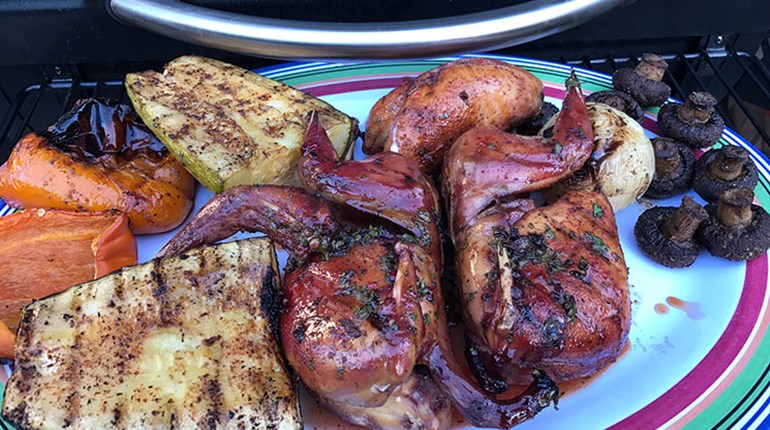
With the dog days summer upon us, it is a chance to use up all of the wild game in our freezers to get ready for a new fall harvest. Grilling is one of my favorite pastimes. It is social cooking, where friends and neighbors come over, frosty drinks come out of the cooler and the air smells like roasting meats and burning charcoal for miles. A mixed grill of all of your favorite game meats makes for a perfect party. Here are my top five tips for getting the most out of cooking wild game on a grill.
Go Big with Venison
Grill thicker cuts of meat, particularly in the case of leaner meats like wild game, since you’re not dealing with a lot of fat and you don’t want to overcook it. I suggest a venison back strap marinated, trussed and cooked no more than medium rare. If you do end up using a fattier cut of meat you’ll want to trim off any excess fat around the edges. If you need to grill a thinner cut, be prepared to grill the meat for a very short time, around a minute or two per side.
Marinate Duck Breasts
Marinades are particularly good with red meat like duck breasts, and for any tougher cuts of meat. They are made with an acidic liquid such as vinegar, wine, citrus juice, buttermilk, or yogurt. A good marinade will have a balance of ingredients so that the outer surface of the meat does not become too sour from the acid. Duck breasts are perfect for a quick sear on a grill. Marinate them in orange juice and rosemary, one of my favorite duck pairings, then cook no more than medium rare.
Brine Wild Hog
Brining is an especially good technique for white meats like wild hog. It involves soaking meat in a flavorful saltwater solution to enhance its moisture and taste at a ratio of 2 tablespoons of salt to 4 cups of water. The true purpose of brining is juiciness and it is a good idea to rest a piece of meat up to 24 hours in the refrigerator once it comes out of a brine to allow the moisture to retreat back into the meat. Some of my favorite flavoring elements include mustard seed, brown sugar, thyme and garlic.
Don’t Touch the Elk T-Bone
Salt a steak very well, then resist the urge to move it once it hits the grill. A piece of protein isn’t ready to be moved until it is completely loose from a pan or grill, and if it sticks at all, it isn’t ready. As it sits and cooks the proteins are caramelizing and creating a surface that will lock in moisture with the help of the salt you have added. By moving it too early, you tear the surface and release the juices. This is especially important for lean wild game like an elk steak. Cooking it to no more than medium rare will also ensure it is flavorful, not gamey.
Let Ribs Rest
It is important to let all meat rest for at least 15 minutes before you serve it. This allows the juices to retreat back into the center of the meat as it cools. Cutting into it too soon will release all of the juices onto the cutting board when they should end up on your palate! That is where the flavor lies after all. For ribs of any kind, whether venison, hog, elk and more, it is especially ideal to have tin foil ready and completely enclose the meat before cutting into it. At that point you can also add flavoring elements, like a dash of apple juice to ribs or a sprinkle of dry rub and let them stay warm in the foil until ready to serve.