Decisions On Distance

by
posted on April 7, 2010
** When you buy products through the links on our site, we may earn a commission that supports NRA's mission to protect, preserve and defend the Second Amendment. **
201047175249-hunters2_f.jpg

(Photo: NWTF) 
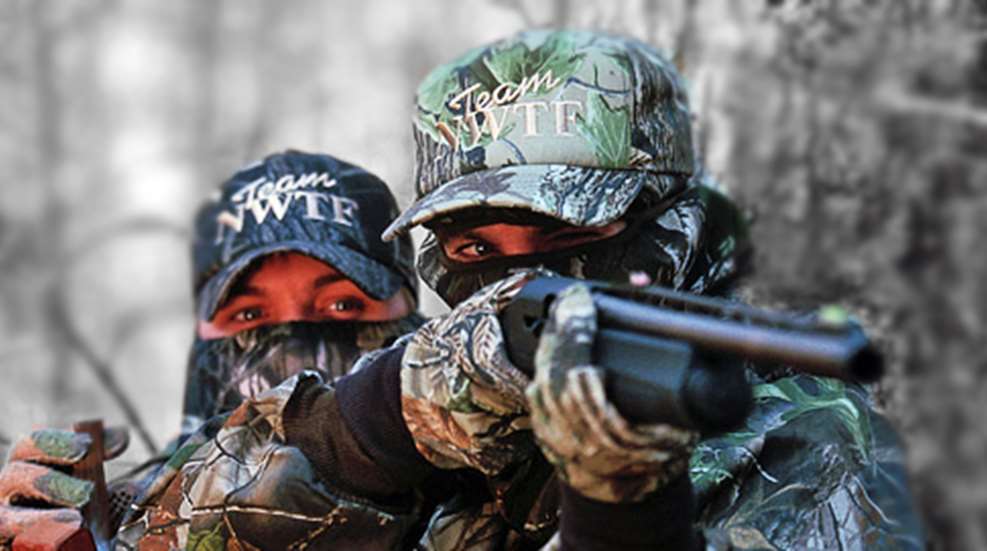
One of the most common reasons for hit turkeys escaping is misjudgment of distance. With turkey hunters constantly seeking to gain a few extra yards of effective range (hence 3 1/2-inch shells for 10- and 12-gauge shotguns; an increasing number of hunters are carrying 10 gauge shotguns afield, never mind weight considerations; duplex loads, and other efforts to “reach out and touch ‘em” at greater distances), let’s look at the issue of distance head on. The essence of turkey hunting with a shotgun, as with deer hunting with a bow, involves an “up close and personal” situation.

Calling skills and woodscraft come into play in a major way, and every hunter should have a mental outer limit when it comes to taking a shot. For a 20 gauge that distance is 30 to 35 yards, while for a 12-gauge it is 40 to 45 yards and for a 10-gauge the limit is 45 to 50 yards. Even then, shots at the far end of the acceptable range should be taken only when no brush or undergrowth lies between the hunter and the bird.

If in doubt, don’t shoot. “Stretching the barrel” when hunting turkeys is just as unethical as “sky busting” when dealing with waterfowl. Similarly, if you have any problems with distance judgment, make a rangefinder a standard part of your turkey hunting accessories. Taking a shot at too great a distance, even with today’s highly effective loads, is an ethical slipup than can and often does result in crippling a bird that will escape only to die a lingering death.

Latest

Ledehow Do You Compare

How do you Compare to the Average Hunter?

There is no “average” hunter, although don’t be surprised if you’re more run-of-the-mill than you think after seeing the results of the “2025 Hunting Industry Insights” report. The survey, conducted by Untamed Outdoor Agency (UOA), focused on what might be the most active demographic—sportsmen between the ages of 32 and 52.

Says You: Trail Camera Overkill?

Editor-in-Chief Scott Olmsted's monthly response column to questions posed by our members. This week, we're discussing mountain lions, poaching and trail camera use.

New for 2026: Trijicon SRO Green Dot

Trijicon has announced a 2.5 MOA, Green Dot version of the SRO reflex sight. The new model will be available in Black and Coyote Brown anodized finishes.

More Than $6.6 Million in Tribal Wildlife Grants to Advance Conservation

The U.S. Fish and Wildlife Service (USFWS) is awarding more than $6.6 million to federally recognized Native American and Alaska Native tribes to benefit fish and wildlife resources and their habitats. This year’s funding will support 35 tribes for conservation projects across 15 states, benefiting a wide range of wildlife and habitat, including species of cultural or traditional importance to Indigenous communities.

Hardware Review: TriStar KR.22

TriStar is noted for shotguns, but Bryce Towsley recently received a test gun from them that’s much different. Check out his review on the TriStar KR.22.

New for 2026: Browning Trail Cameras' Security Tree Strap

Browning Trail Cameras has released a Security Tree Strap, a durable and dependable mounting solution to keep trail cameras in place in nearly any environment.

Interests


Get the best of American Hunter delivered to your inbox.