1. How To Pack
Airline regulations as well as TSA rules require that firearms must be unloaded and packed in an “airline approved” gun case. Any hard-sided gun case with either a built-in lock or a provision for a padlock is “approved.” Prices for gun cases vary from low-end Doskocil to high-end StormCase to my personal favorite, a TuffPak (the cylindrical gun case that looks like a golf club case).
Render your firearm inoperable by removing the bolt from a bolt-action rifle, removing the barrel(s) from a shotgun, taking the slide off a pistol or removing the cylinder from a revolver. Make it easy for the TSA or ticket agent to see your firearms are unloaded.
2. Ammunition “Rules”
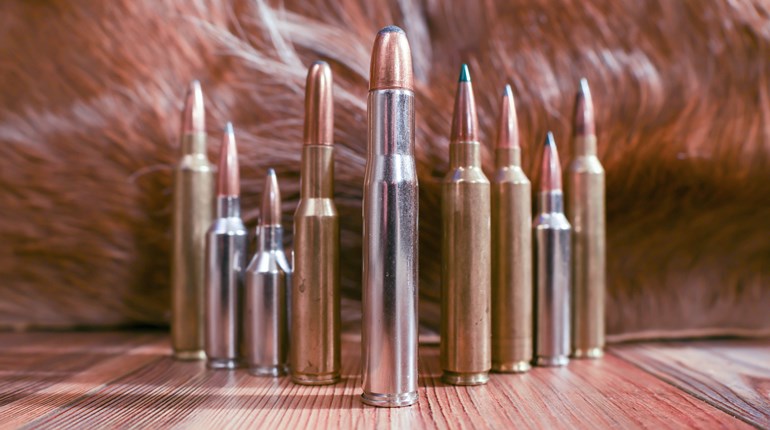
Airlines differ in their policies for the way ammunition must be packed in checked luggage. Some require that the ammunition be in the same case as the firearms, others specify the ammunition cannot be in the same case as the firearms. However, all airlines agree that ammunition must be “packed in original factory containers,” or a hard, plastic container and cannot exceed 5 kilograms (11 pounds) in total weight.
When you check in and declare your firearms, also declare that you’re carrying, “less than five kilos of ammunition in the original factory boxes.” By using this terminology, you’re speaking the same language as the ticket agent, and he or she will know that you know the rules, simply by your using the correct phrasing.
Some international airlines require that ammunition be packed in a totally separate locked case. Accordingly, I always pack my ammo in a small Pelican case with separate padlocks and then place this case inside my “suitcase” which is a large StormCase with its own padlocks. If I’m asked to check my ammo separately, it’s all ready to go in its own case.
3. First Impression
As your mother always told you, first impressions are everything. The most important person you will encounter on your trip is the ticket agent when you check in. Dress nicely. Wear a collared shirt or, my favorite, a well-kept polo with a law enforcement affiliation, such as an embroidered NYPD logo. You’re not being deceitful, you actually like the NYPD. If the ticket agent assumes you’re a cop, hey, that’s not your doing.
When I wear a polo with the logo of the U.S. Embassy, Kabul, Afghanistan that a buddy sent me from the sandbox—a favorite for when I have to clear U.S. Customs—I invariably get asked if I’m in the military. I reply truthfully, “No, a friend who is serving his country sent this to me.” I’ve still made a positive impression without being dishonest.
4. Declare “Unloaded Firearms”
Be polite. Smile. Let the agent check you in normally. The agent will ask how many bags you wish to check, and at that point you matter-of-factly state, “two bags, one of which contains unloaded firearms.” The key phrase is “unloaded firearms.” This is the term the agent is accustomed to using. Don’t say, “huntin’ rifles” or any other descriptor— they are “unloaded firearms.”
The agent should then give you a tag that says—surprise—“Unloaded Firearms” which you sign, declaring the firearms are indeed unloaded. Place the tag inside your gun case as instructed.
5. Inspection Request
Lately, I’ve noticed that fewer and fewer ticket agents ask to personally inspect your “unloaded firearms” but this can arise. Back to what mom said—be polite.
I open my case and show the agent my “unloaded firearms,” and point to the open action (I mostly travel with bolt-action rifles with the bolts removed). Make it obvious that the firearms are unloaded by rendering them easy to inspect (as noted earlier).
6. TSA Inspection
Sometimes the ticket agent places your bag on the conveyor belt and away it goes into the airport’s lower intestine where it will be X-rayed. Sometimes the agent asks you to wait 10 or 15 minutes, and if you’re not paged by TSA to provide the key to your gun case, you’re good to go. Other times you’re asked to physically carry your gun case to a nearby TSA screening area.
When a TSA agent takes your case, inform him or her that it contains—what does it contain, class?—“unloaded firearms.” Sometimes they wave you on without opening the case and sometimes they open it and swipe a patch to check for explosives. I can’t remember a time when a TSA agent has actually removed a firearm from the case to inspect it, but it could happen. Watch the proceedings, and make sure an agent relocks your case and gives you back your keys.
7. Plan On Losing A Bag
The one good thing about pessimists is they’re never disappointed. I’ve had bags delayed so many times that whenever I fly to reach a hunting destination, I always pack my carry-on as if it’s the only bag that will make it. I wear my hunting boots. I pack a set of hunting clothes and three changes of socks and underwear, carry all medications and vitamins in my carry-on as well as my binoculars. I have the bare essentials to be able to hunt.
8. Coming Home
If your destination is outside the U.S., when you come home you must declare to U.S. Customs that you’re carrying “unloaded firearms.” You will be ushered into the “red line” and asked to show your firearms and proof of ownership. By far the best and most universally accepted form of proof is a Form 4457, a “declaration of personal effects” that U.S. Customs issues for free. Simply go to an airport with a Customs office with your personal effects—your firearms—and ask for a Form 4457.