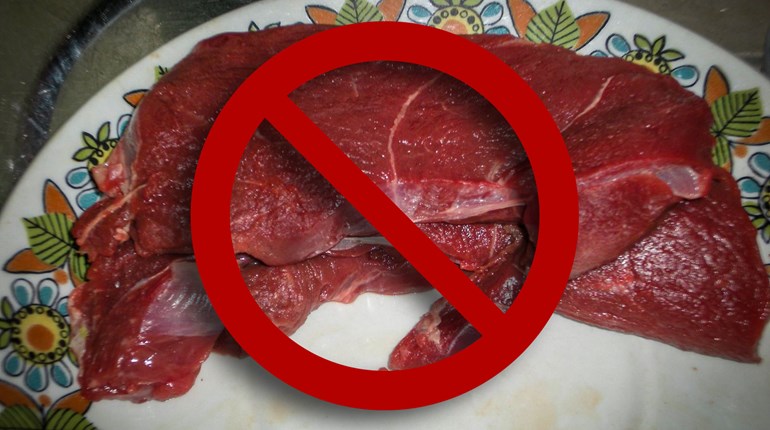
Ingrid Newkirk, PETA’s president, recently said, “A tax on meat would help prevent future global-warming-related natural disasters by encouraging a decrease in meat consumption.” Yeah that’s right, Newkirk wants a sin tax on meat and her rationale is climate change.
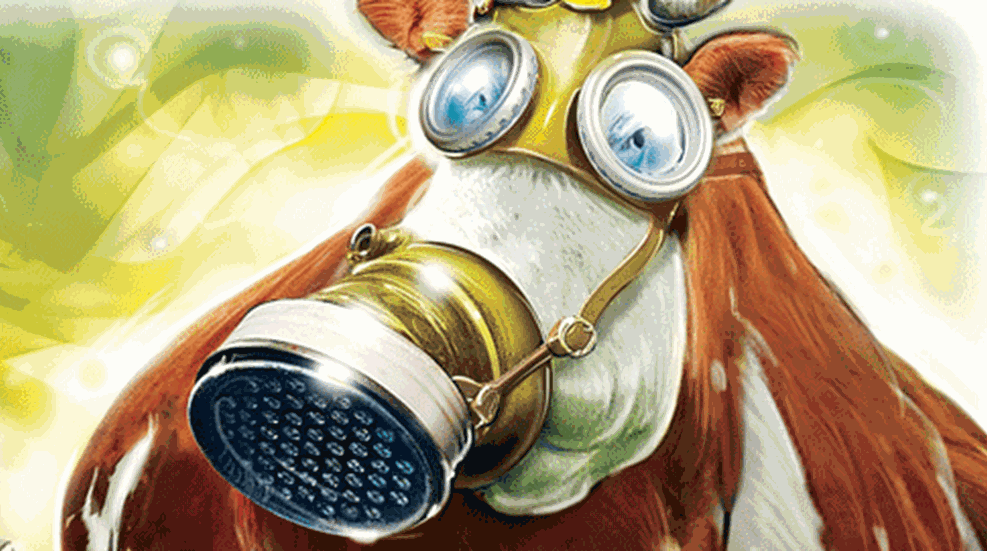
She’s not alone either. Many environmental groups say eating meat results in more global-warming-causing emissions than all our trains, planes and automobiles combined—Al Gore’s private jet included. The main reason is methane emissions from livestock—yes, belches and farts—which they say is 18 times worse than vehicle exhaust. How they came up with that figure is hard to determine, as is how they measured cattle flatulence.
However, we do know the assertion that meat eating causes global warming is based on a report titled “Livestock’s Long Shadow” by The Food and Agriculture Organization of the United Nations (FOA). You can read the 377-page attack on farming and ranching here. The report was produced with support from—those purveyors of wisdom—the World Bank and the European Union. It concluded that 18 percent of global-warming emissions comes from the livestock industry—transportation’s portion, the FOA concluded, is 13 percent.
So they’re postulating how much gas cows pass to argue that we all must become vegetarians for the planet’s sake.Newkirk has even called on Al Gore to give up being an omnivore.
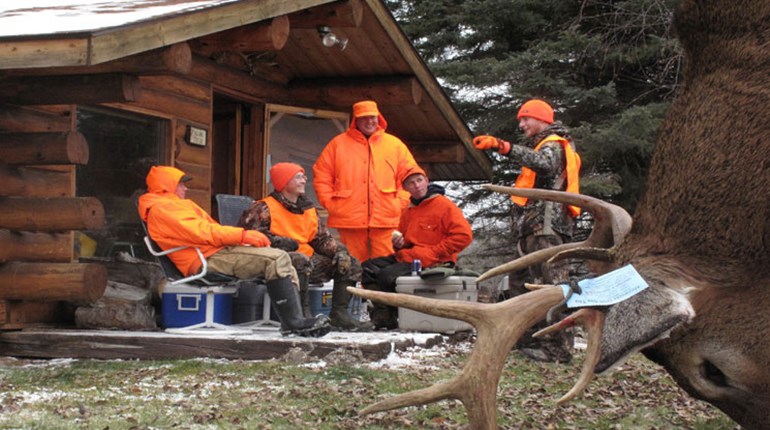
But then Newkirk’s stance highlights her own hypocritical contradictions; for example, if global warming is real and meat eating is really its No. 1 cause, then wouldn’t PETA (a group that is virulently anti-hunting) have to acknowledge that hunting (which game managers use to control populations of methane-emitting elk, deer, bighorns … .) is reducing global-warming? Wouldn’t it also be true that when hunters eat wild game they are not consuming commercially raised livestock? So shouldn’t PETA applaud this double-whammy curb on animal methane?
After all, ending hunting would mean having uncontrolled populations of game animals. And there’s always the pesky fact that if deer and other game populations are left unchecked they would continue reproducing until farmers’ crops were nothing more than deer food. And while we're at it, shouldn’t we also consider the carbon footprint of our game populations; for example, what about the American bison? Did killing off the buffalo in the 19th century contribute to global cooling?
Newkirk, we await your response to these critical questions.
While we wait, we’ll keep looking for honest ways to benefit our environment, such as encouraging farmers and ranchers to continue working with hunters so they continue being the environmental stewards they’ve become in America.