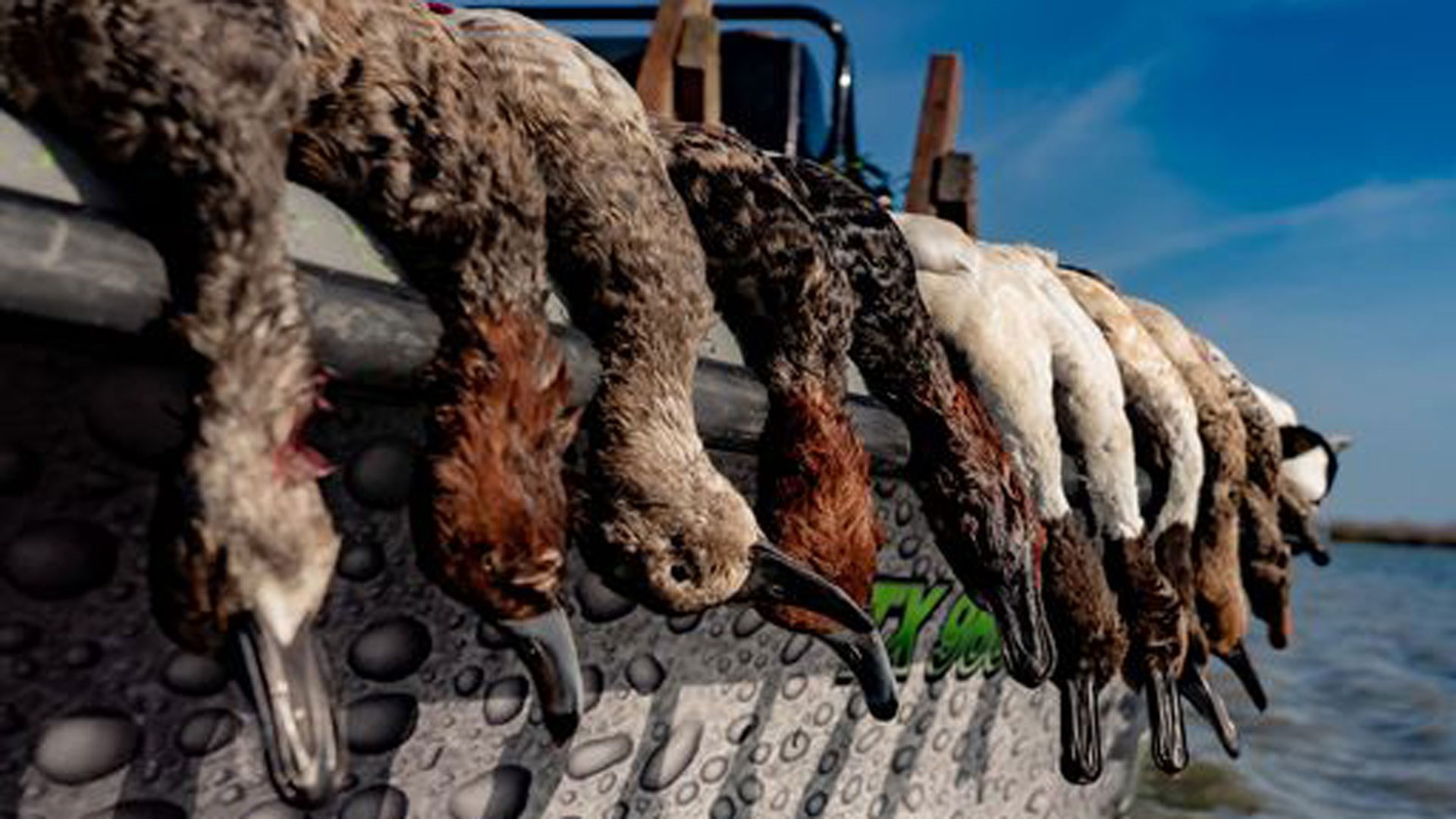
When the boss asks you to travel, you go. While this might sound like the mantra of a company man, I assure you the life of an outdoor writer is no picnic. Sometimes we need to drop everything we're doing to gear up for a hunt or fishing trip, no matter how long the list of household chores we are forced to pass off to our spouse. It's just terrible. Answering the call last December, I joined American Hunter’s Digital Associate Editor, David Herman, and a bevy of other outdoor writers and influencers on a duck hunt out of Seadrift, Texas. Here, we were to set out for two early-morning bird hunts using a new bismuth waterfowl shotshell from friends over at Fiocchi. It boasted denser patterns, extended range, and enhanced lethality over its competitors, so naturally, our job was to test those claims. Well, after the umpteenth bird dropped from the sky, it got my attention, and I requested a sample to take home for a more thorough evaluation.
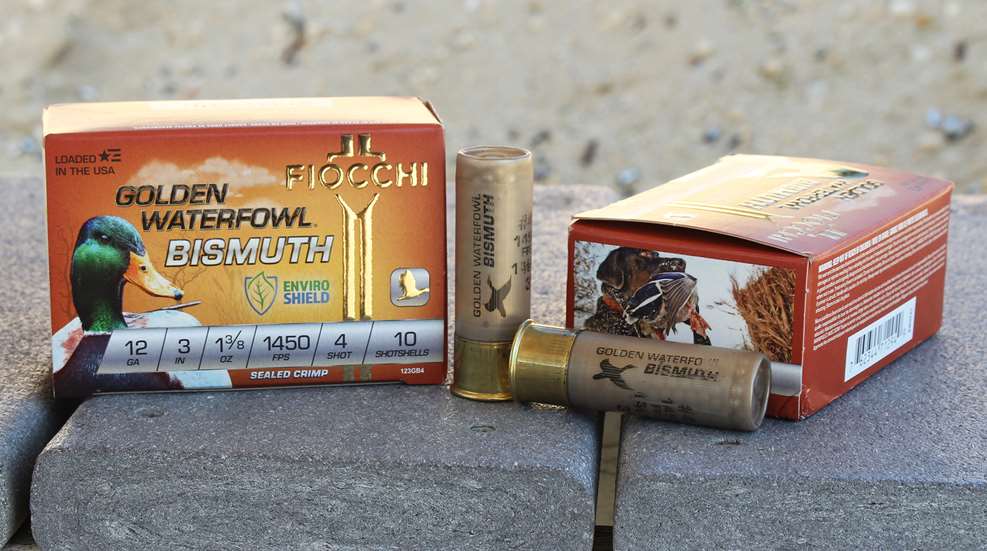
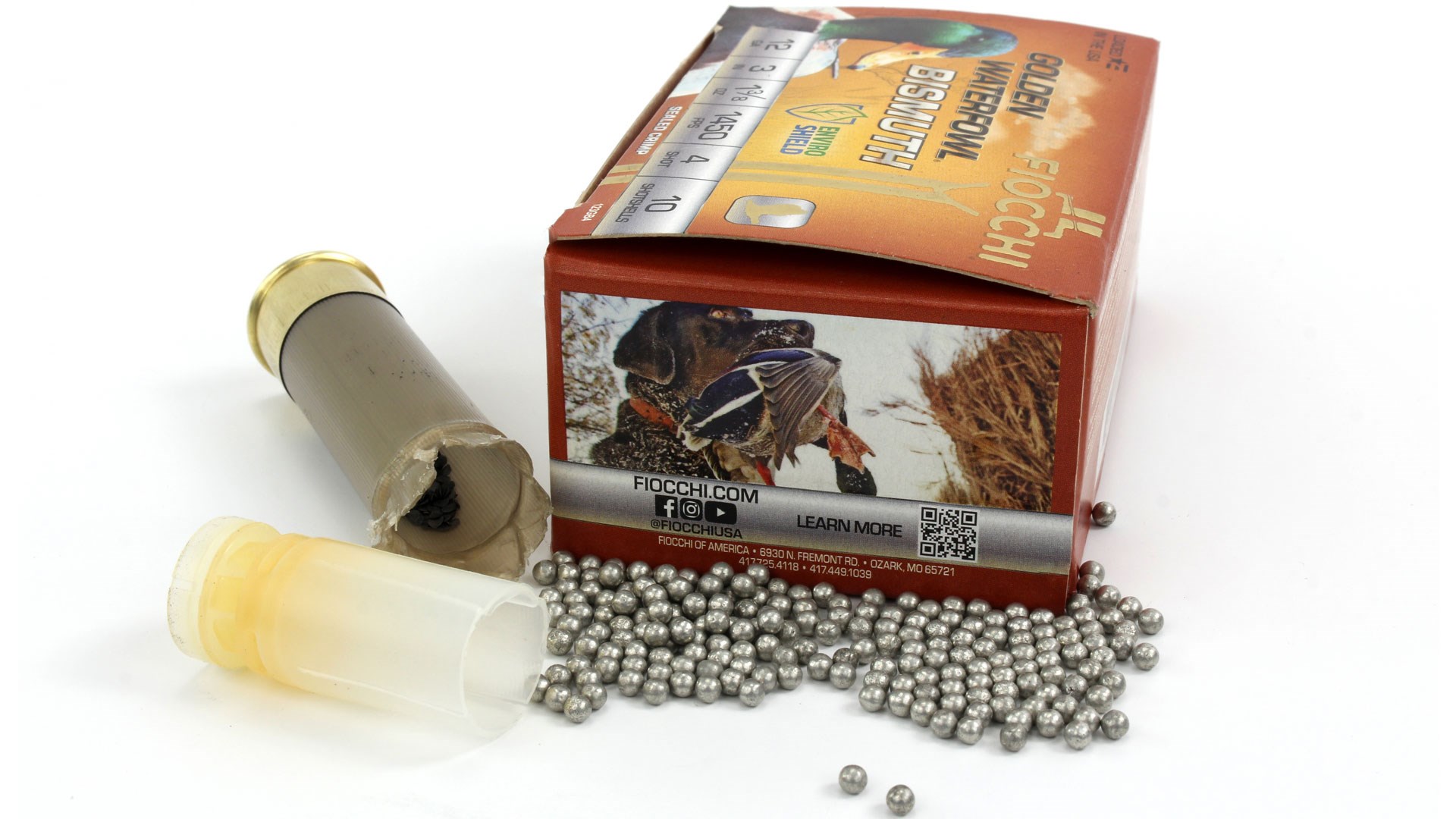
The new shell is aptly named Golden Waterfowl Bismuth and is loaded right here in the USA. They are available in 12-, 20-, and 28-gauge with shot sizes that range from #2 to #6, covering a wide array of shotguns and applications. Fiocchi uses an ultra-pure version of this metal with a density of 9.75g/cc, putting its weight-to-volume ratio on par with many lead alloys and thus acting as such during flight. If you're asking yourself, "then why not just use lead?" the answer lies in a federal ban that took place in 1991. Initially, this left us with just steel shot for use around waterways. Although inexpensive, it just didn't have the range that the old standby did, nor was it able to produce patterns that mimicked the shells of yesteryear. In time, tungsten loads hit the scene with a density that was even heavier than lead, cranking all of our favorite properties to an 11, but also cranking price to a 12. Thus, a good way to think of bismuth is the happy balance between cost, effectiveness, and government bureaucracy.

When the new shells arrived, I quickly tore into a handful to get a better look at the working parts and gather some data. As I began to work my way in, I took notice of the sealed crimp that Fiocchi puts on each of these shells. Inadvertently, we tested this during our hunt, as "one" of us dumped an entire package into the bog and was forced to retrieve them because it was the only ammo he had (it's me, I'm "one"). After pealing it back, I found a healthy, 1-3/8-ounce dose of #4 bismuth pellets that displayed near-perfect uniformity. This is the main contributing factor to how well they fly and retain their energy. The shape wasn't the only thing that was uniform—I only had a 4-percent deviation in the pellet count from shell to shell.
I started my range day by patterning five shots from 40 yards using a Winchester SX4 shotgun wearing a modified choke. After drying out a marker from counting pellet holes, I determined an average of 87 hits inside a 40-inch circle, with an average of 39 inside 21 inches. Considering that the average pellet count was 198, this leaves us with a respectable 44 percent of the shells payload being deposited well within minute-of-duck. Furthermore, none of the patterns had any large gaps to provide an escape for a winged evader, further demonstrating their consistency.

As my testing took place long after duck season closed, I had to fire the remaining shells at clay targets. Things could be worse; at least the call for these birds is easy to learn. "Two boxes of white flyers, please," followed by "pull," seems to draw them in nicely, even without the use of decoys. Shooting three-inch shells en masse isn't generally a fun experience, but I have to say, they weren't the worst I've ever shot. Although it's hard to convey recoil, I can say it was more of a slow push than a sharp punch. While my shoulder wasn't taking a beating, the clays were not as lucky. I cleaned 18 out of 20, with seemingly no limitations regarding range. Furthermore, the shells' measured velocity of 1405 feet per second (fps) drastically cut down the lead I had to put on laterally flying targets.
Fiocchi Golden Waterfowl Bismuth turned out to be one of the best lead-alternative loads I have yet to fire. I found them to be consistent, effective, and just generally easy to shoot. A belly full of duck Philly cheesesteak sandwiches and a pile of broken clays easily confirms this statement. Lastly, they keep the feds happy, which keeps me out of jail and far more available to handle yardwork and all of the other household tasks that are nearly as much fun as hunting with my buddies. For more information, visit fiocchiusa.com.