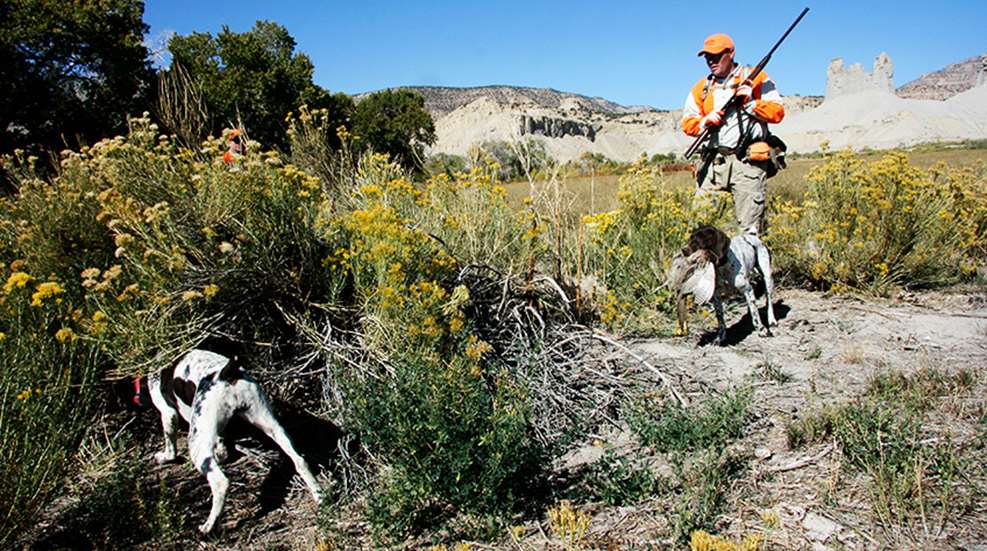
We all know bagging a bird on the wing requires finding one, flushing it, shooting it from the air and then recovering it—none of which are easy. So try these four tips to bag more of them.
Finding
If you flush quail or pheasants and watch them fly away and put down in the distance, don’t race right over to them immediately with your dog. Instead, give your dog a drink of water and wait a few minutes. This will give the birds a chance to calm down a little, and mainly it’ll give them the opportunity to spread a little more scent around so your dog can smell them better. While this is tough to prove scientifically, old timers know it’s true. So take your time, let the bird settle, and you’ll actually have a better chance at finding them again.
Flushing
If you believe a bird is close but it’s holding tight, try stopping and listening for a minute. Pheasants, in particular, feel safe as long as they can hear danger; they know to sit tight if the danger is heading away from them or to slip away if it’s getting closer. However, when they know danger is near but suddenly can’t hear it, their nervousness will often send them to flight. So, when you believe a bird is close but you can’t seem to flush it by walking it up, stand still occasionally for a full minute, and get ready for action. The bird will be so filled with nervous anticipation that he won't be able to sit still for long.
Shooting
The old adage “aim small, miss small” applies in spades to wingshooting, where quail and pheasants burst randomly underfoot like exploding popcorn. One key to wingshooting is to narrow your focus not just to the bird, but to the bird’s head, or even to the bird’s eye or beak. In addition to sharpening your focus, this will naturally put your point of aim toward the front of the bird, thereby automatically installing some lead. It takes practice and mental training, but over time, if you focus on the flying bird’s head and not just the whir of its wings, the entire bird will seem like it’s flying slower. Then instinctively paste the shotgun’s bead on the bird’s head or just in front of it, pull the trigger and remember to follow through. If you do this, you’ll often wind up with a dead bird in the grass.
Tracking Downed Birds
Combine dogs, shooting and other hunters with a whirlwind of action, heavy brush or grass and some adrenaline, and it’s easy to see how dead birds can be lost when the shooter has forgotten the exact spot where a falling bird went down. To remedy this, tie or sew about 12-inches of blaze-orange ribbon on a half-dozen large stainless steel washers. Keep the washers in the pocket of your shooting vest with their ribbon tails hanging out. When you down a bird, pull a marker from your vest and either hang it on a nearby bush or toss it in the direction you last saw the bird. You can now focus on hitting another bird without fear of losing the bird you've already dropped.
Additional Reading:
• 10 Tips for Pheasant Hunting
• How to Drive Pheasants Where You Want Them to Go
• Tips and Tactics for Solo Pheasant Hunting
• Tips for Field Dressing Game Birds