How to Choose a Hog Hunting Cartridge

by
posted on May 28, 2017
** When you buy products through the links on our site, we may earn a commission that supports NRA's mission to protect, preserve and defend the Second Amendment. **
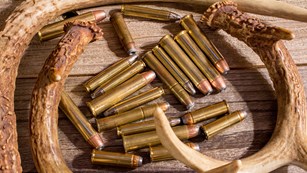
loaded_for_boar_f.jpg

Editor's note: Author Craig Boddington has killed feral hogs across the globe. You can read about his adventures here.

I’m bound to get letters from hunters who maintain they only take head shots and insist .22 centerfires are plenty of gun. This is true if you hunt in situations where you can pick your shots, such as from stands. And if you hunt pigs with hounds, then a big handgun is perfectly adequate.

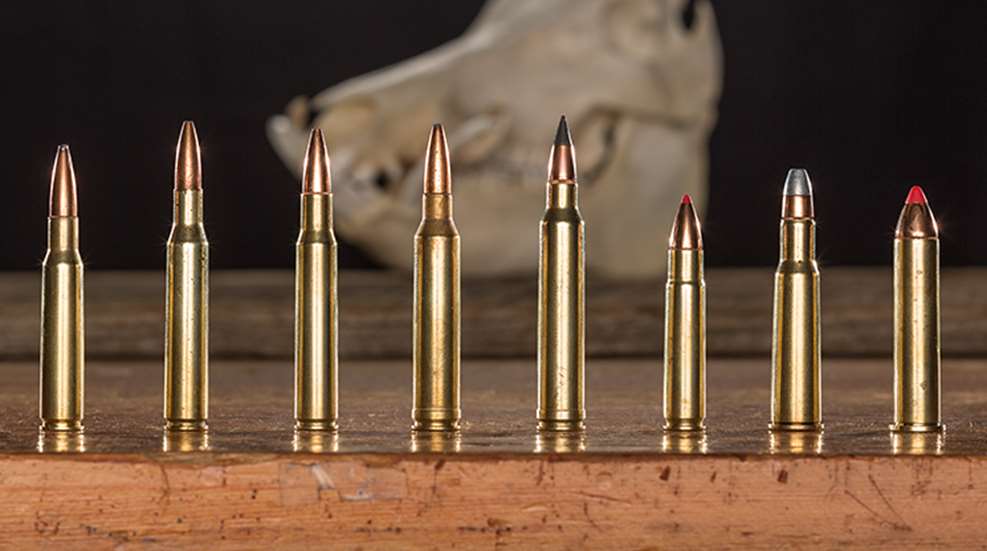
For the full run of pig hunting a big rifle is better. But let’s keep “big” in perspective. I learned spot-and-stalk hog hunting from Mike Ballew, former executive director of the NRA Whittington Center, when he was the hunting manager of Dye Creek Ranch in northern California. Ballew supervised the yearly hunting of several hundred pigs and had his share of close calls. Yes, wounded pigs—of all types—will charge readily. Sows come low, biting; boars come higher, slashing with their tusks. Ballew carried a “big rifle” for backup: a .270 or 7x57. Either is plenty for any pig that walks, and the .30-06 is also very hard to beat. If you have an inclination toward long shots then more is better: fast 7mms and .30-calibers. On the other hand, if you like to get up close and personal, traditional “brush cartridges” like the .35 Rem., .348 Win. and .45-70 Gov’t. are lots of fun.

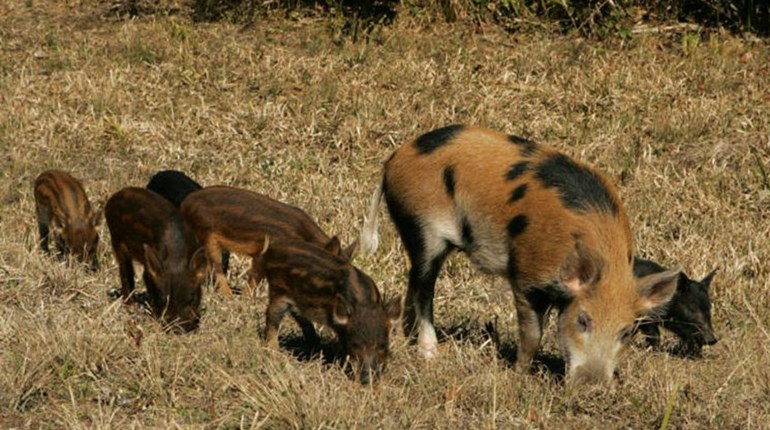
Keep in mind that there’s a big difference between a 120-pound eatin’-size sow and a 300-pound boar … not the same animal at all. Only boars have the thick cartilage shield over neck and shoulders, proof against tusks. This shield is not bulletproof but can make a quick-expanding bullet set up too quickly. Choose bullets of at least medium weight for caliber that are designed to penetrate!

Latest

Facinn1.25
Facinn1.25

Late Season Decoy Mix

In the final days of duck season, don’t be afraid to change the look of your decoy spreads. Be it a simple alteration or a bold move, a different presentation can be all it takes to provide a strong finish to the season.

New for 2026: Stealth Cam 3.0 Tail Cameras

Stealth Cam has announced its 3.0 trail camera line, with some major tech-forward improvements over its previous generations. Designed for hunters and wildlife managers, these cameras introduce a suite of technologies designed to push surveillance capabilities to the next level, all accessible through the Command app.

Kifaru Launches New Hunting Apparel System

“This system is a purpose-driven solution for the tough environments and unpredictable scenarios outdoor enthusiasts’ encounter. Every piece was designed to help hunters meet those challenges head on.”

Hardware Review: Sierra MatchKing X

Sierra MatchKing bullets have been setting the accuracy standard for handloaders since the Truman administration. Now, they have redesigned their classic MatchKing bullet for hunting, with a softer lead core, tapered jacket and a skived nose to help it expand. They call the bullet the MatchKing X (MKX).

New for 2026: Lapua TRX Tipped

Lapua has expanded its True-Range Expanding (TRX) family of products to include several new ammunition offerings.

Bolt-Action Build: Model 2020 Muley

With the right tools and a bit of know-how, anyone can build a quality backcountry rifle in their own shop, and for a far sight less than a comparable rifle from a custom gun-builder. Follow along for exactly how to build a backcountry-capable rifle all your own, with your only trip to an FFL being the one necessary to get your receiver.

Interests


Get the best of American Hunter delivered to your inbox.