9/13/2010
I have shot rut-crazed bucks in 20 states and three Canadian provinces by tweaking this setup to fit the different terrains I’ve hunted. The biggest buck scored 182 according to the Boone and Crocket Club. Using the stand setup outlined here as a guide, look for such stand locations on your land.
The Land
First look for a feeding area that is actively being used during the rut—a field of standing corn, soybeans, alfalfa or a good-sized food plot all qualify. Food drives the movement of does even in the rut and the randy bucks will hang out where the girls are. The less hunting pressure there is in and around the field the better. No pressure is best. If there isn’t any hunting pressure, I can almost guarantee you’ll see at least one shooter buck and probably more from this stand.
The second feature is a hardwood ridge hidden 100 to 200 yards off the field. The perfect ridge is slightly elevated above the field and it connects the field to woods and brush (bedding areas). Also, a perfect ridge is fairly narrow, say 200 to 300 yards across at most. Ideally, it’ll be plenty wide enough for bucks to rub and scrape and to run does on, but not too big for you to cover and hunt effectively. Hang your stand in a good spot, and you will see most of the deer that rut up and down the ridge and cut across it.
Another important element to look for is a sanctuary area where deer can bed undisturbed. A thick, gnarly area with no human activity year-round is ideal.
Lastly, you need a ditch, stream or other terrain structure that allows you to get to and from the stand without spooking deer.
The Stand
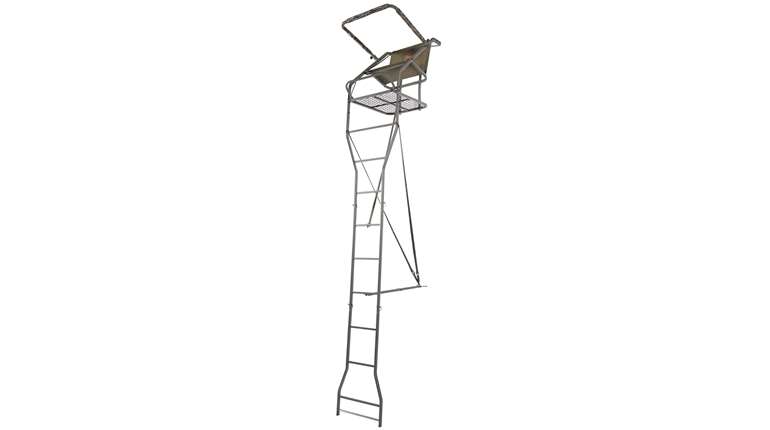
This stand is killer for either morning or afternoon hunting with bow or gun. But it’s devised for an all-day rut sit if you can hack it. I recommend you set a large, comfortable lock-on or ladder stand.
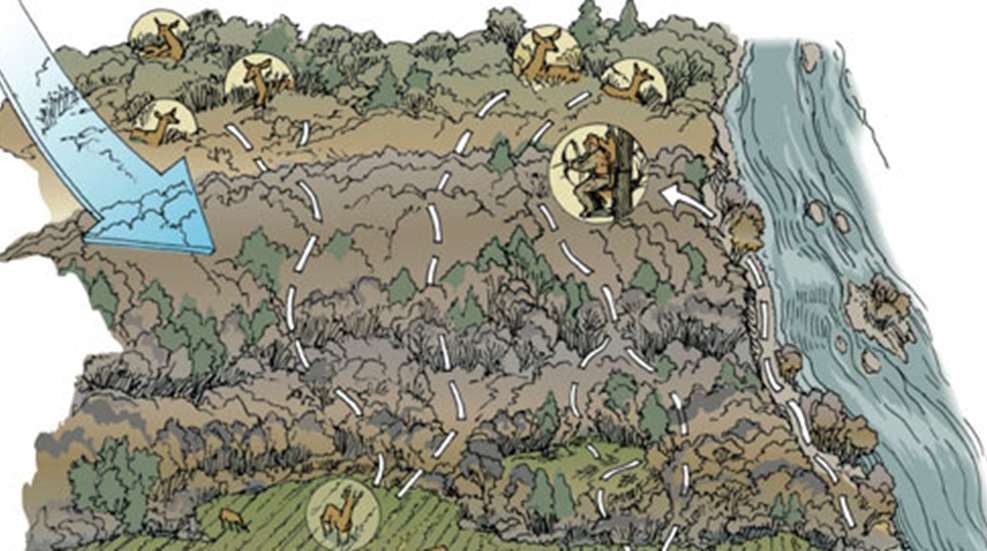
Set up for the west to northwest wind that will blow most days in November. Post in a tree somewhere on the east end of the ridge, tight to an area that doesn’t get much deer activity so your scent won’t alert the local deer.
Hang your perch near the doe trails that head from the bedding area to the feed. You could bowhunt it and maybe kill a big buck trolling on one of the trails, or you might sit there with a shotgun or rifle and nail a big deer.
This setup in the illustration above is designed for stealth access (all your stands should be). Wade or boat across the water to get in and out; you shouldn’t bump a single deer if you’re quiet. Come in from the southeast corner of the field and sneak up the west side of the creek. Use the stream’s bank and the brush to cover your moves.
November is the best time to rattle and grunt, and this stand is great for either one. Strike a buck with your calls and it will probably start to circle downwind of you. But when a buck hits the water barrier behind you, he’ll turn and come in along the bank from right or left.
Secondary Stands
A good option, especially when you’re bowhunting, is to set a lock-on in a semi-open glade just off the ridge and closer to the crops. Use the same access and get there early. In the morning, some does will filter off the field on the trail and browse and stage in the opening.
One time on the Milk River in Montana, I hunted a spot like that. Eight bucks came in and grunted, sparred, and hassled does beneath my glade stand for more than an hour. Finally I was able to draw my bow and kill the second biggest 10-pointer.