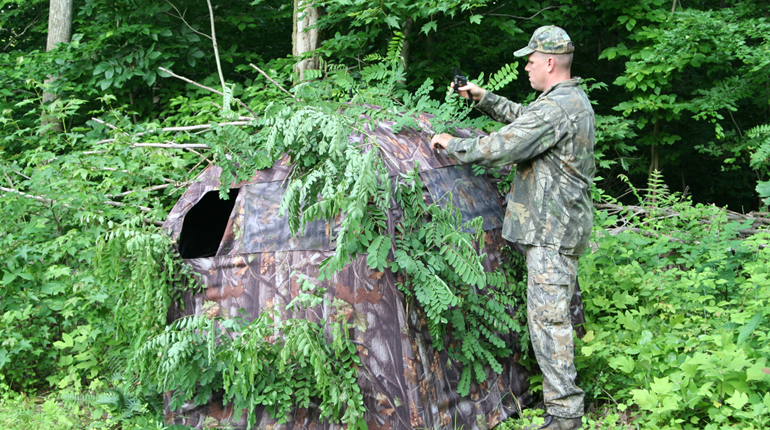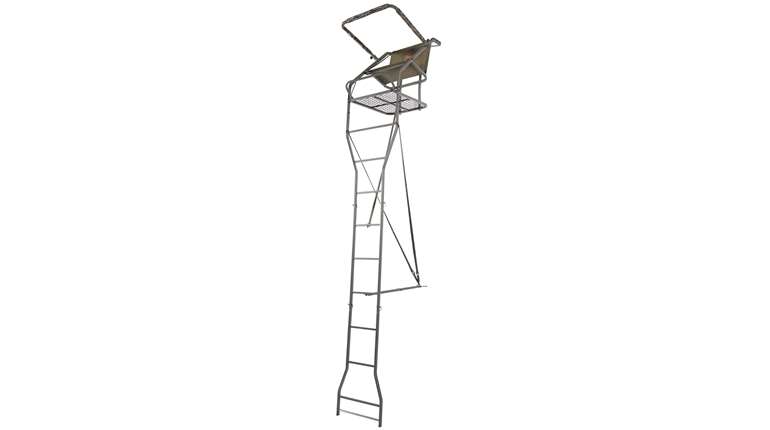
During the whitetail rut there are two schools of thought when it comes to hanging stands. The first is that it is best to scout well before the season and get your stands set long before it is time to hunt, thus minimizing human impact in the core hunting area. This is a great strategy as I am a firm believer in the fewer humans set foot on the ground in the hunting area the better.
There are times, though, when the action is happening just out of range. You have two choices in this situation—stay out and hope a shooter runs past your tree, or make a move. When conditions permit, I prefer moving. Here’s an example of why.
The last few days of October I was hunting in Schulyer County, Ill., on some super property. My friends Jason McKee and Brady Arview had set a stand in the corner of a cut corn field that was bordered on two sides by a small creek, with the entire thing set in a shallow bowl filled with trees and brush. For two evenings, I watched deer come out of the opposite corner of the field 200 yards distant and never get within 100 yards of me. At noon on day three I made my move, setting a stand near the field edge, 20 yards from the trail most heavily used by the deer. The next night I saw lots of deer close to me but didn't see “him.” Having to fly back to Arizona soon to attend a veterans charity event, I showed the drill to Curtis, who had flown in that day from Alabama. An experienced deer hunter, he knew to play it cool, watch his noise and scent column and tread lightly. About 30 minutes before dark, a 2 ½-year old 10-pointer was chasing a handful of does around the field when a gnarly, old 11-pointer walked right out where the others had been entering the field. Curtis ran a NAP Spitfire Maxx through his ribs at nine steps.
The keys here were using information to make it possible to set up on the right trail at the right time, being able to access the new stand site midday without fear of disturbing any nearby bedded deer; staying away from deer travel corridors when moving the stand and the right wind.
Don’t be afraid to make a move mid-hunt. It can pay big dividends.