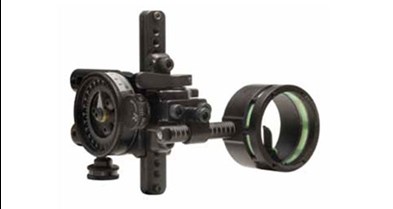
 I’ve had several chats lately on the debate over single-pin vs. multi-pin adjustable bow sights. I gravitated toward the single-pin option when I first started bowhunting, thinking simpler—or minimal—was better. If I were lucky enough to have a whitetail buck or bull elk step out in front of me, there would be enough to think about without having to consider multiple pins. Single-pin sights were easy enough to set up and adjust for the given yardage, and it was impossible to use the wrong yardage pin because, well, there was only one. I liked the uncluttered view offered by a single pin and the fact you simply center it in the peep sight and shoot.
But here’s the trick. What if your sight is set on 20 yards, for example, and your buck steps out at 35 yards—and he isn’t coming any closer as he walks left to right toward the thicket? Now you risk having him catch your movement as you slide your sight to the correct yardage. Or, you’ve practiced shooting at bullseye targets at 30 and 40 yards using your 20-yard pin so you know exactly where your arrow will hit at those yardages and you know to compensate and precisely how high to aim. I wrote an article in American Hunter about how I missed my first whitetail buck because I was so used to shooting rifles and taking the first good shot I knew I could make that when I drew back and the buck suddenly opted to walk 10 yards closer, I shot over him.
Multiple-pin sights, of course, sidestep this potential pitfall. If you have three pins set at 20, 30 and 40 yards, for example, just range your quarry, use the designated pin and shoot. Once you get used to a multi pin sight, it becomes second nature to hone in on the right pin for the yardage. Or, as your heart is pounding in the heat of the moment and you’re trying to focus on so many things, is it too easy to use the wrong pin? A good friend of mine had a slightly different problem when he got his first chance at a bull elk last fall. He got so excited that he rushed to make the shot, never thinking to check the yardage until he was at full draw. Of course, a single-pin adjustable sight forces shooters who tend to rush their shots to take the time to range the distance to the target, but now we’re back to having to unscrew the lockdown bolt, slide the sight to the correct yardage and then lock it down again—often while wearing gloves.
Thanks to new technology in the last few years, sight companies such as Spot Hogg are making best of both worlds, offering multiple-pin sights that include one pin that functions as an adjustable pin, or slider. I’m about to try out the company’s Tommy Hogg model, available in 3-, 5- and 7-pin options. Imagine having a three-pin sight, for example, that maintains a 20- and 30-yard fixed pin with an extra pin that serves as a single-pin adjustable sight.
As for choosing between a single- or multi-pin adjustable sight in general, more often than not, I’m a single-pin-sight bowhunter, though there are certainly pros and cons with each. When it comes to any down sides, perhaps the problem is really more about the simple fact that we bowhunters have so much to think about when that game animal steps into view—and that anything and everything is subject to causing human error.
It’s a fun debate. What’s your take?