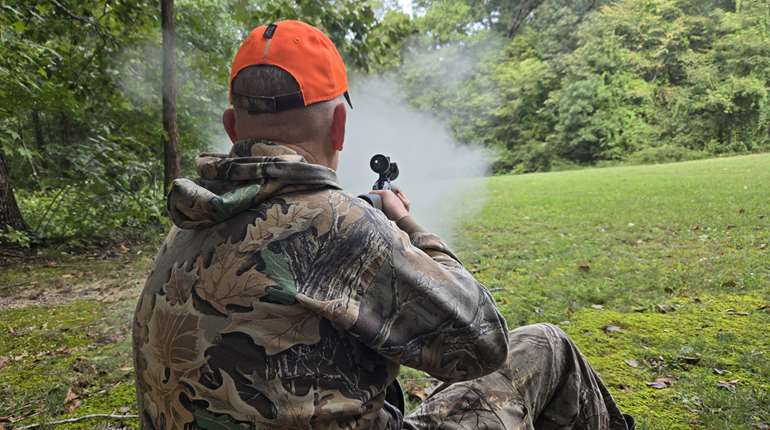
Suppressors, commonly but less accurately called silencers or “cans,” have been commercially available since 1908. Unfortunately for freedom-and hearing-cherishing Americans, they have been demonized by the anti-gun media largely due to their portrayal as “assassin tools” in Hollywood movies. In reality, however, suppressors are common in other countries because of the vast benefits they offer shooters and hunters. Here are few common myths about suppressors.
The Expert Deferral: (The following information courtesy Silencerco.
1. Myth: Suppressors have no good purpose.
False: Suppressors offer:
-Increased accuracy for hunters and target shooters because they minimize flinching before the shot. When shooting an unsuppressed gun the nervous system prepares for a startling bang, which often results in flinching and poor accuracy.) For more on this see Shooting Illustrated’s article entitled “The Truth about Silencers.”
-Hearing Protection: According to the Center for Hearing and Communication, 18 million Americans suffer from hearing loss.Fifty million suffer from tinnitus (ringing in the ears.) In fact, disability payments to combat veterans will soon reach 1.1 billion annually. If suppressors were more prevalent these figures could be reduced.
-Benefits to Hunters: Hunters often have to choose between hearing game and protecting their hearing. By using a suppressor, they can do both.
-Personal Protection Safety: Defensive gunshots in the closed confines of a home or car can leave permanent damage to the shooter’s ears. Using a suppressed firearm in a defensive situation can mean that only the criminal is injured.
-Better neighbor relations: Suppressors reduce noise complaints where people live in close proximity to target ranges, hunting or plinking.
2. Myth: Suppressors are illegal.
False: Suppressors are legal in 39 states, and NRA-ILA isaggressively promoting pro-suppressorlegislation.Recent initiatives in Indiana, Arizona, Texas and Georgia have passed or are pending.
3. Myth: Suppressors are often used in crimes.
False: Legally obtained suppressors are rarely used in crimes.
4. Myth: Suppressors make standard loads absolutely silent.
False: Suppressors only work to lesson the blast of rapidly escaping gasses at the muzzle; downrange, any bullet that reaches hypersonic speeds still makes a loud “crack” as it breaks the sound barrier, but this noise is usually far enough away from the shooter to mitigate hearing damage compared to an unsuppressed bullet.
5. Myth: Suppressors are impossible to obtain.
False: Any law-abiding citizen, 21 years of age or over, who lives in a state where ownership is legal, meets state criteria and pays a $200 one-time tax stamp fee can obtain a suppressor. However, the process can take up to 6 months due to backlog and slow processing by the federal government.
Hushed Facts:
*Hiram P. Maxim invented the first commercially available suppressor in 1908.
*Civilians purchase over 27,000 suppressors per year.
*A one-time tax stamp for suppressor purchase costs $200, the same as it did in 1934 when the law was made.
*In 2010 three large suppressor companies, including Advanced Armament Corp., GemTech and Silencerco teamed together to create the American Silencer Association (ASA) to educate the public about the benefits of suppressors.
*85 percent of Americans believe suppressors are illegal.
Go to silencersarelegal.com for more information, and exercise your rights: Buy a suppressor.