Some Good News (Finally) for Bobwhite Quail

by
posted on June 23, 2014
** When you buy products through the links on our site, we may earn a commission that supports NRA's mission to protect, preserve and defend the Second Amendment. **
dogs_ah2015_fs.jpg (40)

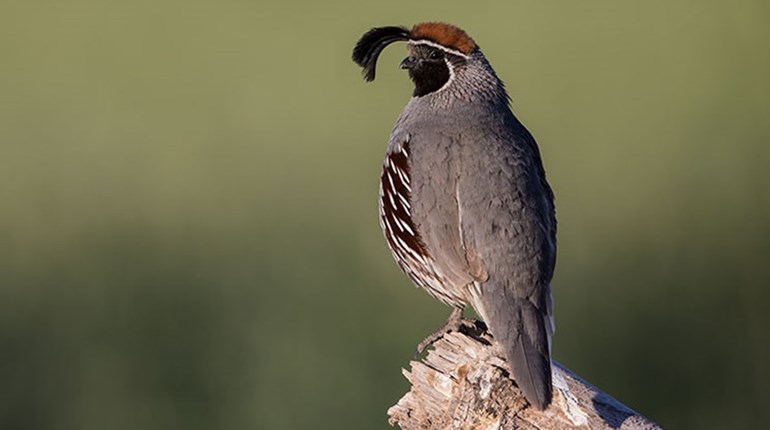
It's been grim times for the bobwhite quail, as wild populations have fallen due to habitat loss and other reasons. However, through careful efforts and occasional luck from Mother Nature, they have stabilized and even resurged in certain southern and Midwest states. Oklahoma is key among them and—good news—state biologists say timely rains and mild spring weather may fuel the largest quail rebound in many years.

"We're seeing better conditions now than we've seen in the past two and a half years," said Scott Cox, upland game biologist with the Oklahoma Department of Wildlife Conservation. "There are a lot of birds being heard ... We're optimistic that we're looking at a good nesting season."

Rain and mild temperatures ensure good ground-cover plants for nesting quail--without them, hens may delay nesting altogether. During last year's drought, state biologists in northwestern Oklahoma hadn't found any hens nesting by mid-June. This year chicks were reported on the ground as early as mid-May. It's important for hens to start early, as this allows time for second and third nesting attempts in the event of nest depredation.

"We're about as good as it gets as far as nesting and forbs production in most parts of the state," Cox added. "We're definitely going to see more birds, if we don't have any catastrophes between July and October."

Just how many more birds? According to Cox, many ranchers are reporting better spring quail numbers than they've seen in a decade. Still, Oklahoma's quail have a long way to go. Cox estimates that the current quail population is 750,000 to 1 million birds. It hasn't been at peak numbers since the 1990's, when the state had 7 million quail.

Latest

Ports To Reopen
Ports To Reopen

Screwworm Invasion Stalling at the Southern Border

The New World Screwworm (NWS) invasion, and the potentially devastating impact it could have on wildlife populations and the ranching industry has stalled, at least temporarily. The U.S. Department of Agriculture (USDA) is confident enough in its defenses—coupled with the cooperation of officials in Mexico—that livestock from Mexico is scheduled to resume entry through the Douglas, Ariz., port on Aug. 24.

First Look: Apex Ammunition Dove Stratified Loads

Apex Ammunition has introduced dove loads in its Stratified line of shotshells. Featuring layered shot sizes of either L3 high-antimony lead or S3 steel pellets, the Dove Stratified series is designed to perform at variable ranges, with dense close- and mid-range patterns and increased terminal energy at longer distance.

Lightweight AR-10: Building a Hunt-Focused Backcountry Rifle (Part 2)

Welcome to Part 2 of the quest to build the lightest AR-10 possible. This section focuses on the upper (Part 1 featured the lower; Part 3 will focus on tuning the gun). No need to keep you waiting; if you want to see the premise or any qualifiers, check out Part 1. Let’s start the upper build.

First Look: Bear Ops Nekama II

Bear Ops has released the Nekama II, a purpose-built everyday carry knife.

Braves Defy Hunting & Fishing Night Scarcity in MLB

Major League Baseball’s (MLB) Atlanta Braves held a Hunting & Fishing Night in Truist Park. It’s back by popular demand for 2026, sponsored by RealTree, and takes place on Aug. 29, with ticket sales are helping fund conservation efforts in the state.

Behind the Bullet: The .250-3000 Savage

Curious about a chambering seemingly made for, and certainly popularized by the mythical Savage 99? Let's delve into the history of the .250-3000 Savage, a revolutionary cartridge for its time, that will still bring home the bacon today.

Interests


Get the best of American Hunter delivered to your inbox.