So you want to be a long-range hunter? You have a super-accurate rifle and you have tuned the ammo until it punches little bug holes in the target instead of groups. The trigger is crisp and clean and you have the best optics money can buy on top of the gun.
So, what’s next? Lots and lots of practice, for one thing.
The Laws of Gravity
Hitting targets at long range is tough. You can’t buy the skill; you need to earn it by burning powder. But first you need to understand external ballistics and how to deal with the aiming points for long-range shooting. (You also need to learn how to deal with wind drift, but that’s another subject for another time.)
It might seem obvious, but long-range shooting is about variations in distance. If our bullets simply flew straight to the target it would be pretty easy, but they don’t. Bullets, like everything else on the planet, are subject to the laws of gravity. As soon as a bullet is free from the support of the rifle it starts falling to the ground at a rate of acceleration of 32.2 fps—per second. So after a bullet has been in flight for one second it is dropping to the earth at 32.2 fps. After two seconds it is dropping at a velocity of 64.4 fps and so on. The longer the shot, the longer the bullet is in flight and the faster it is dropping.
While the line of sight is linear because gravity has no effect on it, the bullet’s flight is not. If your line of sight was exactly parallel with the bore of the rifle, the bullet would always impact below the line of sight as it exits the barrel below the scope. The greater the distance to the target, the farther below the line of sight the impact will occur. For example, a 180-grain bullet from a .300 Winchester Magnum impacts 63.11 inches low at 500 yards, but at 100 yards it’s only 3 inches below the line of sight.
So we adjust the relationship between the line of sight and the bullet’s flight. To work correctly, rifles do not have the line of sight and the bore parallel. The bore of the rifle will actually be tilted up at the muzzle when compared to the line of sight. The bullet exits the muzzle about 1.5 inches below the line of sight for most scoped hunting rifles. Because the bore is tilted slightly relative to the straight line of sight, the bullet’s path will arc up through the line of sight. With our .300 Win. Mag. and a 200-yard zero, the bullet crosses for the first time at 20.5 yards. Even though the bullet is dropping toward the earth, its path will continue to rise relative to the line of sight until it reaches its peak. That varies with cartridges, bullets, velocity, zero range and other factors, but for our .300 Mag. with a 200-yard zero it happens at about 110 yards, where the bullet will be 1.86 inches above the line of sight. After that point the bullet will be moving closer to the line of sight until it crosses it again at 200 yards. From that point on the bullet will always be below the line of sight and the distance between the bullet path and the line of sight will grow exponentially larger as the distance increases.
So what does that mean hunters? Well, first off, with most modern, high-velocity, bottleneck rifle cartridges you can pretty much ignore all this out to 250 yards or so.
With a 200-yard zero the .300 Winchester’s bullet will be about 3 inches below the line of sight at 250 yards. So from zero to 250 yards the bullet is never more than 1.86 inches above or 3 inches below the line of sight. On big game this means you can hold on the center of the chest and you will hit the kill zone if you do your job. Even at 300 yards the bullet is only 7.3 inches below the line of sight. If you hold slightly high, but still on the critter—on hair not air—you will hit vitals.
But after that things rapidly start to change. The .300 Win. bullet has been in the air for more than a third of a second and it is beginning to pick up drop speed. At 350 yards it is almost 13 inches below the line of sight. At 400 yards the bullet impacts more than 20 inches below the line of sight. At 500 that has doubled to 40 inches. It’s almost 70 inches at 600 yards. By 1,000 yards the bullet will impact almost 290 inches below the point of aim—that’s more than 24 feet.
But if you move your zero distance out, you run into other problems. Suppose you zero that same .300 Win. Mag. for 400 yards: At 200 yards your bullet will be 10.2 inches above the line of sight. If you aim at a deer standing 200 yards away, you will shoot over his back. Remember too, this is with a .300 Win. Mag., one of the flattest-shooting cartridges. With many less powerful cartridges these numbers grow bigger due to slower bullet velocity. Considering that a lot more deer are shot at less than 200 yards than are shot past 200 yards, a 400-yard zero would be a mistake.
The key to long-range hunting is to zero for a reasonable distance, like 200 yards, and then deal with the hold-overs for longer stuff. There are basically three techniques.
Hold-Overs
The first thing you can do is simply hold over the target. This is the oldest technique and it’s worked for eons. The first guy to chuck a spear used this technique; archers were doing it centuries ago; gun hunters have used this method since the invention of gun powder. But it only works if you use your brain. The tendency is to hold high, not trust your rifle and move your aim a little higher, then jerk the trigger and miss.
A smart hunter has a method.
Now that we have laser rangefinders it’s easy to know the exact distance. If you know the hold-over for each distance and have something of a known size to use for a guideline, you can adjust. For example, if you are hunting northern whitetails and you know that the average mature buck measures 18-20 inches through the chest you can gauge how high to hold.
Say the buck is at 400 yards: We know the .300 Win. Mag. drops 20 inches at that distance. So you would hold one deer thickness above where you want to hit, which is the center of the buck’s chest. That means you hold half a deer above his back. If the deer is at 500 yards there is a 40-inch drop, so you would need to hold two deer above where you want to hit, or one and a half deer above his back (I discourage trying it). A pronghorn measures about 15 inches through the chest, an elk about 25 inches: adjust accordingly. It’s not perfect, but it can work if you keep your cool and do the math.
Clearly this is full of variables and there are too many things that can go wrong to consider it a precise technique for hunting. Say you are at 440 yards where the drop is 27.12 inches: Can you do the math in your head quickly? What if the deer is a runt and its chest measures only 15 inches, but you think it is 20? Are you sure you are holding two deer above your expected point of impact, not 2.3 deer or 1.7 deer?
There are better ways.
Dial-Ups
You can dial up for the distance, for example.
Suppose your rangefinder says the distance is 400 yards again. Our ever popular .300 Win. Mag. will impact 20 inches low, and your scope has quarter-minute clicks. That means you move it four clicks to adjust for one minute of angle (MOA), which for all practical purposes is 1 inch at 100 yards. (It’s actually 1.047 inches, but let’s not split hairs.) At 400 yards one click will equal 1 inch, as an MOA at 400 yards is 4 inches. So, you adjust the scope up 20 clicks and aim at where you want to hit the deer. If he is at 440 yards, you come up 27 clicks.
Simple, right? In theory, yes, but there are problems.
The biggest problem is that a lot of scopes don’t work all that well. Often their adjustments are erratic, so they do not move the amount you expect. You think you dialed in 20 inches, but the scope moved only 16 inches, or maybe 27. I have seen this time and time again with scopes when trying to zero them.
Or maybe it didn’t move at all because it’s stuck. (That happens a lot, too. That’s why you see savvy shooters tapping the adjustments on their scopes after moving them.) So, the shot is low but the recoil jars the mechanism loose. Thinking you didn’t go enough, you dial in another 20 clicks and the bullet sails over the buck’s back. This is particularly true with inexpensive scopes, but I have seen this with top-of-the-line brands as well.
It also takes time to make the calculations and make the changes in the scope. By the time you are finished, the deer might have wandered away, or the distance may have changed so now you need to add or subtract clicks. Finally there is a danger of losing count, particularly when the adrenaline is flowing. Now you don’t know where the heck your bullet is going to impact, and you will need to go to a shooting range and re-zero. If you ask me why I know this, do not expect a polite answer.
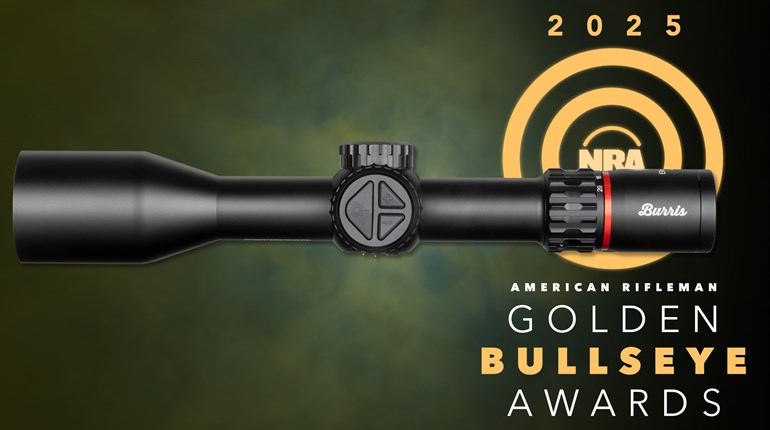
Dialing up is actually a preferred technique for a lot of snipers and competitors. But they use scopes designed for long range, which are not for hunting. Long-range scopes have external adjustment turrets and are designed with very positive movements. Most also have a feature by which it’s easy to return to your pre-set, original zero. They will work for hunting, but they are not perfect either. The large target turrets stick up so they are in the way and can be easily damaged. Also, unless they lock, the turrets can rub on your coat or in a gun case and turn so that your rifle will impact off in space rather than where you expect.
The best scopes are tough, as they are designed for battle and they have locks on the turrets, but they also are very expensive and usually quite heavy.
One variation on this technique that works well for hunters is the Swarovski Ballistic Custom Turret, which is custom made to your cartridge and load. In addition to your main zero, it has three pre-set distances you can dial up in an instant. So, for a long shot you simply click to the desired position and hold dead center.
Ballistic Reticles
The third long-range sighting option uses a ballistic reticle with hold-over aiming points. I think every major scope maker has one or more of these in its lineup. Some companies like Leupold even build a custom reticle specific to your rifle and cartridge. I know Swarovski, Nikon, Zeiss and others offer online ballistic programs where you can plug in your data on the Web then the program provides values for hold-over lines for your scope, rifle and ammo.
The way they work is simple. There is a series of extra horizontal lines along the descending vertical wire that provide multiple aiming points for holding over for long range. They are set with specific spacing. Some use milliradian spacing (mils) while others try to adjust for the external ballistics for the most popular cartridges. Because most American-style hunting scopes place the reticle in the second focal plane so that it does not change size as you zoom the power up or down, the data is only relevant at one magnification, usually the highest. However, that too can be adjusted. For example, Swarovski’s online calculator lets you select the magnification you want to use before it runs the calculations. By turning down the power, you can increase the distance the scope will allow you to shoot with the reticle aiming points. Of course, the first focal plane reticles popular in some European hunting scopes and on a lot of tactical scopes maintain the same perspective throughout the magnification range, so the hold-over distances do not vary.
The advantage of this type of reticle is that it is extremely fast to use in the field. You don’t need to do any math or move any dials. Yet it is very precise and there is little or no guesswork. Obviously, if the target is not exactly at one of the prescribed distances you will need to make some adjustments. But it’s a lot easier with multiple aiming points than with just one aiming point. For example: your settings are for 100-yard increments and the deer is at 450 yards. If you bracket with the 400- and 500-yard lines and favor just a bit high to allow for the acceleration of drop due to gravity, you will be fine—at least in theory. With any of these methods you must prove the data at the range.
Check Your Work
All this, whether you dial up or use a ballistic reticle, involves math. Now, the math will get you close when shooting, but there are simply too many variables to be exact. You must shoot your rifle at each distance to know for sure if the math is correct. It almost always is not. It will be close, but you need to fine-tune by shooting.
Your ballistic program may indicate you need to dial up 20 clicks to impact at 400 yards, but the reality will likely be something different. That’s because of many factors, not the least of which is how ballistic programs must make assumptions on things like ballistic coefficient; elevation; ambient weather conditions; barometric pressure; the angle of the shot; bullet velocity and more. Most of those change day to day and certainly from gun to gun and location to location. It’s the same with ballistic reticles. The program may indicate the third line down is for a 400-yard hold, but the reality will probably prove that to be incorrect. You won’t know until you shoot and shoot a lot. Make sure you practice at various distances on various days. After you turn a lot of cartridges into empty brass you will begin to understand that shooting at long range involves a lot of variables. Until you understand and can adjust for those variables, you should confine your shooting to targets, not animals.
On the other hand, shooting at long range is a lot of fun. If you don’t enjoy it enough to get out and practice on a regular basis, you probably should not call yourself a long-range shooter. Perhaps another term might apply, like “golfer.”