How many times has this occurred? You just killed a great buck, and in the rush of recovery and trying to get back home to show it off, you forget to take a photo of it. In haste, you drop the tailgate and pose for the picture. Oh yes, the tongue is hanging out when you later look at the image.
Fortunately, those snapshots are disappearing quickly thanks to quality examples seen across the Internet and your eagerness to top your social media followers. A thoughtful image sends a statement of reverence you have for the hunt. That is foremost since your image is forever part of the online universe including your family and friends, and anti-hunters and firearm opponents.
Filmmaker Gear List
Study the camera mode on your smartphone. Play around with all features, but become comfortable with the standard photo, portrait and video modes. Photo mode is typically wide-angle and portrait mode zooms in and blurs the background. Video preserves a few minutes of hunt excitement and what transpired up to the shot.
Most modern smartphone cameras are in the range of 12-megapixel for high-resolution images. Some are even higher. The main drawback of your smartphone is typically its flash will not illuminate a night scene well. As a backup, carry a small point-and-shoot camera with a slightly better flash, plus use a SureFire flashlight or headlights to help. The extra camera provides an illumination boost and backup if your smartphone battery dies. Always carry extra power sources for all image devices. If you hunt solo, pack a selfie stick or small tripod. Review how the timer works on your camera device.
If photography is your forte, utilize a DSLR with 25 or more megapixels. Your interest and budget will determine if you want to spend more than $1,500 for high-quality images.
Film Location Scout
With production equipment in hand, choose a photograph location before field-dressing. Gutting increases blood cleanup and deflates the animal’s size. With a 700-pound bull elk, you are married to a mountainside, but with a whitetail buck you're able to move and position the trophy at will. Now look up.
Cloudy skies work well since they eliminate shadows under hat brims and antlers stand out amid most backdrops. For intense sunshine, it is best to move the animal to an edge in full sunlight. Crisscrossing shadows from trees are a nightmare when trying to balance light across you and the animal. This move may serve well for those who like to position the animal on a small rise to skyline antlers while photographing from a lower angle.
Unless you like the “bass angler look,” never use a close, wide-angle framing. Snap images with a normal perspective and take images from a 360-degree approach of all animal angles.
Makeup Artist
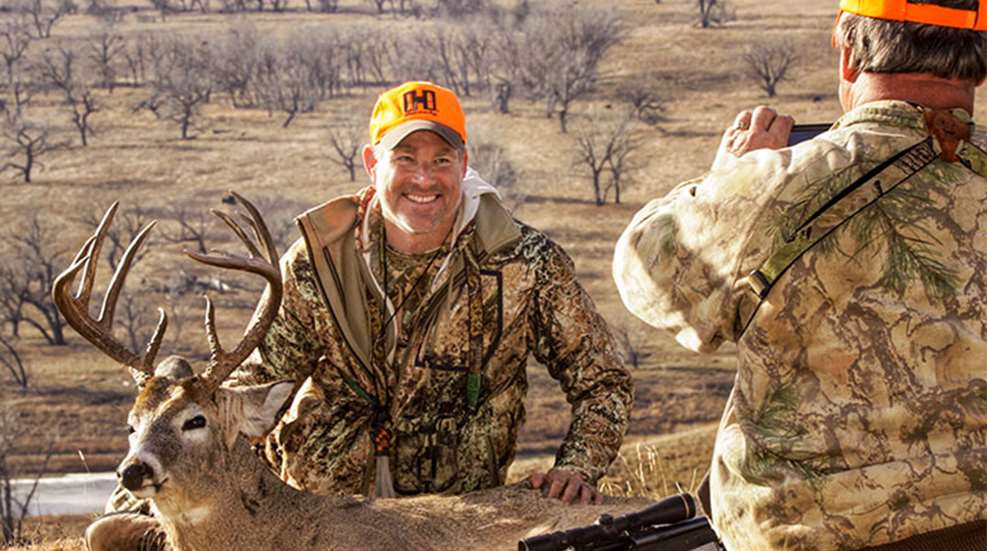
With the deer in location, attempt to prop it up as if it were bedded. This highlights the size of the deer, especially if you sit on your bum, low behind the buck. For extra help holding it in position, push a log or several rocks behind the body. Clean up any blood. Have wipes and paper towels at the ready, along with water. You may need to twist short lengths of wipes to insert into the nose, mouth or wound channel to block blood. Slice off the tongue if it will not stay in. A coyote will thank you later. Never leave an arrow in the wound, rather, place it alongside the animal or back in your quiver.
An extra trick to make big game look stunning is to slip a set of taxidermy eyes over the actual eyeballs. It adds a noticeable sparkle to the eyes in the photograph, and if you do use a flash, it eliminates the ghost glow seen in many images. Before you say "cheese," remember to smile. Shun the stern look. This is a celebration, not a family feud.
Lastly, back up all your hunting memories ASAP. And if you get home and discover a bit of blood or some other distraction in the image, utilize any of the free photo editing apps out there to fix the situation. Your niece or nephew may be helpful resources.
Do your part to keep hunting respectful, acceptable and memorable by taking quality hunting success images.