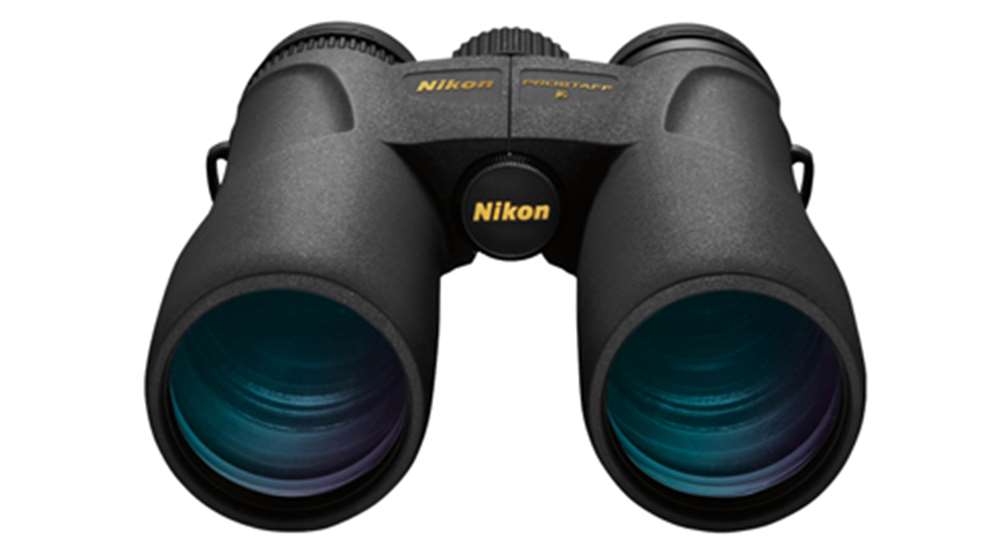
Hunters who’ve enjoyed the exploits of Nikon Pro Staff personalities on television and elsewhere can now experience hands-on benefits from the company’s new Pro Staff series—a budget-friendly line of riflescopes and binoculars packed with features normally found in more expensive optics. Fully multi-coated lenses transmit sharp, true-color images, and an extensive scope roster boasts reticles specifically calibrated for centerfire, rimfire and shotgun slug loads.
Scopes
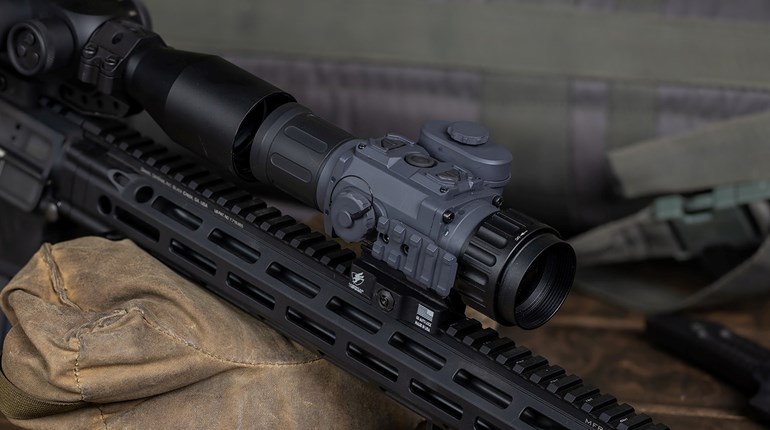
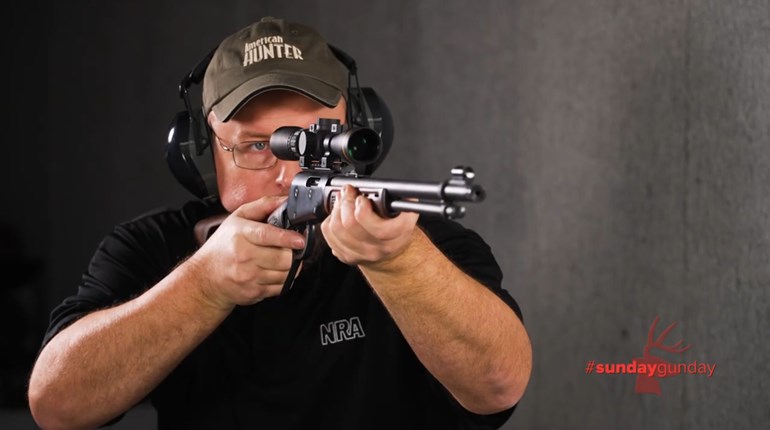
To test Pro Staff scope performance, we mounted a 4X-12X-40mm riflescope on a Savage Edge .243 and 2X-7X-32mm shotgun scope on a Savage 220 slug gun. Utilizing eyeboxes similar to those found on Nikon’s top-shelf Monarch, these scopes offer wide fields of view and ample 3.75-inch eye relief throughout the magnification range.
Though our Pro Staff scopes listed for just $199 or less, both came with Nikon’s top-of-the-line BDC (bullet drop-compensating) reticle. Crafted with four “ballistic circles” on the lower half of the vertical wire, the BDC gives shooters numerous positive aimpoints for dead-on holds at various distances out to 500 yards and beyond (200-plus yards with shotgun scopes). I believe the BDC is one of the handiest of the new long-range ballistic reticles and used a BDC-equipped scope to make my longest shot ever on big game.
Nikon’s free online Spot-On Ballistic Match Technology mini-site even acts like a 24/7 coach to help owners get maximum performance. Following the three-step process, I learned my VOR-TX 80-grain .243 loads would hit dead-on at 242 yards with the second ballistic circle and at 357 with the third. I then confirmed that at the range, holding halfway between the two circles on a 300-yard target to get a 61/2-inch group at the correct elevation.
Our test scopes’ turret adjustments delivered definite click-stops that made dialing in corrections easy and sure. To test for consistency, we used the 4X-12X to shoot a 100-yard group at a dead-on zero, then proceeded to dial in 16 clicks of elevation and fired three more shots from the original hold. As hoped, that cluster printed 4 inches directly above the first group. We then took 16 clicks right and fired again, followed by another 16 down for the final grouping. That left us with a tidy 4-inch “square” that confirmed two very important attributes: the adjustments were as advertised, 1/4 inch at 100 yards; also, the scope maintains its point of impact. However, adjustments made in smaller increments weren’t always as predictable; often we had to fire a shot or two before getting the desired shift in point of impact. In fact this is a fairly common occurrence and so seasoned shooters often rap the turret with an empty casing or dial past the desired adjustment then backtrack to it.
Our Pro Staff scopes delivered sharp, clear images on the range, and we noted their low-light performance by wrapping up testing during the last 20 minutes before sundown with shots fired on a life-size deer target placed along a tree line. Both the riflescope and the shotgun scope made it easy to get on target and place hits in the vital area. Based on what we saw, hunters can count on Pro Staff scopes to perform in any legal shooting light.
Binoculars
The Pro Staff 7 10x42 bino feels like it costs more than $199. It has a tidy look, and Nikon got the rubber armor right; it’s slightly sticky but not mushy. At 6.8 inches the Pro Staff 7 is a long binocular, but at 22 ounces it is lightweight for its size. Company reps say a new focusing mechanism adds length but also saves weight and cost. Its central focus wheel movement is firm but not too stiff; it’s also fast, requiring only 1.25 turns to focus from 13.1 feet to infinity. The unit is available in 8- or 10-power, both with 42mm objectives. This combination is a proven balance of magnification and objective size, which produces adequate exit pupil diameter and brightness. We particularly like the eyecups that rotate out in three stages to accommodate eyeglasses or naked eyes.
But the reason we use binos isn’t for the cheery feeling instilled by holding them—rather, it’s what we see through them. And here is where the story gets murky. To offer products at low price points, companies must make sacrifices to best manufacturing techniques, technology and materials. Fact is, Europeans can’t build inexpensive optics over there because labor is so expensive. While some Nikon products hail from Japan, the Pro Staff is made in China. I used to be leery of Chinese optics, but China has ramped up its manufacturing quality to win contracts. No doubt there are still very cheap optics coming from the commies, but many are made well to exacting specs of companies worldwide.
A glance down the Pro Staff’s barrel-end with a flashlight revealed no telltale glue streaks or black tape meant to hide seams or cheaply baffle light. It’s evident the bino’s aluminum barrels have been machined precisely. Its lenses are fully multi-coated and its roof prisms are top-end BaK-4 glass. A few years ago these features would’ve been impossible at $199.
The main difference in this unit and Nikon’s costlier lines is that its prisms are coated with aluminum alloy. Generally speaking, this type of coating allows 87-93 percent light transmission. Nikon’s mid-priced units use silver alloy (95-98 percent), while top-end units such as the $2,200 EDG are dielectrically coated (99 percent). This means the Pro Staff’s low-light performance is slightly inferior.
All in all, however, the Pro Staff performed great. We submerged it and saw no leaks; we dropped it in grass and it did not break. There is slight aberration at the outer edges of the lenses, but about the only time you’ll notice that is when testing optics—not when using them.
The average hunter will not be disappointed in this binocular, unless, of course, he gets his hands on a true top-end unit. Likely it will be difficult to tell any difference between the two at the store, but it will also be difficult to hand the top-line unit back to the clerk...until the price registers. With Nikon’s Pro Staff line, however, a hunter can buy a complete optics package—riflescope, shotgun/muzzleloader scope and binocular—that should serve him just fine for years to come, all for less than $600.