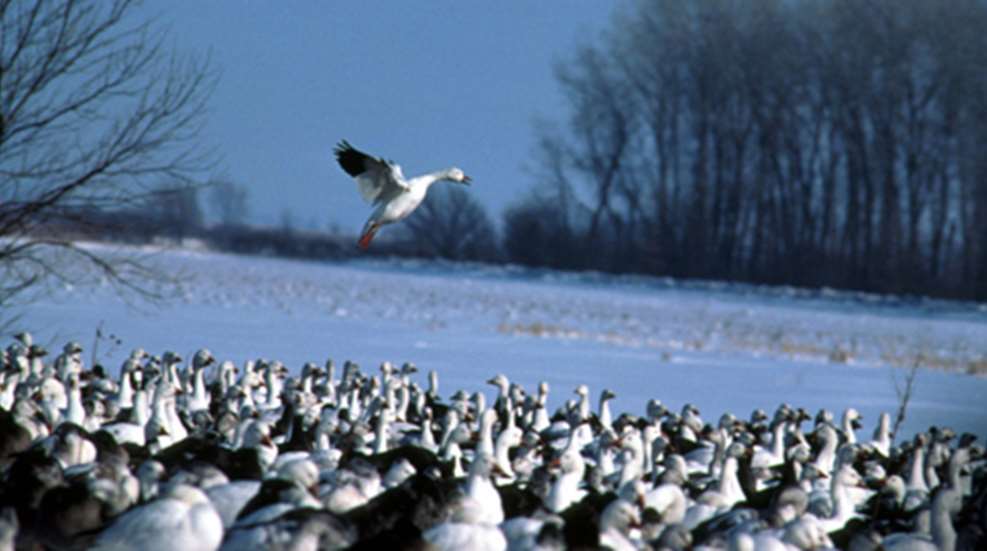
(Photo Courtesy of USFWS)
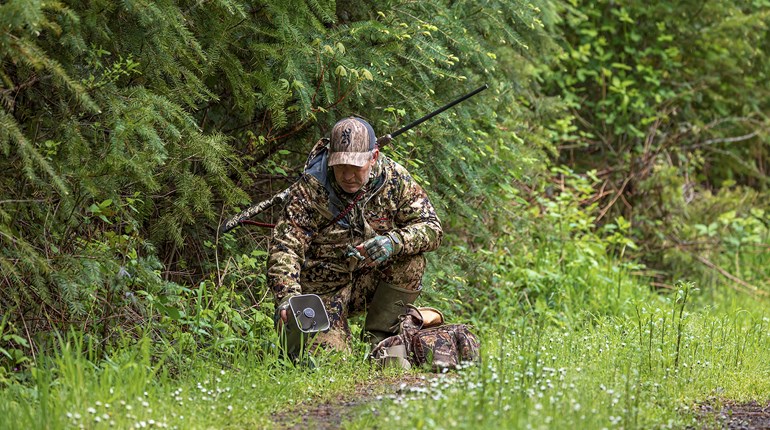
For duck hunters, what was a lackluster season throughout much of the United States courtesy of a warmer than usual winter, has grinded to a finish, but for goose hunters the waterfowling itch can still be scratched in many places well into February. By this time, however, flocks have been banged at and seen almost everything a hunter can throw at them. So setups must be approached with a more aggressive mentality. Try these tips to keep filling your bag limit.
• Add motion to your spread: A large, 2x4 foot goose flag wagged back and forth as flocks fly high and far from your spread can catch their attention and draw them closer for a look.
• Think big when it comes to decoy spreads: The two dozen dekes you cast about earlier in the season isn’t going to cut it now. Eastern Shore waterfowler Kurt Derwort said a hunter “needs a lot of decoys.” He hauls his around in a trailer. His average late-season spread will see 150 to 200 decoys set up around him in the field. A big spread shows up better at long distances.
• Leave a hole: Even with a larger spread, the same principles apply to setting up decoys. Set them out facing into the wind, with a hole in the middle big enough for geese to be able to land right in front of your blind.
• Mix your decoys for economy and success: Derwort likes to have variety in his spread by mixing silhouettes with full body decoys, as the former are easier to tote, generally less expensive to buy and quicker to set up. Most of the silhouettes will be aimed into the wind at the outside of his spread though he will turn some sideways so that approaching geese have continued visuals on the decoys as they come in. As the spread gets closer to the built-in landing zone, Derwort sets the majority of his full-bodied decoys there to maintain better realism as the geese prepare to set on the ground. He also likes to mix in a good number of shells, a few dozen of which are sleeper decoys. He’ll mix them toward the middle of the spread and also put some right around a pop-up blind or on top of his pit blind with a rollback roof. Sleepers simply add confidence that all is well as the geese set down.
• Scouting and understanding the wind is still vital: You need to know where geese are going to feed, and observe which direction the wind is blowing when they go there. Use that knowledge to set up where geese want to go naturally in certain conditions and set up accordingly.
• Observe flight patterns: Should weather drive new geese into the area, one thing holds true, Derwort said: although these geese may not know where the food is yet, flock after flock tends to follow the same visual features when flying, and thus follows the same patterns. You need to be set up where these new geese can see your decoys and hear you call.
• Don’t shoot up your sanctuary: On the Eastern Shore of Virginia where Derwort hunts, geese will typically spend the evenings in protected coves along any number of salt-water tidal creeks that feed into the Chesapeake Bay. If there is a spot where geese go night after night because they feel safe there, resist the urge to gun them as they come into that spot in the evening or even first thing in the morning. By keeping a bird sanctuary where you hunt, you improve the chance that you’ll be able to maintain an endless supply of local birds until through the end of the season.
• When hunting water, set up off shallow points and sandbars: Toss at least a few dozen floaters into the water and set up shells or full bodies along a shallow bank or sandbar. Geese like to lounge on these shallow spots when the tide is out or water is low, but will almost always land where the water is deep enough for them to easily set down.
• Choke up: Geese are more apt to circle your spread just outside of where you would typically shoot as they check it out before landing. Shots can be outward of 40 or even 50 yards, which means you need to be able to deliver tighter patterns out to distance. Derwort recommends a full choke with No. 2s for this time of the year.
• Call with caution: Don’t mess up a good thing. Flocks can be big this time of year, which means a lot of sound that makes it hard for even individual geese to hear. Many times, you may not even need to call, and if birds are coming and reacting as you want, then keep it in your pocket. When you do call, however, many seasoned late-season goose hunters recommend going with a higher-pitched call. It can cut through the calling of the real geese and catch a flock’s attention. Pressured birds call less, so listen to their vocalizations and mimic them. Avoid busting out a contest routine!
• Plan hunts around the weather forecast: Weather plays a significant role in the daily movement of geese. When it’s warm and sunny, they don’t need to feed as much, but the colder, windier and rainier (or even snowier) it is, the more flocks will be on the move in search of food. The colder it is the better, since geese have to eat to maintain energy when weather is severe.
• Don’t miss first light: Everyone has been caught still setting up or getting prepared as shooting hours actually begin, but don’t make that mistake late in the season. Some of the best shooting, maybe the only shooting, will take place when geese first take flight at dawn. You need to be ready and not risk spooking the only flock that may come in that day.
• Stick around: Remember, when it is cold or storms are moving through an area, geese may still move well into the day. On really cold mornings, they may not even begin to fly until midmorning. Be sure to stick around if you can.
• Be there until the end: Likewise, know exactly what minute shooting hours end, as those final minutes can also produce on what can sometimes be slow, challenging hunts in the waning days of goose season.